 Retro Replay Retro Gaming History, Reviews & Emulation

Retro Replay Review
Gameplay
Canton earns your attention by making the first successful trade feel like a discovery. You begin in Canton with a single caravan and limited capital, so the immediate task is not grand strategy but locating another city and figuring out what can be bought cheaply and sold at a worthwhile margin. That modest beginning gives the game a strong sense of momentum: every new destination is both a possible market and a gamble on the cost of getting there.
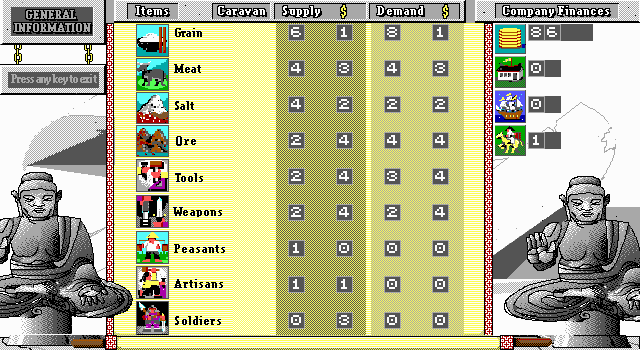
The trading itself has more pressure than a simple buy-low, sell-high routine. Grain and meat are not merely profitable cargo; they are part of the ongoing cost of maintaining caravans. Meanwhile, caravan payments eat into each turn’s income, and carrying capacity prevents you from treating every promising price as an automatic windfall. You have to think about what earns money now, what keeps a route running, and what cargo is worth sacrificing for the next leg of the journey.
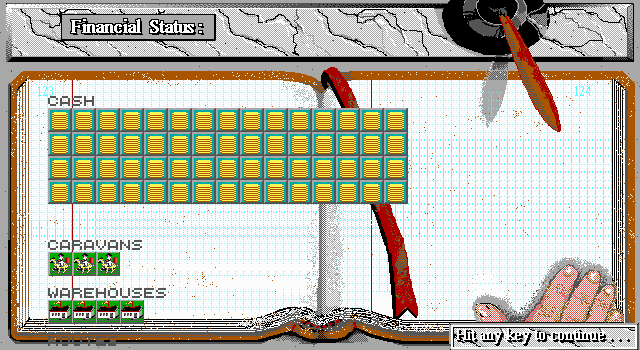
Once profit starts coming in, Canton opens into a sturdier business simulation. More caravans let you split exploration from commerce, while warehouses relieve storage pressure and create a path toward production. Staffing a warehouse with peasants produces food, and assigning artisans produces tools or weapons. That is the point where the game’s systems begin to click together: trade funds expansion, expansion supports storage and labor, and production can reduce your reliance on finding every useful good elsewhere.
There is danger in becoming too comfortable. Special events can hand an exploring caravan hidden treasure, but pirates can also attack at sea. Hiring soldiers for protection is another expense that can feel painful right up until an unprotected ship is at risk. Canton is at its best when it forces that sort of calculation, asking whether you can afford security before it proves you needed it.
Graphics
Canton is a top-down, turn-based management game, and its view is built around overseeing routes, cities, caravans, and the growing reach of your company rather than putting you close to individual characters. The focus stays on the practical work of moving through 18th-century China and managing a commercial network.
Story
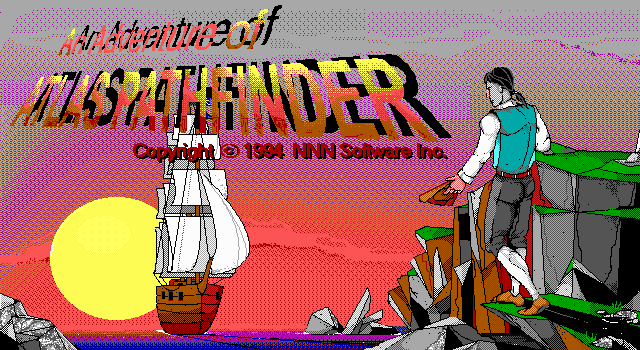
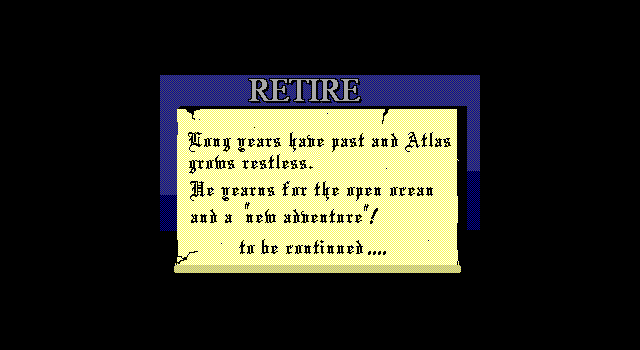
You play Atlas Pathfinder, a young adventurer and entrepreneur, but Canton’s story is really the career you build from that starting point. It begins with a lone caravan in Canton and can stretch into decades of in-game business growth, giving your decisions a natural rise-from-nothing arc.
That framework works because your setbacks are personal in a managerial sense. A bad margin, an expensive payroll, lost cargo capacity, or a pirate threat can turn an optimistic expansion into a recovery job. Conversely, a treasure find or a warehouse that starts producing goods can make a previously fragile company feel established.
Do not come to Canton looking for a heavily authored historical tale. Its drama comes from the changing fortunes of your enterprise: the route that finally pays, the city that becomes essential, and the moment your tiny operation becomes capable of supplying itself.
Overall Experience
Canton has the satisfying shape of an old-school trading game that expects you to earn every improvement. Its core is clear enough to grasp quickly, but it does not let you coast. Food, wages, capacity, labor, production, and protection all pull on the same pool of money, so growth feels earned instead of automatic.
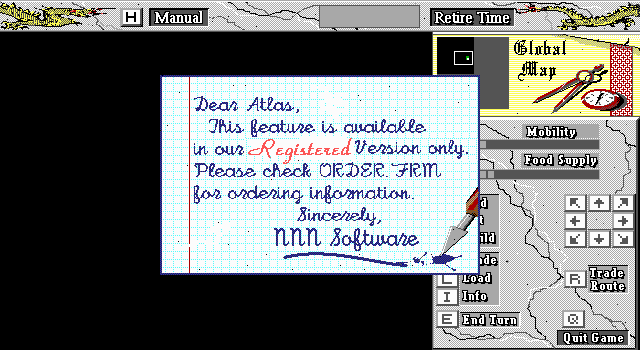
The shareware version is a meaningful caveat. Five years, or sixty monthly turns, is enough time to learn the economy and establish a company, but it limits the long career promised by the broader game. Fixed trade routes are also unavailable there, which makes the restricted version a more hands-on and shorter-lived experience.
If you enjoy patiently mapping markets, accepting a few lean turns for a stronger future, and watching a business network take shape from a single caravan, Canton is worth your time. It is less about heroic conquest than disciplined commercial momentum, and that narrow focus is exactly why its successes can feel so rewarding.

Reviews
There are no reviews yet.