 Retro Replay Retro Gaming History, Reviews & Emulation

Retro Replay Review
Gameplay
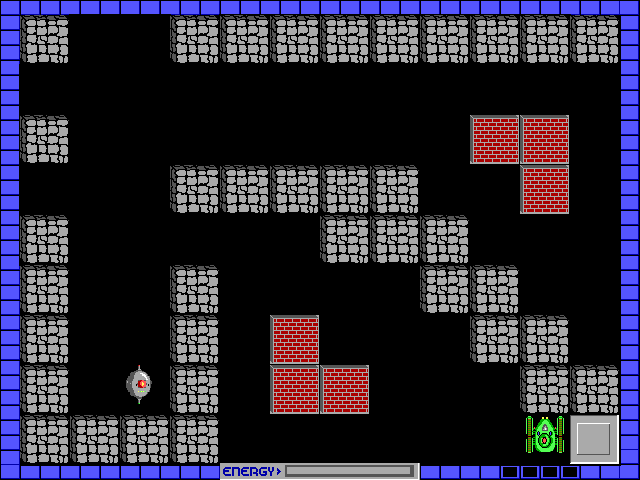
The first few minutes make the central problem clear: find an exit, do not let the maze chew through your energy first. Driving an unarmed, tank-like vehicle changes the feel of a simple maze. You are not sweeping rooms with firepower; you are navigating around robot orbs that want to close the distance and explode beside you. That turns each unfamiliar corridor into a small nerve test.
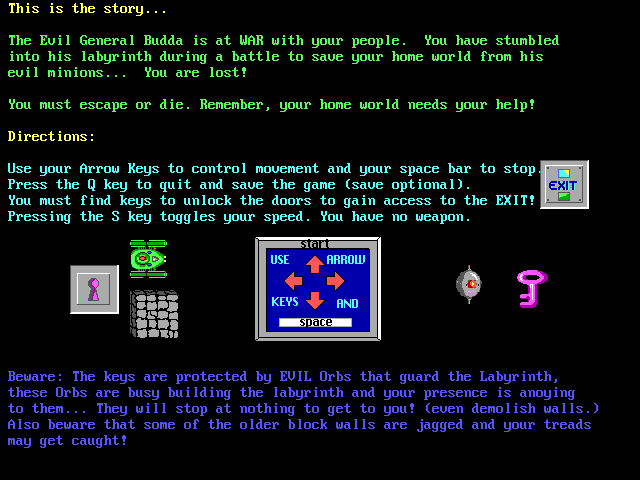
The best idea is that destroyed orbs stay destroyed. Clearing one takes a threat off the board for good, so exploration gradually becomes less hostile rather than endlessly repetitive. Keys add another useful layer, since a discovered key can turn a previously blocked wall with a keyhole into a new route. It is a modest set of rules, but they fit together well: scout, survive, unlock, and push toward an exit.
Frustration can set in when the maze asks you to revisit spaces while hostile orbs remain active, especially because an orb can dig a hole through a wall and emerge where you did not expect it. That unpredictability gives the game bite, though, and permanent enemy removal keeps it from feeling entirely punitive. Give it a chance if you like direct, compact maze challenges more than elaborate action games.
Graphics
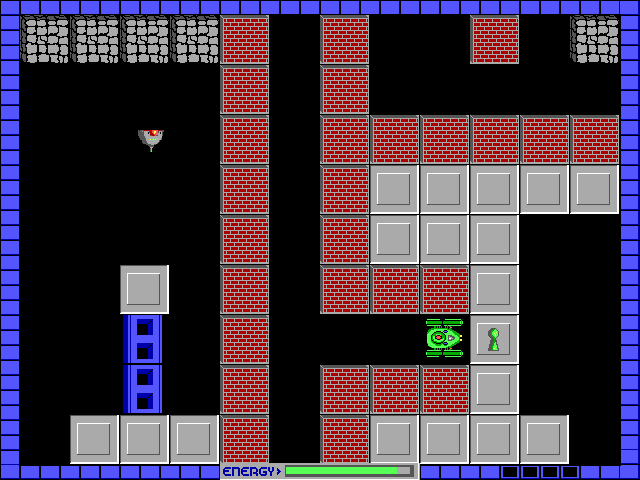
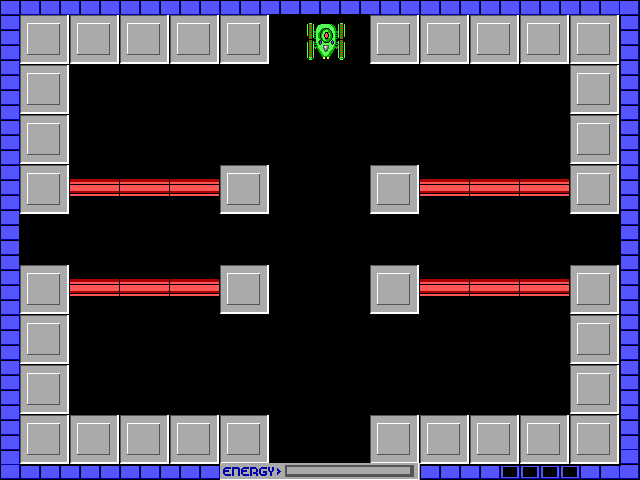
The view is built around static maze rooms, your tank-like vehicle, locked walls, keys, and roaming robot orbs. The fixed, top-down layout suits the game well: you can quickly judge corridors, blocked routes, and the immediate danger of an orb moving in for an explosion.
Story
There is very little narrative standing between you and the next maze. The stated goal is simply to get out in one piece, which is exactly the right amount of setup for a game this focused on navigation and survival.
The three episodes at least give the journey a progression: The Orbs of Distruction, Evil Secrets!, and Budda’s Lair!. Their titles suggest an escalation from the initial orb threat toward General Budda himself, even if the game’s real storytelling happens through the pressure of its labyrinths.
Do not come here for characters or a developed plot. The thin framing works because it never interrupts the game’s core loop; each maze is allowed to be its own immediate problem, and the episode structure supplies a simple reason to keep going.
Overall Experience
General Budda’s Labyrinth is a small, focused action-puzzle game whose tension comes from being vulnerable in spaces you have not fully understood yet. Its strongest moments arrive when you find a key, remember a locked wall from earlier, and realize that removing a few orbs has made a risky section manageable.
Its age and simplicity are inseparable from the experience. You get static mazes, direct movement, and a handful of hazards rather than a broad campaign full of changing systems. For some, that will feel bare; for maze-game fans, it is refreshingly concentrated.
The original three-part structure also makes the full game feel like a collection of increasingly pointed labyrinth challenges rather than one overstuffed adventure. The included level editor is a welcome bonus for anyone who finishes the episodes and wants to build more of this particular brand of trap-filled maze. It is worth your time if you enjoy methodical exploration under pressure and can appreciate a game that gets a lot out of a few sharp ideas.


Reviews
There are no reviews yet.