 Retro Replay Retro Gaming History, Reviews & Emulation
Retro Replay Review
Gameplay
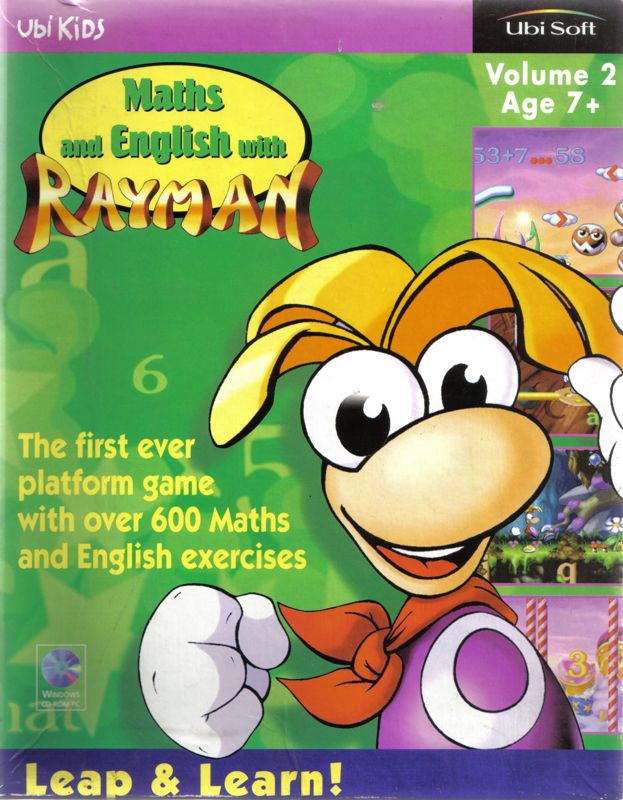
The first hour has a simple, effective rhythm: listen to the wizard, work out the answer, then make Rayman survive long enough to act on it. Rather than separating lessons from play, Volume 2 puts the questions directly into the route. In Butterweed Bog, correct mental-arithmetic answers become platforms or boats; in Pebble Peril, numbered paths must match verbal instructions. When it clicks, the answer is not merely marked right—it gets you moving again.
There is welcome variety across the twelve activities. You might be choosing the correct tens digit while flying in ’Copter Candy, spotting a numerical pattern in Eraser Rebound, reconstructing words on Slick Slopes, or smashing the boulder that matches a vocabulary clue in Rocky Road. The language material reaches beyond spelling into phonics, alphabetical order, and word recognition, while the maths work includes arithmetic, multiplication, place value, comparisons, and odd-and-even groups. That range gives the package more staying power than a single repeated quiz format.
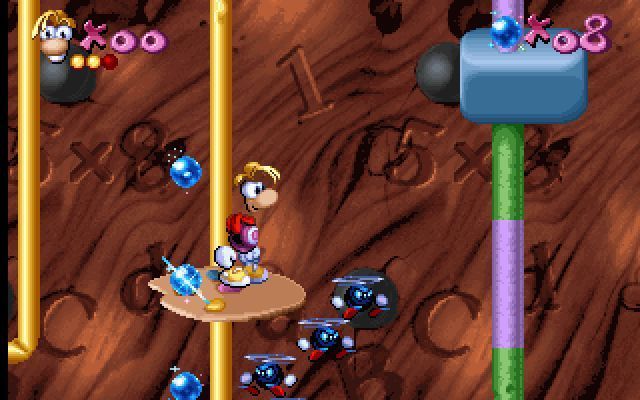
Its major frustration is also its central design choice: correct answers are only half the battle. Rayman still has to negotiate traps, enemies, timing-heavy jumps, and moving platforms, and mistakes can cost health or lives. Blue bubbles, health-boosting power balls, save points, and fist upgrades add familiar arcade incentives, but they do not soften a difficult landing. For a child who thrives on being challenged, that pressure makes success memorable. For one already unsure about maths or English, it can turn a missed answer into a discouraging pile-up.
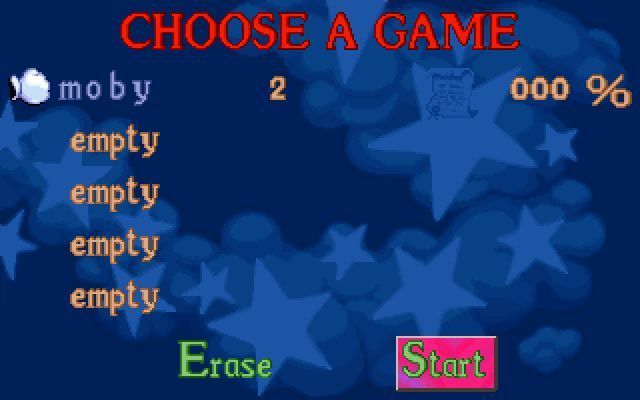
The structure is kinder than it initially appears. Each activity has five stages, with automatic saves after stages two, four, and the optional timed bonus stage. Completing fourth stages opens paths on the Map of the Worlds, so progress feels like an adventure unfolding rather than a strict lesson plan. The timed bonuses are a nice extra challenge, though they are wisely optional; taking them as a test of quick recall rather than mandatory homework is the better way to enjoy them.
Graphics
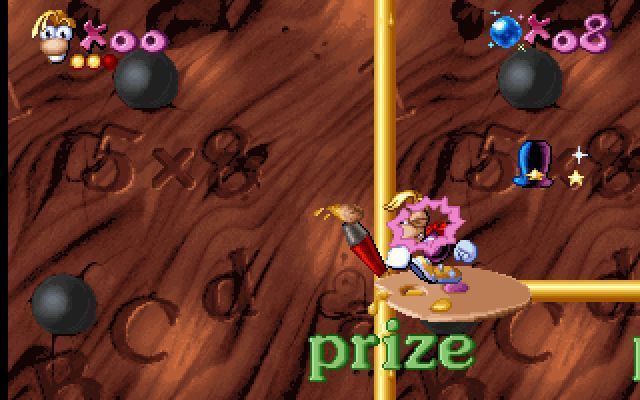
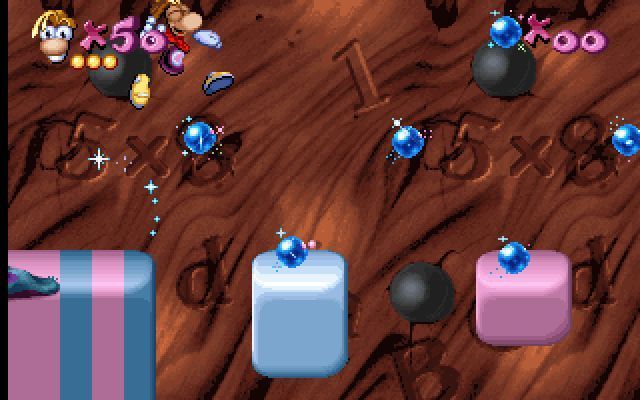
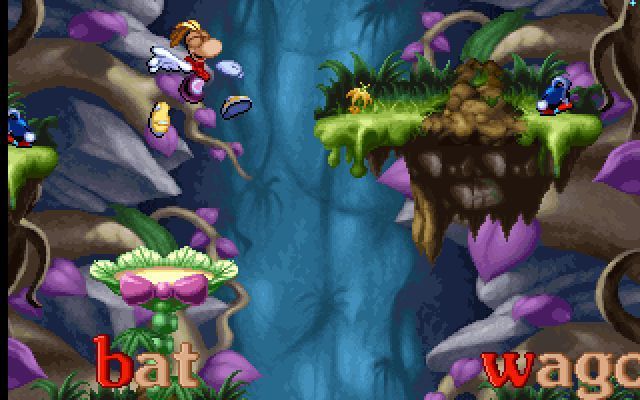
This is a side-view Rayman platform game built around distinct lesson locations: caves, bogs, slopes, tides, and an art course where Rayman rides an artist’s palette. The on-screen objects have a practical teaching role—numbered stones, fruits carrying answers, letter groups, boulders with words—so you are constantly looking at the next answer as part of the obstacle course.
Story
Mister Dark has stolen the contents of the Magic Book of Knowledge, and Rayman is sent by a wizard and Betilla the fairy to reclaim them. It is a familiar arcade-game excuse to travel from world to world, but it fits the subject matter neatly: the missing knowledge is literally what you are rebuilding through grammar and maths challenges.
The twelve golden rings give the campaign a tangible goal, split evenly between grammar and maths activities. That simple collection structure helps younger players understand why they are revisiting subjects that might otherwise feel unrelated. Every completed activity is another piece of the rescue, not just another page of questions.
Do not expect the plot to carry much emotional weight. Its job is to put a villain, a destination, and a reward around the lessons, and it does that efficiently. Reaching Mister Dark’s hideout leads to a video ending and a printable diploma, which is exactly the sort of concrete finish that can matter to a child who has pushed through a long educational game.
Overall Experience
Volume 2 is at its best when it makes an answer feel physical. Picking the right fruit, ring, route, or boulder creates an immediate little burst of progress that a conventional drill rarely manages. Rayman’s platform-game framework supplies momentum, and the broad mix of subjects keeps the game from settling into one stale routine.
Still, this is not frictionless learning. The platforming demand means it can punish a child for coordination even when their schoolwork is correct, and the spoken prompts require attention as well as knowledge. Sitting with a child for the first few activities is sensible, particularly for the phonics, place-value, and multiplication exercises. Once they understand that failures can come from movement as well as answers, the experience is less likely to feel unfair.
Give it a chance if you want educational practice with real arcade stakes rather than a gentle quiz book in costume. The payoff is strongest for kids who already enjoy Rayman-style obstacle courses and like earning visible progress through persistence. Everyone else may find the mix of precise platforming and timed thinking more taxing than motivating, but the saves, branching map, optional bonuses, and final diploma give committed learners a satisfying route to the finish.


Reviews
There are no reviews yet.