 Retro Replay Retro Gaming History, Reviews & Emulation
Retro Replay Review
Gameplay
Pył starts by asking you to slow down. This is a first-person shooter, but firing your way through every problem is a bad habit when ammunition is worth preserving. Sneaking is not decorative here; it is part of the survival calculation. That simple pressure gives encounters a more cautious, scrappy feel than a shooter built around constant aggression.
You choose a primary weapon, then build on that choice by finding more equipment along the route. The important practical advice is to treat every pickup as potentially useful rather than assuming there will be endless replacements around the next corner. If you enjoy measuring a situation before committing, Pył’s tactical bent has a satisfying pull. If you mainly want rapid-fire action and uncomplicated forward momentum, the repeated need for restraint may feel like friction.
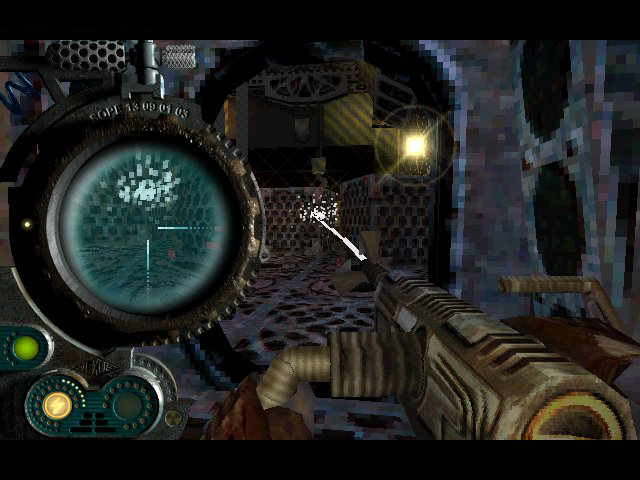
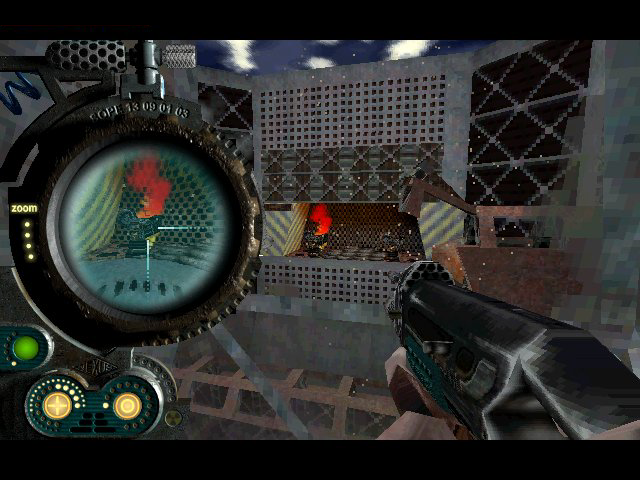
The advanced optics add welcome utility. Zooming in helps you inspect the environment, while infrared viewing offers another way to survey what lies ahead. These tools fit the game’s emphasis on moving carefully through hostile spaces rather than charging blindly. They also break up the basic shooter loop without turning Pył into a different genre.
Logic puzzles sit alongside combat and require you to match pieces of information in order to activate machinery or computer systems. That can be a good change of pace when you want a shooter to demand a little attention beyond aim and ammunition management. It also means progress is not always immediate: you need to be willing to pause, look over the clues, and work out what the system wants from you.
Graphics
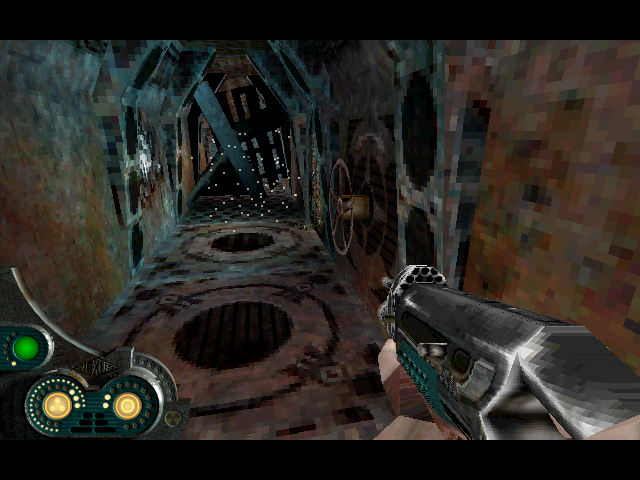
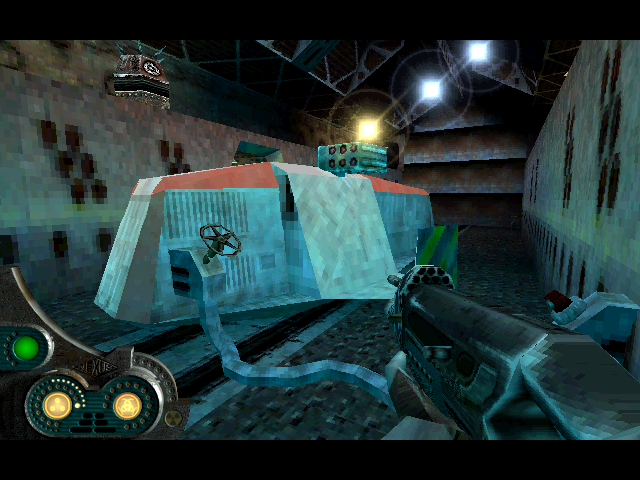
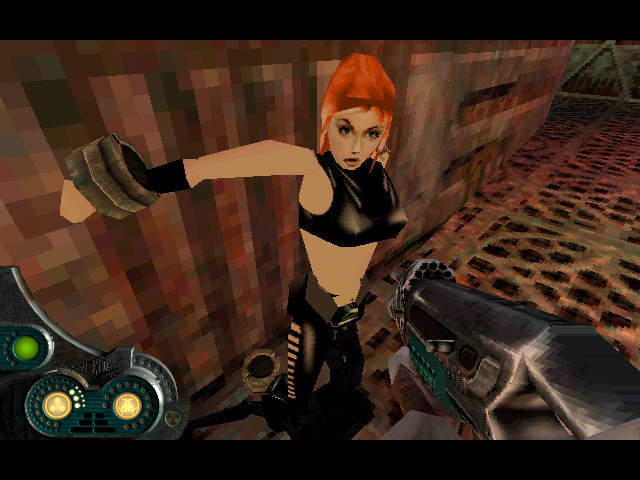
Pył is a 3D game seen through the hero’s eyes, taking you through structures on Arena as you search for artifacts and a route forward. The most concrete visual hook is the optics: the view can tighten for a closer look, then switch to infrared observation, giving environmental scouting a direct on-screen presence.
Story
The setting is a bleak sci-fi one. Humanity has taken interplanetary travel and carried war with it, eventually agreeing to shift the fighting to the uninhabited desert moon Arena rather than continue destroying inhabited planets. That compromise does not bring peace for long. The Empire takes control, and Arena becomes an exile ground for people it no longer wants.
Jafo and Sope, deserters from the imperial army, arrive there by chance. Their immediate problem is not saving a galaxy; it is surviving in the sands, locating remnants from old battlefields, and selling artifacts to make a living. That smaller-scale motivation suits the cautious play well. You are not framed as an unstoppable soldier with limitless resources, but as someone trying to scrape together a future in a place built by decades of conflict.
The search for the ship Valkyrie gives the pair a more pointed goal: it is their only chance to leave Arena. Pył’s strongest narrative idea is that escape is something earned through survival and scavenging, not handed over by a grand military mission. The premise has enough bite to make the mix of ruins, combat, and machinery puzzles feel connected.
Overall Experience
Pył is worth a look if the phrase “tactical DOS-era sci-fi shooter” sounds more inviting than intimidating. Its best quality is the way its parts reinforce a survival mindset: conserve shots, sneak when you can, use the optics, and stop to solve the occasional system puzzle. The first hour should make its priorities clear, and your enjoyment will largely depend on whether that slower, more methodical pace clicks.
There is frustration built into that design. Ammunition conservation can make a bad decision feel costly, and logic puzzles can halt the momentum when you would rather keep moving. Still, those interruptions are part of what separates Pył from a simple corridor shooter. It wants you to observe and think, not merely react.
The payoff is a focused journey through an unforgiving exile world with a credible reason to keep pressing on. Jafo and Sope’s hunt for artifacts and the Valkyrie gives the action a grounded objective, while the tactical rules keep the stakes close to the player. Give it a chance if you enjoy older shooters that reward patience; skip it if you need constant combat and quick, effortless progress.



Reviews
There are no reviews yet.