 Retro Replay Retro Gaming History, Reviews & Emulation
Retro Replay Review
Gameplay
The first hour with Shogi Master can be humbling, especially if you arrive from chess expecting familiar instincts to carry you. The board is smaller, but the decisions are not. Promoted pieces and the ability to return captured pieces to the board make every exchange feel less final than it does in chess. A piece you happily take can become ammunition for the other side a few turns later, so you quickly learn to look beyond the immediate capture.
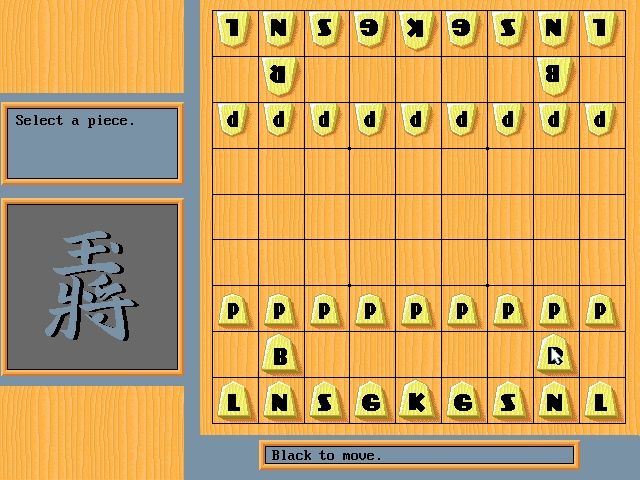
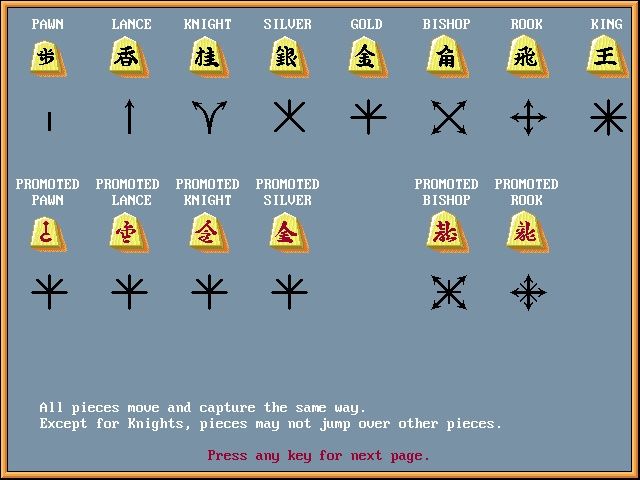
Start with the three lessons. They are not a substitute for practice, but they give a newcomer a proper foothold before the computer begins punishing loose moves. The F4 toggle between Japanese and English piece markings is especially practical: use English while learning what each piece does, then switch when you want to become more comfortable with traditional shogi notation. That small choice makes the program friendlier without diluting the game itself.
Six opponent levels are a modest but welcome ladder. You can begin at the low end, make mistakes without turning every game into a hopeless lesson, and move up when you can spot basic threats before they land. Two people can also play at the same machine, which is arguably the best way to learn: pause, debate a position, and see why a tempting move may be dangerous. Recording and replaying games gives losses some value too, because shogi rewards going back to find the turn where your position truly unraveled.
Graphics
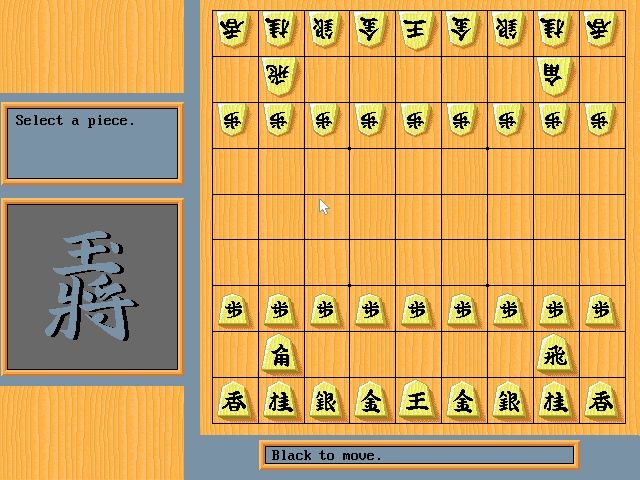
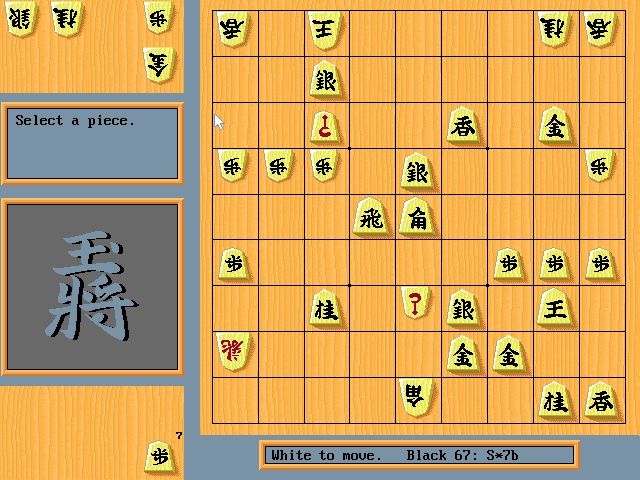
The view is a straightforward top-down shogi board built around the pieces themselves. Japanese or English characters appear on the pieces depending on your chosen setting, and that is the key visual decision here: English markings make early games far easier to follow, while the Japanese set better suits players settling into the traditional form of the game.
Story
Shogi Master finds its drama across the board, not in a written tale. Each match develops its own little contest of nerve: a defended square becomes an invitation, a captured piece changes hands, and an apparently safe king position can suddenly demand attention.
That makes the computer opponent the closest thing the game has to a recurring rival. Raising its level changes the kind of story a match tells, from learning the consequences of simple oversights to trying to hold together a position against sharper resistance. The satisfaction comes from recognizing a pattern you once missed and making a calmer decision next time.
Example games add useful context to that process. Rather than leaving you alone with rules on a page, they let you revisit completed shogi contests and study how positions can develop. Combined with replay files from your own games, they turn the game’s most memorable moments into positions you can actually examine.
Overall Experience
Shogi Master is a good fit for someone who wants to learn and play shogi rather than merely sample its idea. Its strongest feature is not flash; it is the way lessons, adjustable computer opposition, piece-language toggling, and replay tools address the real friction of starting with a demanding board game. You are given a route from confusion to competence instead of being dropped onto the board cold.
The friction is that shogi itself asks for concentration. If you want quick strategy-game gratification, the deliberate pace and unfamiliar piece behavior may feel like homework at first. Stick with it long enough to understand drops and promotions, though, and the game starts producing the kind of tense positions where one overlooked square can matter more than a flashy attack.
For a solo learner, the computer levels and saved games make this more than a one-evening curiosity. For two people, the local head-to-head option gives the rules room to breathe without a timer or ranking hanging over the match. It is a plain, purposeful shogi companion, and its payoff is directly tied to the effort you put into learning one of the richest board games around.


Reviews
There are no reviews yet.