 Retro Replay Retro Gaming History, Reviews & Emulation

Retro Replay Review
Gameplay
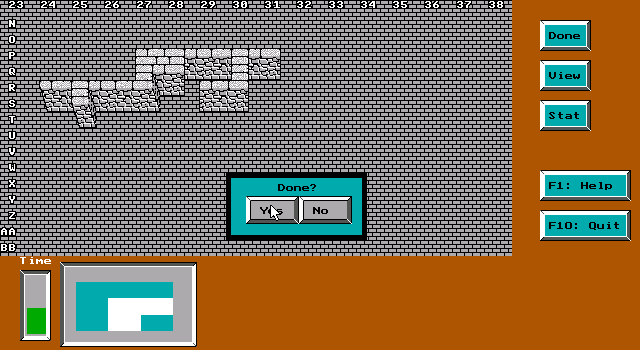
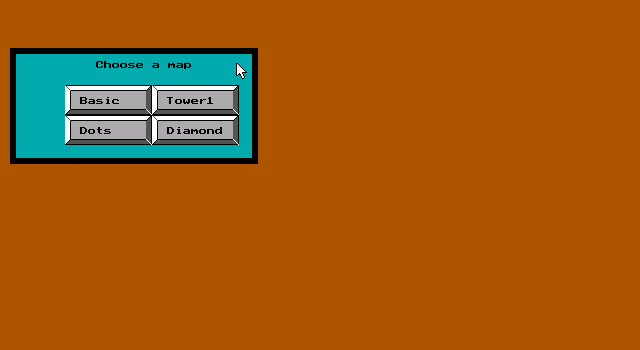
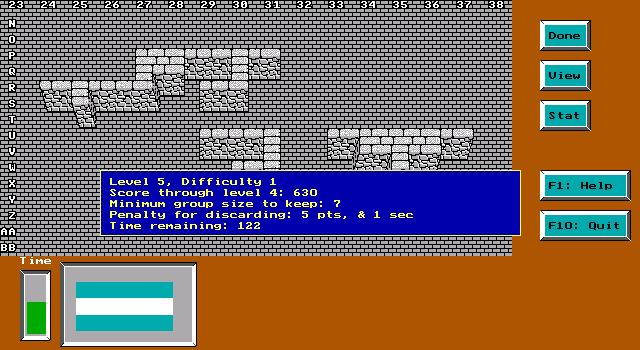
The first few floors of Towers lure you into thinking this is a relaxed spatial puzzle. You pick from rectangular, diamond, or hollow starting bases, rotate odd Tetris-like bricks in your head, and try to fill the shape cleanly. Then the clock starts biting, the next piece remains hidden until you place the current one, and the whole exercise becomes a brisk test of nerve.
Its smartest idea is that your work persists. A level is trimmed when time expires, and what remains becomes the base for the floor above. Leave gaps, narrow ledges, or an uneven outline now and you have made the next round harder. A fully filled floor is the dream because it gives you a clean, flat platform, but Towers is built around accepting that the dream often slips away under pressure.
Discarding a piece can save a run, but the time penalty makes it a painful choice rather than an easy reset. That trade-off gives each awkward shape real weight. You will sometimes jam down a merely acceptable block because the timer is too low to gamble; other times you will spend precious seconds hoping the replacement finally fits a troublesome pocket. The increasing time demands and minimum-group requirements ensure that survival never turns into autopilot.
Frustration can set in when one bad floor shrinks your usable area enough that later requirements become impossible. Still, that harshness is central to the game’s satisfaction. Towers rewards learning to protect future space, not simply filling whatever hole is nearest. If you enjoy puzzle games where a shaky recovery feels more exciting than a flawless plan, its escalating structure has real pull.
Graphics
Towers lets you inspect the finished construction from eight directions and at different distances, which gives your precarious stack a welcome sense of physical shape after all that top-down block placement. Seeing a tower from another angle is a small but satisfying reward for surviving a run.
Story
There is no character drama competing for attention here. The story is the one you make out of a single build: a promising clean base, an ugly compromise forced by the clock, and the gradual realization that an old mistake is still dictating your options several floors later.
That stripped-down approach suits the game. Each tower becomes a compact record of your decisions, with every surviving section showing where you played safely, gambled on a discard, or failed to leave enough room for the next requirement.
The hall of fame gives that personal construction a little competitive context. Chasing a higher tower than earlier entrants is enough of a finishing line for a game whose drama comes from whether your structure can keep growing at all.
Overall Experience
Towers is a focused, demanding puzzle game built around consequences. The timer keeps you moving, but the lasting base system stops it from becoming thoughtless speed-play. You need to think about the current piece and the next several floors at once, even though the game deliberately refuses to show you the next brick before you commit.
It will suit you best if you can enjoy a run that collapses because of your own imperfect construction. The challenge is not just placing unusual pieces; it is knowing when “good enough” preserves a future and when it quietly ends one. That can feel unforgiving, especially as the available floor space dwindles, yet it also makes high towers feel earned.
The lack of a saved tower means the pleasure is immediate rather than archival: admire the result, chase the score, and start another attempt. For fans of tense DOS-era block puzzles, Towers has a sharper idea than its simple premise suggests. It is worth trying if you want a puzzle game where every floor is both a score opportunity and a problem you have handed to your future self.


Reviews
There are no reviews yet.