 Retro Replay Retro Replay gaming reviews, news, emulation, geek stuff and more!


Retro Replay Review
Gameplay
Wolfenstein 3D revolutionized the first-person shooter genre by placing you directly in the boots of Allied spy B.J. Blazkowicz as he battles through Nazi strongholds. From the opening moments in the shareware “Escape from Wolfenstein” episode, the pacing is relentless: you’ll navigate maze-like corridors, uncover hidden switches, and grab keys to unlock doors while dispatching guards with knife or bullet. Each of the six episodes delivers a tight pair of eight main levels and a final boss showdown, ensuring a focused yet varied run from cell block to underground laboratories.
(HEY YOU!! We hope you enjoy! We try not to run ads. So basically, this is a very expensive hobby running this site. Please consider joining us for updates, forums, and more. Network w/ us to make some cash or friends while retro gaming, and you can win some free retro games for posting. Okay, carry on 👍)
Weapon progression feels intuitive and satisfying. You start each level defenseless, armed only with a knife, then quickly pick up the standard pistol. Machine guns and the iconic Gatling gun are strategically placed in secret areas or dropped by tougher enemies, rewarding exploration. Ammo management is crucial—every grenade, clip of bullets, and medikit must be used wisely as health and supply crates are limited. Scoring adds another layer: if you find every secret, grab all treasure, and clear a level under par time, you’ll earn bonus points and extra lives.
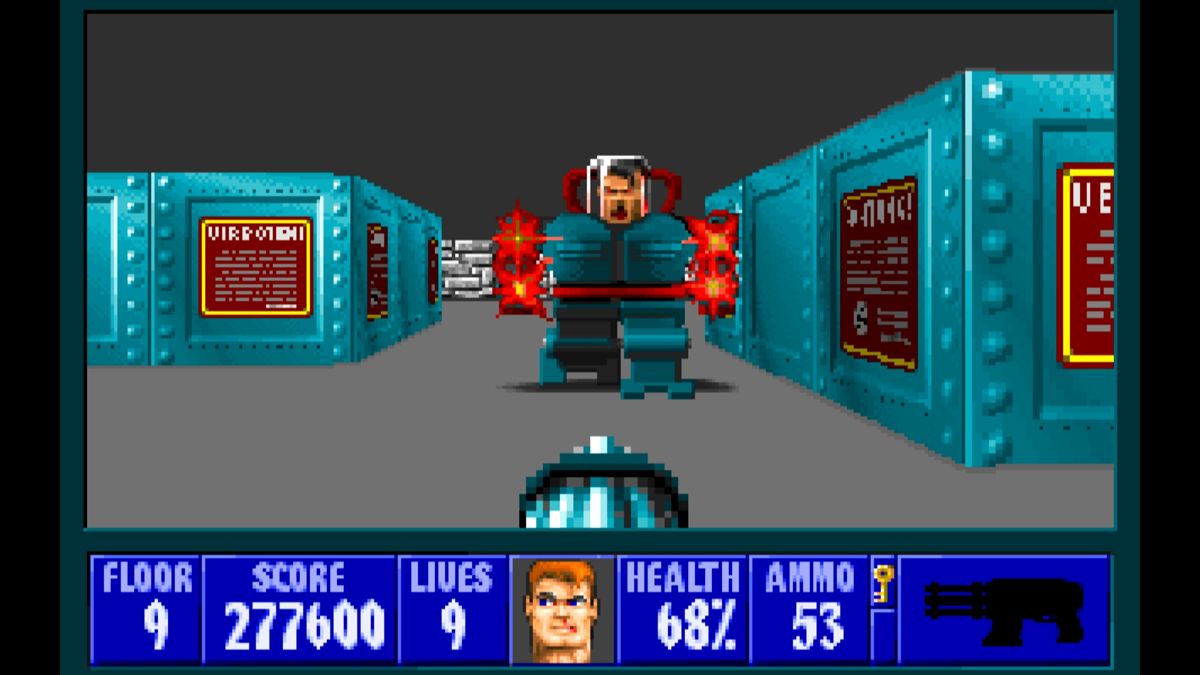
Enemy variety, though limited by today’s standards, is thoughtfully designed. Fast-moving dogs pressure you early on, while SS troopers and officers demand precise aiming and cover usage. Mutant prototypes in later episodes add firepower challenge, forcing you to prioritize targets and learn enemy patterns. Boss levels, such as taking down Hans Grosse’s dual-machine-gun onslaught or infiltrating “Die, Führer, Die!” to face robotic Hitler, provide memorable stand-offs that break the loop of maze navigation and enforce tactical positioning.
The level design excels at encouraging curiosity: push walls hint at hidden caches, secret rooms brim with health and points, and colored keys spark tension about whether you’ve found every route. Difficulty settings adjust enemy count and aggression, making Wolfenstein 3D accessible for newcomers yet still challenging for veteran gamers. Controls are crisp and responsive, whether you’re strafing around corners or lining up headshots, and the linear progression keeps you motivated to see what new traps or power-ups await in the next level.
Graphics
While primitive by modern standards, Wolfenstein 3D’s graphics were groundbreaking in 1992. The fast raycasting engine renders smooth, 90-degree walls and sprite-based enemies, creating an immersive pseudo-3D environment. Textures are low-resolution but carefully designed to convey the cold stone of Wolfenstein Castle, the sterile labs of Operation: Eisenfaust, and the propaganda-laden Nazi interiors.
Character sprites are instantly recognizable, with distinct uniforms and animations that telegraph actions—drawing a pistol, charging at you, or raising a fist. The clarity of enemy silhouettes is crucial for split-second reactions, especially when multiple guards appear around a corridor bend. Level geometry is simple yet effective, relying on lighting contrasts and repeating textures to craft claustrophobic hallways and spacious boss arenas.
Secret areas are visually hinted at by slightly different wall patterns or misplaced decorations, encouraging players to experiment with push walls. Though there’s no dynamic lighting, the subtle shifts in palette between episodes—from earthy browns to clinical whites and ominous reds—help differentiate each chapter’s atmosphere. The minimalistic HUD displays health, ammo, and score without distracting from the action, ensuring you remain focused on exploration and combat.
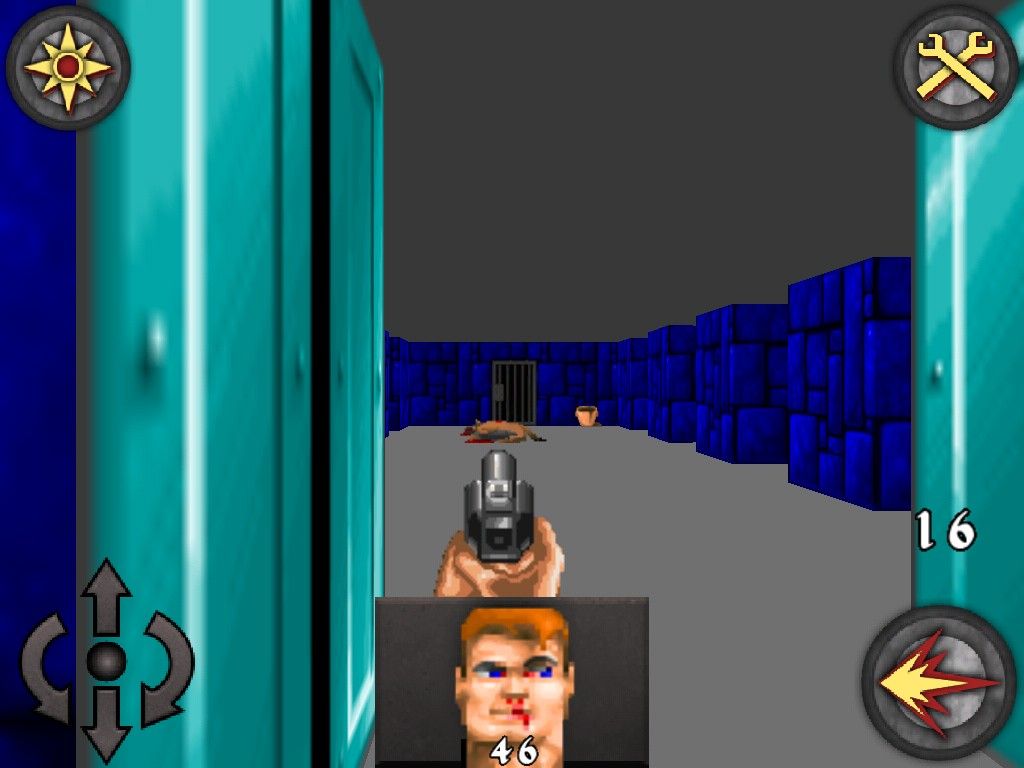
Ports and re-releases over the years have polished the visuals with higher resolutions, widescreen support, and smoother frame rates, preserving the original aesthetic while making it compatible with modern hardware. Whether playing the DOS classic or a mobile touch version, the core visual identity of Wolfenstein 3D remains intact, reminding players how an efficient engine and strong art direction can overcome technical limitations.
Story
Wolfenstein 3D’s narrative is straightforward but effective: Allied agent B.J. Blazkowicz escapes imprisonment, uncovers a sinister plot of mutant prototypes and chemical weapons, and ultimately confronts a robotic Hitler. Each episode adds a new twist to the core mission, from prison break thrills to lab infiltration and high-stakes sabotage of chemical warfare plans. The episodic structure keeps the story digestible while ramping up stakes and environments.
Cutscenes and printed briefings between episodes provide context without slowing gameplay. You learn that Operation: Eisenfaust threatens the war effort, and subsequent Nocturnal Missions reveal the twisted ambitions of Dr. Schabbs, Gretel Grosse, and General Fettgesicht. Though dialogue is minimal, it’s enough to motivate progression—each level’s exit feels like one step closer to thwarting history’s darkest forces.
Character motivations are archetypal, but that simplicity serves the arcade-like intensity of the game. You aren’t bogged down by lengthy exposition; instead, you’re propelled by the urgency of each mission. The final battle against “Der Führer” in a mechanized suit stands as a fittingly over-the-top climax for this action-driven plot, emphasizing the series’ tongue-in-cheek defiance of tyrannical villains.
For players craving deeper lore, the game’s manual, level names, and collectible in-game documentation hint at a broader Wolfenstein universe. Later series entries expand on B.J.’s backstory and the science-fiction elements introduced here, but Wolfenstein 3D’s lean narrative remains a testament to concise storytelling centered on explosive gameplay rather than cinematic grandeur.
Overall Experience
Wolfenstein 3D remains a pillar of gaming history and a joy to revisit for both nostalgia seekers and newcomers interested in the origins of the FPS genre. Its fast-paced action, tight controls, and cleverly designed levels deliver pick-up-and-play fun while offering depth through secrets, scoring, and difficulty settings. Even decades later, clearing every secret room or achieving a full “par time” run provides genuine satisfaction.
The shareware distribution model—free first episode, paid subsequent levels—was revolutionary for its time and helped catapult the game to worldwide acclaim. Modern digital storefronts now offer the complete package at a modest price, ensuring accessibility. Community mods and fan-made levels continue to breathe new life into the engine, proving its enduring appeal and adaptability.
Audio complements the visuals with simple but effective sound effects: gunfire echoes in narrow halls, guards shout warnings, and the iconic “Get the key!” chime motivates exploration. While there’s no orchestrated soundtrack during levels, menu music and ambient effects enhance immersion and tension, especially in secret areas where unexpected footsteps can trigger a heart-pounding skirmish.
Whether you’re exploring for the first time or replaying a childhood favorite, Wolfenstein 3D offers an unfiltered, adrenaline-fueled experience. Its combination of straightforward storytelling, responsive mechanics, and pioneering graphics make it a must-play title that still holds up as a testament to creative design under technical constraints. This game isn’t just a piece of history—it’s a timeless action classic that continues to inspire developers and entertain players.

Reviews
There are no reviews yet.