 Retro Replay Retro Gaming History, Reviews & Emulation

Retro Replay Review
Gameplay
The first stretch of Lesser Mern has a comforting, direct pull if you enjoy early Japanese RPG structure. Tile is sent on a clear quest, you move across an overhead world map, and towns and hostile areas wait as distinct destinations. There is no mystery about what kind of game this is trying to be: build a party, prepare your equipment, gain levels, learn to use magic well, and push farther into danger.
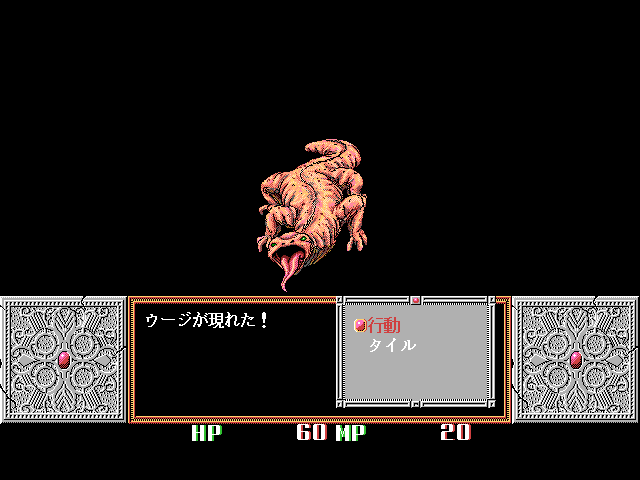
The semi-random encounters are the detail that gives the routine a little more life. After you walk a few steps, small whirlwinds appear near the party. You can run into one and take the battle, or steer around it. That is a welcome compromise between constant random interruptions and total freedom to ignore combat; when you want experience or money, the next fight is close, and when you are trying to reach a town or hostile area, you have a chance to avoid wasting time.
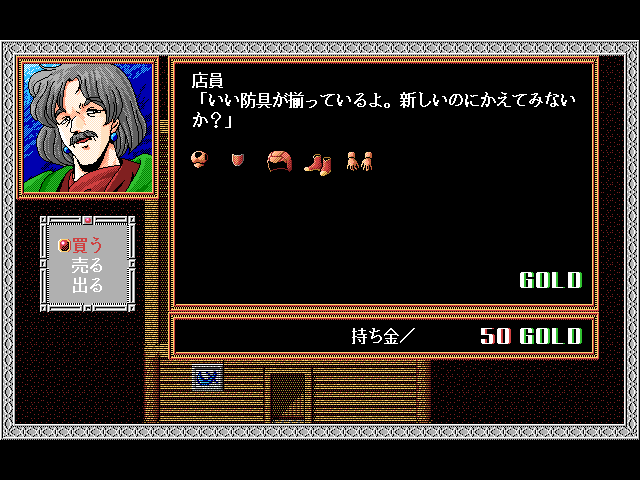
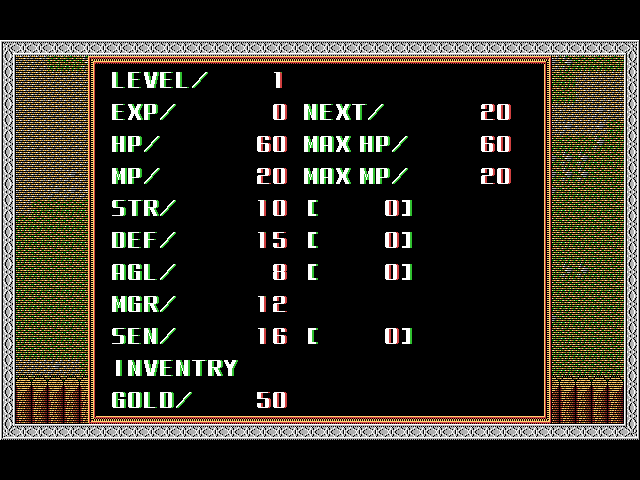
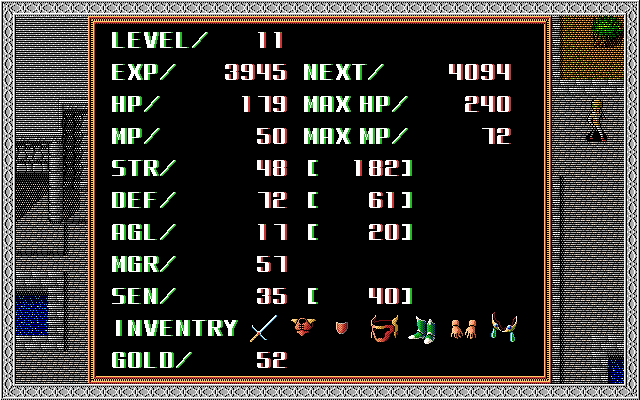
Combat itself follows the turn-based playbook, so your enjoyment depends heavily on how much affection you have for that older rhythm. Leveling, magic, and equipment are not treated as side systems but as the core of progress. If you want a role-playing game that constantly reinvents its rules, Lesser Mern will feel conservative. If you find satisfaction in making a party steadily tougher and turning preparation into victory, its straightforwardness is easier to appreciate.
Graphics
The game uses an overhead map for travel, with towns and hostile areas marked as icons rather than rendered as a continuous landscape. The most useful visual touch is also the encounter warning: the small whirlwinds that appear around Tile make an approaching battle visible before it begins. Its anime and manga lean fits the fantasy material, though the world-map view is more functional than lavish.

Story
Lesser Mern does not ease into its mythology. Red and blue dragons stand at the beginning of the world, then become the humanoid gods Tarnas and Martia; their conflict is already cosmic before Tile ever picks up his quest. Martia’s monsters give the threat a practical presence, while Tile’s dream ties one young swordsman to a struggle much larger than him.
The prophecy setup is familiar, but it is a good fit for this kind of RPG. Tile is not merely wandering toward danger: his father brings him to King Seva, Seva reads meaning into the dream, and the resulting mission gives the journey immediate direction. That clarity helps the traditional leveling-and-exploration loop feel like an actual campaign rather than a sequence of errands.
At the same time, the premise leans hard on archetypes: gods at war, a foretold hero, and a world threatened by monsters. Whether that is a strength comes down to your taste. The material is more inviting when you want mythic fantasy delivered cleanly and without a lot of ambiguity, rather than a story built around unusual characters or a radically different setup.
Overall Experience
Lesser Mern is a modest but appealing choice for a gamer who misses RPGs that commit to the basics. Its party growth, magic, equipment, turn-based battles, and map-based journey are familiar on purpose. The game’s strongest practical idea is the visible, avoidable whirlwinds, because they give you a little agency over one of the genre’s most common frustrations without throwing away the need to fight and improve.
That same traditionalism limits its reach. Much of the experience rests on systems that were already well established: your payoff comes from the steady climb in power and from seeing Tile’s quest through, not from novelty. The formula can become repetitive if you need frequent surprises, but it has enough structure and a strong enough mythic setup to reward patience.
Give it a chance if you are in the mood for a 1992-era Japanese-style RPG with an uncomplicated heroic mission and a useful twist on encounters. Skip it if conventional leveling, equipment management, and turn-based combat sound like chores rather than comforts. For the right mood, Lesser Mern’s old-fashioned focus is more charming than limiting.


Reviews
There are no reviews yet.