 Retro Replay Retro Gaming History, Reviews & Emulation
Retro Replay Review
Gameplay
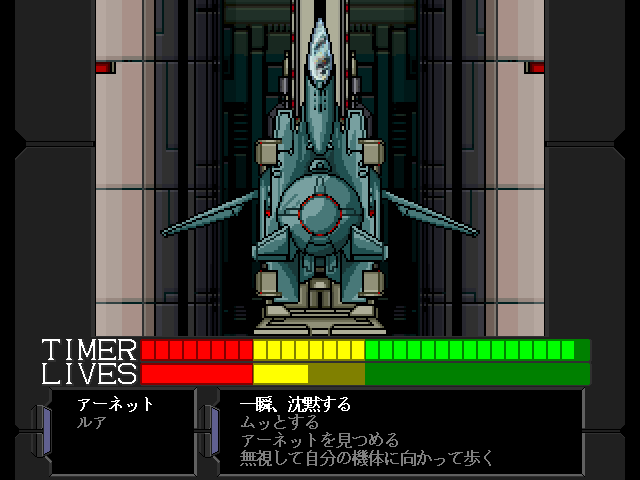
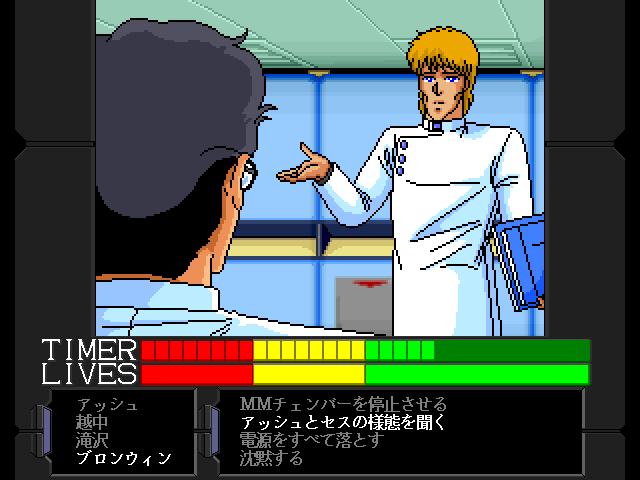
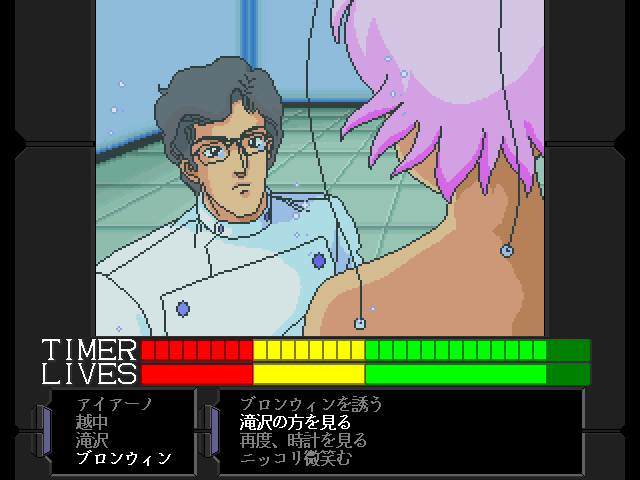
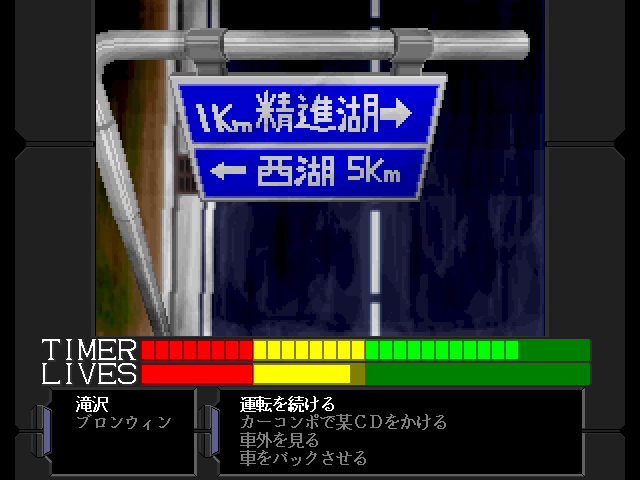
The first hour’s hook is the vulnerability of it all. You are not wandering a ship, collecting items, or settling into a familiar adventure-game routine; you are watching events unfold and then being asked to make a snap judgment. Pick the correct character, select the correct action, and do it before time expires. It makes even a short scene feel like a test of whether you were paying attention.
The Life bar is what turns that setup from a simple quiz into a tense interactive movie. Letting the timer expire costs a small amount of Life, while choosing the wrong action generally hurts much more. That distinction is smart: hesitation is survivable, but confidently misreading the scene is expensive. You quickly learn to watch for clues rather than treating each prompt as a guess.
That same structure is also where frustration sets in. Merrygoround asks for precision while leaving little room to absorb a wrong read, and a depleted Life bar ends the game. The loop works best when you enjoy replaying scenes and tightening your understanding of their clues. If repeated failures make you impatient, its heavy reliance on timed right-or-wrong decisions can feel punitive rather than dramatic.
Graphics
The bulk of Merrygoround is made of semi-animated voiced cutscenes, so you spend more time watching characters and story scenes than navigating a game world. The FMV-style format fits its anime and futuristic science-fiction framing, with the player’s interruptions arriving as timed decision moments rather than lengthy playable sequences.
Story
This is the second chapter of the Einheit story arc begun in D-Again, and it does not pretend to be a clean break from what came before. Koshinaka is researching the Diabolique’s data bank to improve the life adjustment factor of bionic soldiers when Einheit members attack the laboratory. That immediately gives the story a dense military-science-fiction tone.
You take control of Blon-Win, a bionic soldier who must follow the clues left behind and continue the research. The central mystery points toward Rua Rip Salisbury and the Original Matrix, giving the movie-like scenes a concrete investigative drive rather than leaving them as disconnected spectacle.
Prior familiarity with D-Again will likely make the Einheit material land more strongly, because Merrygoround is explicitly continuing that arc instead of starting over. Even so, the immediate conflict is understandable: a research project has been interrupted, information must be pieced together, and Blon-Win has to press forward. The plot’s biggest strength is its willingness to stay strange and specific; its barrier is that you are entering midstream.
Overall Experience
Merrygoround is a curious artifact with a focused idea: turn an anime sci-fi continuation into a chain of tense, timed reactions. When you are locked in, the format creates the feeling that you are trying to keep up with a dangerous unfolding situation, not merely watching it from the couch.
Its limitations are inseparable from its identity. The game puts most of its weight on cutscenes and correct inputs, so the satisfaction comes from attention, recall, and getting a scene right under pressure—not from broad adventure-game freedom. A harsh Life penalty for wrong choices means the tension can flip into irritation if the expected answer is not obvious to you.
Give it a chance if you are already invested in D-Again’s Einheit arc or have a taste for early interactive movies that make you earn the next scene. Everyone else may admire the commitment more than they enjoy the repeated demands. The payoff is worthwhile for a patient player willing to meet it on its own unusually strict terms, but it is a niche sequel rather than an easy recommendation.


Reviews
There are no reviews yet.