 Retro Replay Retro Gaming History, Reviews & Emulation


Retro Replay Review
Gameplay
The first stretch of Rejection: Den-No Senshi is more tense than flashy. You move through maze-like areas one step at a time from Keiko’s eyes, looking for the route forward while hostile mutants and reanimated corpses make every detour feel risky. It has the nervous, enclosed rhythm of an early computer dungeon crawl, not the free-running momentum associated with later first-person shooters.
Combat gives you firearms and melee options, including knives, and the basic survival loop is easy to understand: kill enemies, collect ammunition and health kits, and avoid getting worn down before you find the next way through. The RPG side matters because defeated enemies award experience. That creates a useful reason to fight rather than merely flee, especially when you need Keiko to become stronger.
The catch is that enemies often respawn. That can be a welcome safety valve when you want more experience, but it also means the same passages can become a grind if you are only trying to push onward. You will get the most out of it if you can enjoy mapping mazes in your head and treating repetition as preparation, rather than expecting constant new encounters or smooth, rapid movement.
Graphics
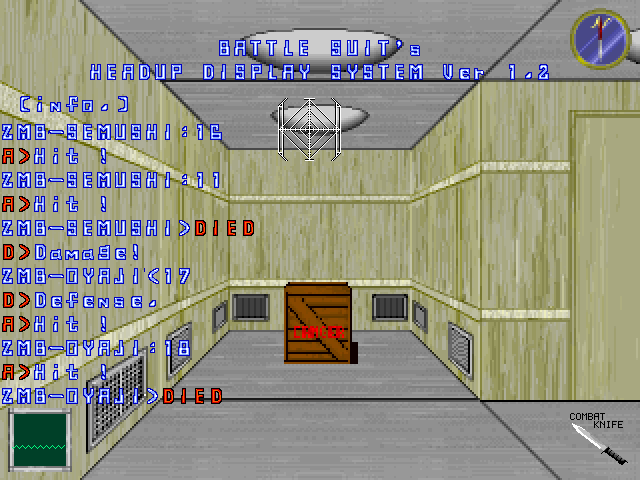
The game uses a pseudo-3D first-person view, with the city’s dangerous interiors encountered as step-based maze spaces rather than fully fluid 3D environments. Its strongest visual hook is the contrast built into the premise: a lone armed woman moving through a Tokyo ruined by a meteor strike, radiation, disease, mutants, and zombies.

Story
Its setup is unapologetically bleak. A huge meteorite has destroyed Tokyo, and the aftermath has turned survivors into mutants while raising corpses as zombies. The remaining humans live underground, holding on as a small resistance force against a city that has become almost uninhabitable.
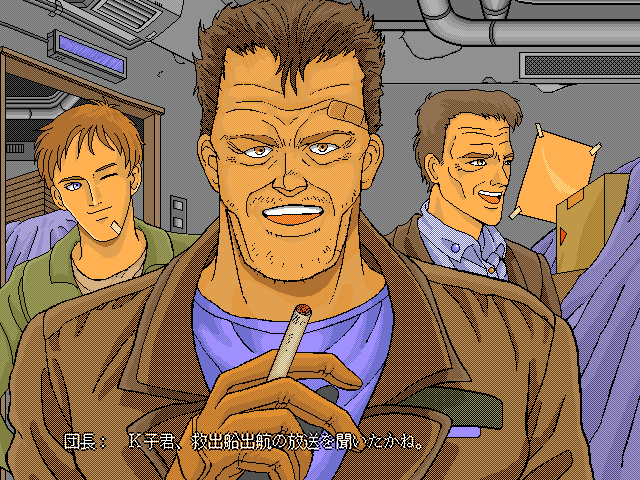
Keiko Kirihara gives that broad catastrophe a concrete purpose. As the only woman in the armed group, she is sent into the most dangerous parts of the city to locate a route to a safer place. That is a clean, practical mission for this kind of maze-heavy game: you are not wandering ruined streets for atmosphere alone; you are trying to secure a future for the people still alive below ground.
The story’s real strength is its directness. It does not need a complicated political web to make the journey feel urgent; the hostile city, dwindling human resistance, and Keiko’s assignment already give every supply pickup and fight a survival-minded context. Fans of compact post-apocalyptic anime setups will find plenty to latch onto.
Overall Experience
Rejection: Den-No Senshi is a particular kind of early-1990s commitment: slow, maze-bound, and willing to make you earn progress through repeated combat. If you come in wanting a Wolfenstein-like rush, the step-based movement will likely frustrate you. If you enjoy first-person RPGs where caution and persistence matter as much as aim, the format starts to make sense.
What keeps it interesting is the hybrid structure. The weapons and hostile encounters supply action, while experience gains give those fights a longer-term purpose. Finding health kits and ammunition adds pressure without complicating the central goal: keep Keiko alive long enough to navigate a devastated Tokyo and open a path to safety.
It is easiest to recommend to retro RPG enthusiasts, maze-crawler veterans, and anyone drawn to grim mutant-and-zombie apocalypse fiction. Patience is essential, because respawns and repetitive corridors are not incidental obstacles. For the right mood, though, that friction becomes part of the game’s oppressive survival trek rather than a reason to quit.



Reviews
There are no reviews yet.