 Retro Replay Retro Gaming History, Reviews & Emulation
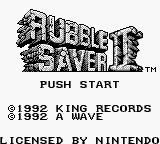
Retro Replay Review
Gameplay
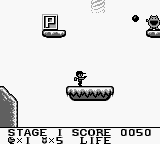
The first few minutes of Max are immediately familiar if you grew up with Game Boy action games: you run, jump, shoot, and try not to let the screen’s supply of enemies and bullets box you in. Its seven levels each represent one of the planets Max must free, so the game has a direct, purposeful structure rather than a lot of detours. You are here to push forward, survive, and clear the next world.
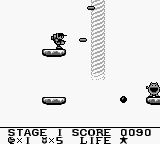
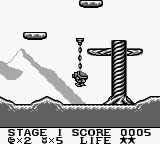
The climbing rope is what keeps that basic formula from becoming entirely routine. Fire it straight up, let it catch on the level architecture, and Max is pulled upward. That one tool changes how you look at a platform above your head or an elevated path that seems out of reach. When it clicks, you stop treating the rope as an occasional trick and start watching the vertical space for opportunities.
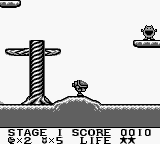
Combat is uncomplicated, but the pressure is real. Max can only take three contacts with enemies or their bullets before dying, and that makes careless forward motion expensive. The two gun upgrades are welcome because they give you a tangible reason to grab power-ups and help even the odds. Still, this is not a platformer that lets you coast on firepower; staying alive depends on clean jumps, timely shots, and using the rope with intent.
That can become frustrating when you are already having a rough run, because the game’s hazards demand consistent attention. Yet the compact seven-level format works in its favor. Max does not ask for a huge commitment, and its central movement idea is strong enough to make another attempt feel like a chance to play more sharply rather than simply repeat the same ground.
Graphics
This is a side-scrolling 2D Game Boy platformer, with Max moving across seven sci-fi planets filled with enemies and climbable overhead architecture. The side view makes the rope’s vertical path easy to understand: you can see where it is fired and where Max will be pulled.
Story
The story is stripped down to a classic arcade-platformer mission. Draco threatens the galaxy, Max stands in the way, and seven planets need freeing. It gives the journey a clear destination without slowing the action down for elaborate plot business.
That simplicity suits the game. Each cleared level feels like progress toward restoring the galaxy, but the narrative never competes with the platforming for attention. You are not likely to remember Max for its characters or twists; you will remember the practical mission and the constant need to stay one step ahead of danger.
As a sequel to The Adventures of Star Saver, it continues in the same broad heroic, galactic vein. The stakes are easy to grasp from the outset, which is exactly what a short, action-first handheld game needs.
Overall Experience
Max is a solid rather than essential Game Boy platformer. Shooting and jumping alone would make it a familiar piece of early-1990s handheld action, but the rope adds enough personality to make the moment-to-moment traversal more interesting. It is the feature that earns the game its own space instead of making it feel like another generic blaster with platforms.
The limited health gives the game bite, and it may test your patience if you want a forgiving run-and-gun. Go in ready to learn the hazards, protect your three hits, and make the most of gun upgrades when they appear. The game rewards alert, deliberate play more than reckless speed.
For a gamer in the mood for a concise sci-fi challenge, it is worth a look. The seven-planet campaign is brief, the goal is clear, and the rope-based climbing has real value beyond novelty. Max will not convert someone who dislikes strict, old-school platforming, but it is a worthwhile six-out-of-ten curiosity for anyone who appreciates a simple handheld game with one smart movement idea at its center.


Reviews
There are no reviews yet.