 Retro Replay Retro Gaming History, Reviews & Emulation
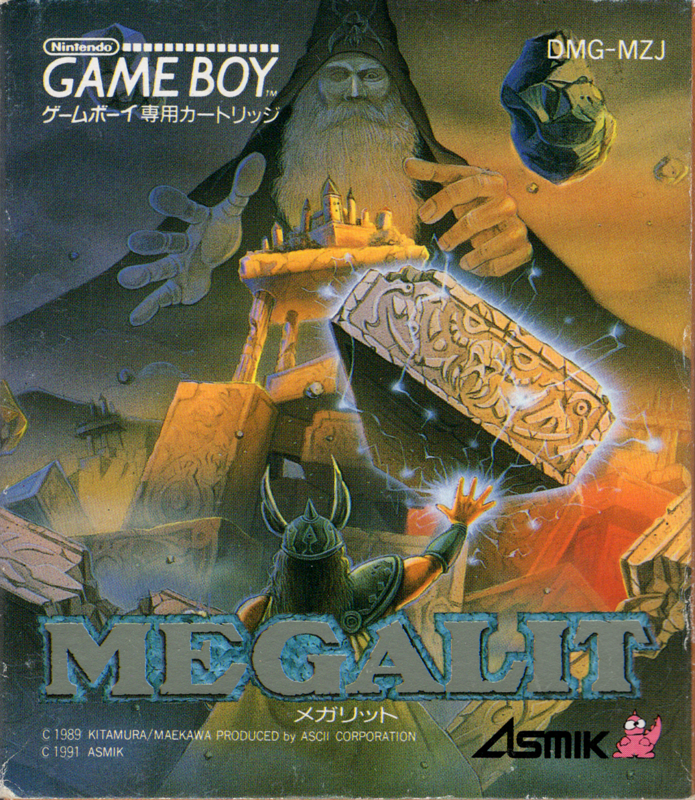
Retro Replay Review
Gameplay
Megalit earns its tension from a rule you understand immediately and fear almost as quickly: every block has to touch the ground, but a block that drops too far breaks and ends the level on the spot. That makes each compact room feel less like a platforming playground and more like a tiny demolition problem. You are not just clearing space. You are constantly protecting the route a block will take when it finally comes down.
The blob-like hero has a focused set of actions—jumping, pushing, and pulling—and that restraint works in the game’s favor. Pulling matters as much as pushing because a block placed against a wall or another shape can become impossible to recover cleanly. Early rooms teach you to be cautious, but the stronger puzzles are where you start deliberately arranging blocks as steps, supports, and safe landing points. When a solution clicks, it feels earned rather than accidental.
Frustration is built into the design, because a bad fall means immediate failure instead of a messy recovery. Easy Mode is the right starting point: its 30 puzzles and unlimited tries let you learn the game’s harsh rules without worrying about the clock. Quest Mode is for when you already trust your planning; its more complex rooms and time limit turn deliberate thought into pressure, which will either sharpen the challenge or make every mistake sting more.
Graphics
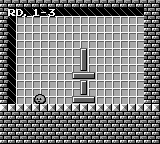
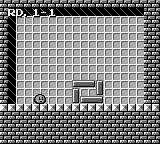
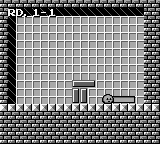
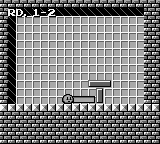
The Game Boy view keeps the action confined to single puzzle rooms, with the small blob hero and the differently shaped blocks taking center stage. That clear, compact layout suits a game where you need to judge where a block will land and whether there is enough space to move around it.
Story
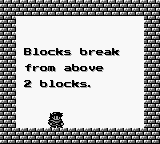
The setup is pure fantasy-puzzle motivation: a witch has trapped the hero and kidnapped women with magic crystals, and solving the Megalit rooms is the path to freedom. It is a thin premise, but it gives the succession of enclosed challenges a simple sense of purpose.
Don’t come to Megalit expecting the plot to carry you from room to room. The witch, the captives, and the crystals frame the action; the actual drama comes from seeing a dangerous stack of blocks and working out how to lower it safely.
That is enough for this kind of game. The story stays out of the way and lets the puzzles do the talking, which is exactly where Megalit is strongest.
Overall Experience
Megalit is a sharp little puzzle game for anyone who enjoys planning under unforgiving conditions. Its central objective is easy to explain, while the combination of pushing, pulling, jumping, block shapes, and breakable drops creates rooms that demand patience. The first hour has a satisfying rhythm of testing an idea, failing quickly, then returning with a better plan.
The split between Easy Mode and Quest Mode is a sensible one. Start with the unlimited retries, get comfortable with how little falling distance a block can survive, and only then take on the timer. Quest Mode’s pressure is a real commitment: if you want a relaxed brainteaser, it can feel needlessly punishing, but if you like a puzzle that asks you to think cleanly and act decisively, it gives the game extra bite.
Its appeal is narrow but genuine. Megalit will not win you over with a sprawling adventure; it wins by turning one rule—get everything safely to the ground—into 60 tightly constrained problems. Give it a chance if you enjoy old-school block puzzles where one careless move can wreck the whole plan, and where finally seeing the safe sequence feels like a small triumph.



Reviews
There are no reviews yet.