 Retro Replay Retro Gaming History, Reviews & Emulation


Retro Replay Review
Gameplay
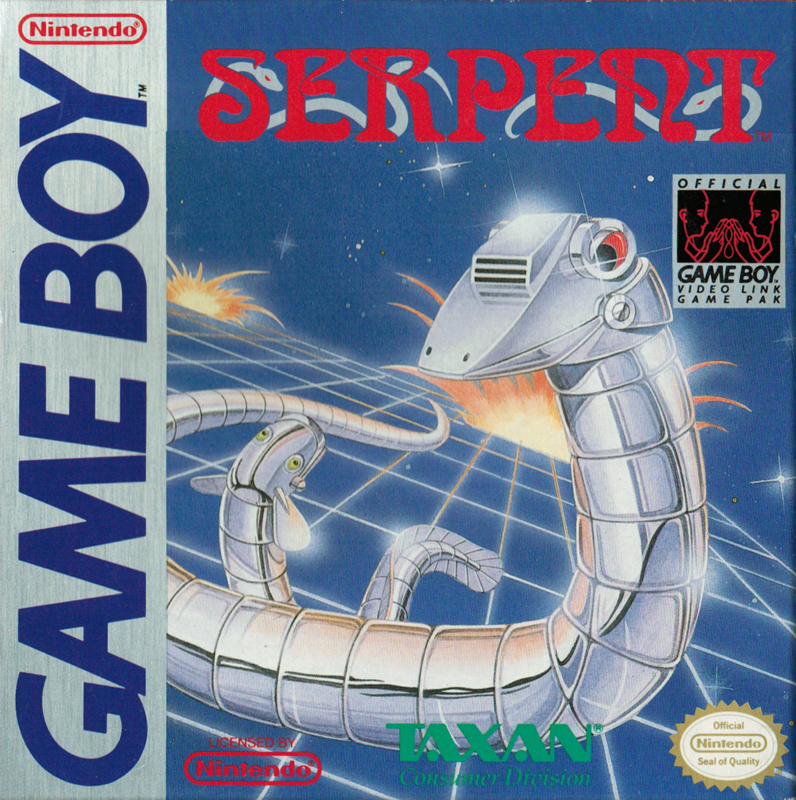
Serpent starts with a rule anybody who has played Snake will understand: keep moving, avoid disaster, and use your tail to control the board. The difference is the other vehicle. You are not just managing your own growing trail; you are watching an opponent carve up the same space, waiting for a route to disappear beneath them.
That makes the one-on-one format far more tense than a solitary Snake run. A harmless-looking turn can become a trap when the other player closes off an area with their tail. The best moments come from seeing a pocket of space shrink and realizing, perhaps a second too late, that you have been herded somewhere you cannot escape.
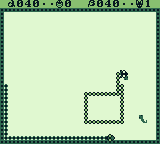
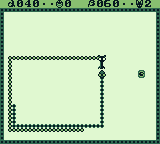
Enclosing areas adds a welcome layer beyond simple avoidance, because it spawns power-ups such as rockets that can be fired at the opponent. This gives territorial play a payoff: making a loop is not only defensive, but a way to gain an offensive edge. Serpent’s ideas are small in scale, yet the combination of trapping, space control, and power-up pressure makes for a sturdier multiplayer contest than its premise first suggests.
Graphics
On Game Boy, Serpent is built around top-down, fixed-screen play, with both competitors represented as snake-shaped vehicles. That overhead view suits the game neatly: you can see the trails that matter, the enclosed spaces taking shape, and the dangerous edges of the arena without needing to interpret a busy scene.

Story
There is only a light frame around the action: in the distant future, Serpent is the world’s favorite one-on-one sport. It is enough context to make the vehicle duels feel like organized competition rather than an unexplained puzzle match.
The important story here is the one you create across a round. One vehicle claims room, the other searches for a gap, and a tail becomes a wall at exactly the wrong moment. Serpent does not need a larger narrative to make that reversal satisfying.
Anyone hoping for characters or a developed science-fiction plot will not find much to hold onto. The futuristic sport premise is functional, then wisely gets out of the way so the rivalry can carry the experience.
Overall Experience
Serpent’s strongest decision is refusing to leave Snake as a lone-player endurance exercise. Giving each side a moving, dangerous opponent turns every stretch of tail into a tactical commitment. The first few matches should be easy to understand; the longer you play, the more you start to notice how much the available space matters.
Its limitation is also built into its strength. This is a focused two-player game, and its tension depends on having someone across from you who wants to trade traps and counterattacks. Without that rival, the central idea loses much of its spark.
For local competitive play, though, Serpent has a clean arcade hook and a genuinely smart power-up wrinkle. It will not replace a deep strategy game, but it can absolutely earn a place in a short session with another player—especially if you enjoy winning through one cruel, neatly timed enclosure.


Reviews
There are no reviews yet.