 Retro Replay Retro Gaming History, Reviews & Emulation
Retro Replay Review
Gameplay
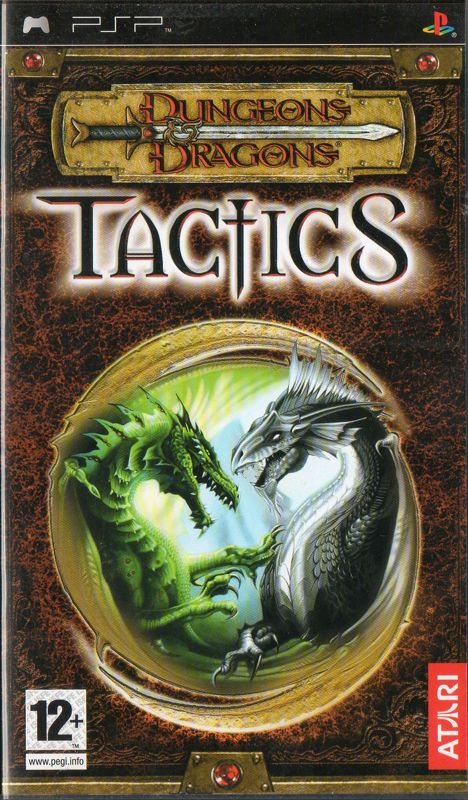
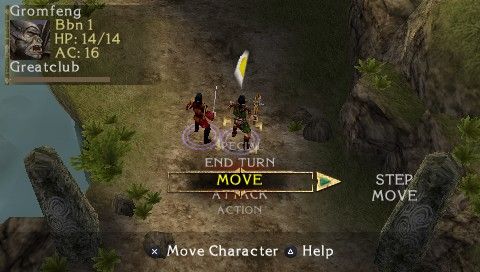
Dungeons & Dragons Tactics is at its most compelling when you stop treating it like a casual fantasy quest and start treating each fight like a tabletop encounter squeezed into a PSP. You choose a hero, fill out a party, move across an overworld map, and then shift into turn-based combat on a grid of five-foot squares. Initiative dictates the order, and each turn asks you to make choices through an Action menu rather than simply rushing everyone toward the nearest target.
Character creation is the game’s strongest invitation. You can choose from the eleven core D&D classes, with psion and psychic warrior added to the mix, make the entire party yourself, use pre-generated characters, or let quick-start handle the lineup. That range is valuable because it lets you decide how much rules homework you want to do before the adventure begins. A veteran can build toward a preferred party composition; a newcomer can get a group on the board without pretending to understand every option immediately.
Once combat clicks, the 3.5 Edition framework gives the game real tactical weight. Positioning on the grid, turn order, and the availability of spells or psionics for the appropriate characters mean that party makeup matters. The frustration comes from that same density. If you do not know the rules, menus and terms can slow you down, and this is not a game that turns a complicated system into a breezy one. Thankfully, the included glossary is more than a formality: use it rather than guessing.
The campaign also makes consequences unusually direct. Your initial party tops out at five companions, later expanding through recruits, but if the main hero dies, the campaign ends. That rule makes careful play feel worthwhile, though it can sting when you are still learning what your group can handle. Recruits found through places such as the Temple and Mercenary Hall offer a practical reason to revisit party composition instead of treating your starting crew as permanent.
Wireless multiplayer adds up to four-player Dungeon Bash and Deathmatch Battle using pre-generated characters. It is a focused extra rather than a replacement for the campaign’s party-building hook, but it gives the combat system a place to stand on its own.

Graphics
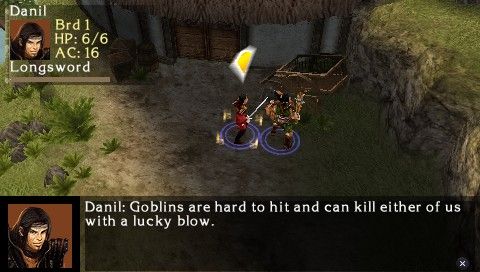
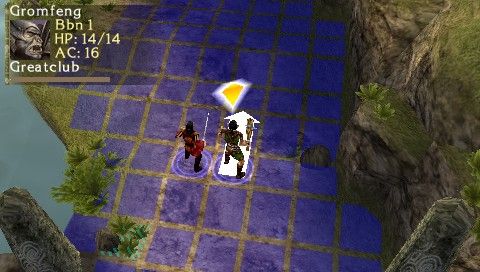
The game uses a diagonal-down view, with the campaign represented by a party icon moving across the map and combat taking place on square tactical grids. In battle, that angle suits the rules: you can follow who is taking a turn and where characters are moving from square to square.
Story
The adventure takes place in the eastern border reaches of Lindesi, a collection of kingdoms ruled from far to the west by a human High-King. It is a functional frontier backdrop for a party-based campaign, keeping the focus on your chosen hero and the companions gathered around them.
Your hero matters to the story in the most practical possible way: their death ends the campaign. That does more for the sense of personal investment than a generic fail state would, because the character you selected or built is not interchangeable with the rest of the roster.
There is a modest but welcome sense of adventuring progression in building a larger stable of companions over time. Finding potential recruits in the marketplace, from divine characters at the Temple to martial options at the Mercenary Hall, makes the party feel like something you are actively shaping as the journey unfolds. For release and background context, see this Dungeons & Dragons Tactics overview.
Overall Experience
This is a game for the PSP owner who wants the weight of D&D 3.5 rules more than the convenience of a streamlined RPG. Its best moments come from making a party decision, seeing the initiative order unfold, and realizing a spellcaster, martial character, or specialist was more important to the plan than you first thought.
The rougher side is equally clear: the rules load is high, the main-hero death condition is unforgiving, and the game asks you to meet it on its terms. Quick-start softens the opening, but it does not erase the learning curve. If you are impatient with glossaries and tactical menus, that first hour may feel more like study than adventure.
For D&D fans willing to read, experiment, and accept that a bad decision can have campaign-ending consequences, there is a satisfying portable tactics game here. Everyone else may find the commitment outweighs the payoff. Dungeons & Dragons Tactics earns respect for taking its rules seriously, even when that seriousness keeps it from being an easy recommendation.


Reviews
There are no reviews yet.