 Retro Replay Retro Replay gaming reviews, news, emulation, geek stuff and more!
Retro Replay Review
Gameplay
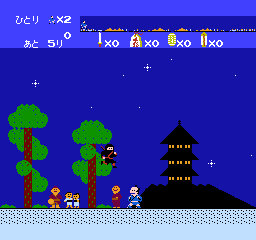
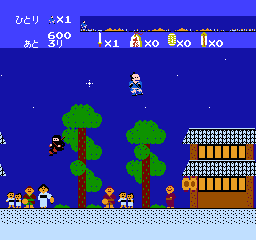
The first few minutes make the central gimmick clear: Kantarō throws bombs, enemies crowd the route, and you need to keep moving without letting a single hit ruin a life. It is a direct kind of 2D action that asks you to judge spacing rather than build elaborate combos. When an enemy projectile is coming your way, jumping onto a platform is not flourish; it is survival.
Bombs do more than clear a path. They can expose hidden items, which gives the stages a welcome reason to experiment with your shots. An invincibility item can change the rhythm of a dangerous stretch, and searching for these pickups adds a small exploratory edge to what could otherwise be a very linear march. The satisfying part is learning when to spend a bomb on immediate danger and when to test the scenery for help.
That said, this is unforgiving by design. Three lives do not leave much room for sloppy landings, missed jumps, or an enemy you fail to notice in time. Since contact and projectiles both cost a life in one hit, frustration can arrive quickly if you expect a relaxed platformer. You will get more out of it if you treat each of its 21 stages as a short obstacle course to learn, not a place to charge through on your first attempt.
Graphics
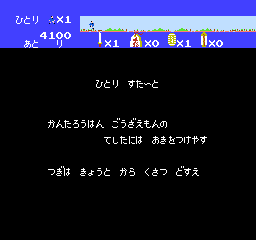
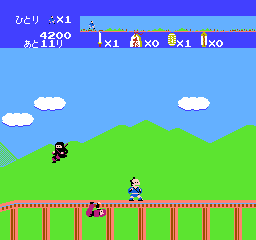
The game uses a side-scrolling 2D view, with Kantarō moving across platform-filled stretches of the Tōkaidō while enemies and their projectiles approach from around the screen. That straightforward viewpoint suits the action: you can keep track of where to jump and where a thrown bomb is headed without wrestling the camera.
Story
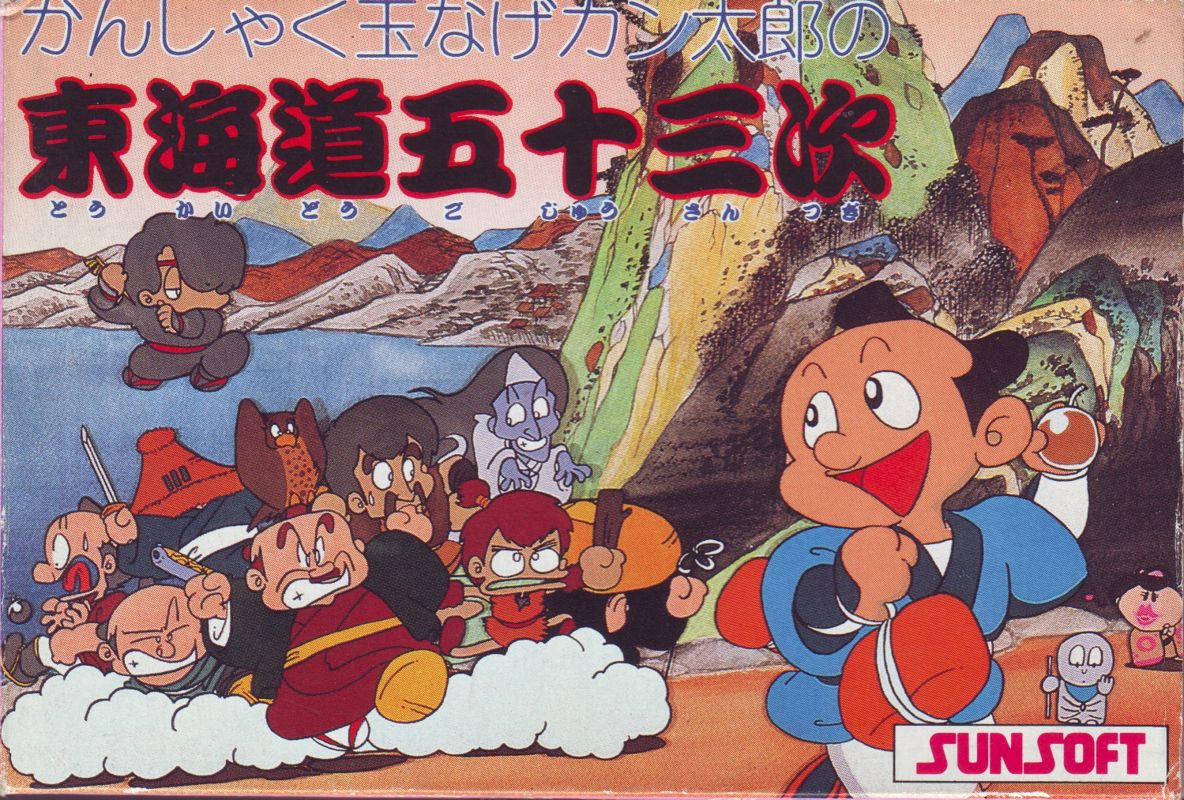
There is a pleasingly human goal at the center of the journey. Kantarō is not setting out to save a kingdom; he is a fireworks maker trying to walk home from Kyoto to Edo, where Momoko is waiting. The long road gives the game a natural excuse for its sequence of stages and makes the trip feel more specific than a generic left-to-right adventure.
The merchant pursuing Kantarō adds pressure with a clear motive: he wants the fireworks maker kidnapped so he can learn his techniques. It is an appropriately mischievous threat for a game built around throwing bombs. The premise ties Kantarō’s trade to both the action and the trouble chasing him, which is more charming than an unrelated villain appearing just to supply enemies.
Do not come for a densely developed travel tale. The story works because it gives the action a playful destination and a personal reason to keep walking. By framing the route as the Tōkaidō’s 53 stations while condensing the adventure into 21 stages, it turns a famously long trip into a brisk arcade-sized homeward trek.
Overall Experience
Kanshakudama Nage Kantarō no Tōkaidō Gojūsan Tsugi has the kind of clean, severe arcade logic that can be either compelling or exhausting. Throw bombs, hunt for useful hidden items, jump out of danger, and try not to lose one of your precious lives. Once that loop clicks, every new stretch of road becomes an invitation to play a little smarter than before.
Its strongest quality is how neatly the theme and action meet. A fireworks artisan throwing explosives while making a long journey home is an unusual premise, but it is never wasted: bombs are your primary tool, the trip supplies the stage structure, and the kidnappers give the obstacles a reason to exist.
Give it a chance if you like concise, demanding platform action and do not mind replaying stages to improve your route. Skip it if one-hit damage and a three-life limit sound more irritating than motivating. For the right mood, its stubborn road trip has a distinct, scrappy charm.


Reviews
There are no reviews yet.