 Retro Replay Retro Gaming History, Reviews & Emulation
Retro Replay Review
Gameplay
The first thing you notice is how quickly Ryūnosuke is thrown into trouble. He begins as a student with little courtroom confidence, and that makes the usual Ace Attorney act of pressing witnesses and presenting evidence feel especially satisfying. You are not simply watching an established hotshot work the room. You are helping someone earn the right to stand there.
The core loop remains wonderfully tense: listen closely, test each statement, and find the one detail that does not fit. Multi-witness cross-examinations freshen that formula up by putting several accounts side by side, encouraging you to compare reactions and testimony instead of treating every witness as an isolated puzzle. It is a smart change because it makes a contradiction feel like something emerging from the room rather than a single obvious error.
Juries add another layer of pressure. Since they can halt proceedings and issue a verdict, trials do not always move in the clean, orderly direction you expect. Closing arguments give you a way to fight back by turning the jurors’ own positions against each other. The Dance of Deduction sequences with Herlock Sholmes also break up the courtroom routine nicely, even if Sholmes’s presence can make an investigation feel cheerfully chaotic before Ryūnosuke brings the reasoning back down to earth.
Graphics
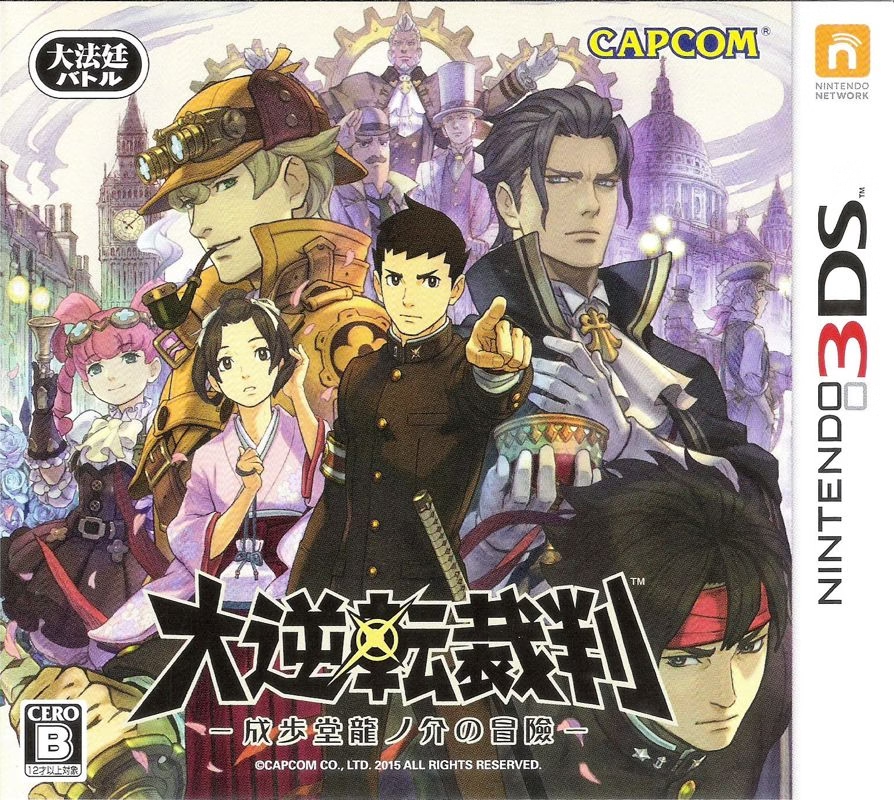
The game uses anime and manga styling for its historical detective adventure.
Story
Ryūnosuke is an effective lead because the story lets him be overwhelmed without making him passive. His path from defending himself to handling cases in an unfamiliar British legal system gives the five-case structure a real throughline. The stakes are personal from the start, but the game keeps widening its world through fellow students, clients, legal mentors, and a growing circle of strange allies.
The shift between Meiji-era Japan and Britain is more than a backdrop for a historical gimmick. It puts Ryūnosuke in a legal culture he has to learn on the fly, which naturally feeds the fish-out-of-water comedy and the tension in court. Susato Mikotoba provides crucial support, while Kazuma Asōgi gives Ryūnosuke a meaningful connection to his initial journey abroad.
The individual cases have the kind of mystery hooks that are easy to sink into: a death aboard a steamship, a murder in a moving horse-drawn cab, and accusations aimed at people who need a capable defense. Herlock Sholmes is the wild card. His deductions give the story energy and humor, while Ryūnosuke’s corrections keep the mysteries from floating away into pure nonsense.
Overall Experience
This is a confident evolution of the Ace Attorney format rather than a total reinvention. If you come for courtroom contradictions, oddball witnesses, and the slow pleasure of turning a bad case around, it delivers what you want. The jury and multi-witness ideas make the familiar routine feel more active, especially once you understand how closing arguments can rescue a trial that seems ready to end badly.
Patience helps. The five cases are built for players who enjoy following a mystery through its many turns, not for someone who wants quick standalone puzzles with no buildup. You will spend plenty of time listening, reconsidering assumptions, and letting a case unfold before the key contradiction appears. That deliberate pace is part of the reward when a seemingly hopeless defense finally starts to make sense.
Dai Gyakuten Saiban is worth your time if you like Ace Attorney’s theatrical legal drama but want a protagonist who is still finding his footing and a setting that changes the pressure around every trial. Its best moments come from making you feel outmatched, then handing you just enough information to push back.



Reviews
There are no reviews yet.