 Retro Replay Retro Gaming History, Reviews & Emulation
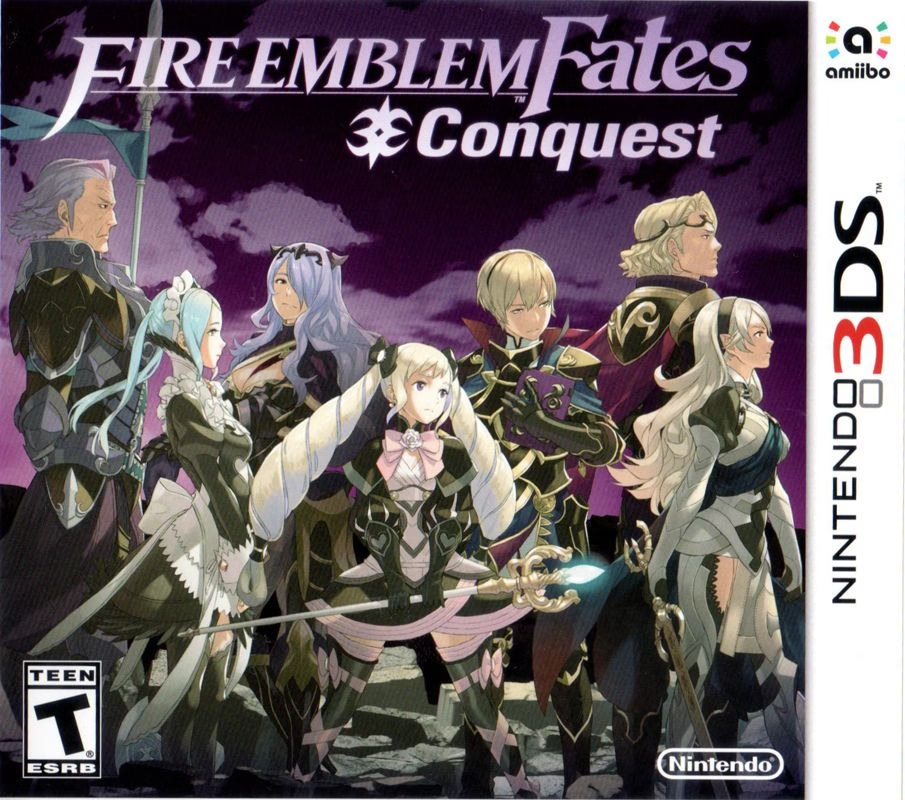
Retro Replay Review
Gameplay
Conquest is at its strongest when a battle goes wrong and you have to salvage it with the army you built, not with a few easy extra fights beforehand. Unlike a more forgiving tactical RPG, this campaign does not offer opportunities to grind for experience, money, or items between story battles. Every unit choice carries more weight because you cannot assume a struggling character will be fixed later.
That restriction makes the route satisfying for veteran Fire Emblem fans, but it can also be harsh if you came in expecting the smoother progression of Fire Emblem Awakening. You need to think about who fights alongside whom, both for survival and for the returning support relationships. Building those bonds can lead to marriage and children, giving your long-term army planning a personal payoff rather than making every deployment feel purely mathematical.
You can set the safety net that fits your tolerance for loss. Classic Mode brings permanent defeat, Casual Mode removes that consequence, and Phoenix Mode returns fallen allies on the following turn. Being able to step down permanently from Classic or Casual later is a sensible concession, although you cannot reverse that decision. The result is a campaign that can be punishing without forcing every player into the same level of commitment.
My Castle offers a useful breather between major fights. You can customize the village, build helpful shops, and improve it with StreetPass resources. StreetPass battles can even add defeated enemy units to your own forces, while the village shop offers Einherjard. It is a nice side system because it feeds back into army building instead of sitting apart from the core game.
Graphics
Conquest uses an anime-inspired fantasy look for its war between Nohr and Hoshido, with a fully customizable avatar at the center of the army. The visual focus is on making a broad cast of allied units feel distinct enough to support the relationship-building side of the campaign.
Story
The central conflict is a strong hook: you discover that Hoshido is your birth family after being raised among Nohr’s royal children, yet choose to remain with Nohr. That is a much more interesting starting point than a simple good kingdom versus evil kingdom setup, since your goal is not merely to win a war but to reform the side you have chosen from inside it.
Azura gives that dilemma a fitting mirror. She was taken from Nohr and raised in Hoshido, so both she and the protagonist have lived between families and nations. With war approaching, the story has a solid emotional foundation for questioning whether blood, upbringing, loyalty, or responsibility should matter most.
The four siblings you grew up with matter to the premise because they keep Nohr from feeling like an abstract enemy nation. Conquest asks you to invest in people tied to a corrupt cause, then lead their forces against the country that should have been your home. Even before individual support conversations enter the picture, that is a genuinely uneasy place to put the player.
Overall Experience
Conquest is the Fates route to choose when you want tactical pressure to be the main attraction. The lack of grinding makes victories feel earned, and the flexible difficulty modes let you decide whether the campaign’s punishment should be permanent, temporary, or nearly absent. Its best moments should come from planning around limited growth and seeing relationships turn a group of units into your own army.
The tradeoff is clear. If you prefer a tactical RPG that lets you level freely until any obstacle gives way, Conquest can feel restrictive and frustrating. If you like being forced to make do with what you have, that same restriction is the point. The castle and StreetPass additions provide extra ways to shape your roster, but they do not dilute the campaign’s more demanding character.
The story premise gives that challenge a useful edge. You are not simply defending the obvious righteous side, and the choice to stay with Nohr creates a conflict worth carrying through a long strategy game. Conquest is a tough, systems-rich Fire Emblem for players who want their tactical decisions and their loyalties to feel uncomfortable in productive ways.


Reviews
There are no reviews yet.