 Retro Replay Retro Gaming History, Reviews & Emulation
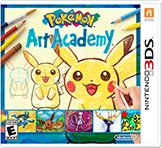
Retro Replay Review
Gameplay
Pokémon Art Academy works because it starts with a subject you probably already want to put on the page. Instead of asking you to practice with generic fruit bowls or anonymous shapes, it builds its drawing lessons around Pokémon. That simple choice makes the educational side easier to stick with, especially if you usually lose interest when an art tutorial starts feeling like homework.
Professor Andy leads 40 lessons of increasing complexity, and the progression is the heart of the game. You are not simply handed every option at once and told to figure it out. Individual lessons focus on the tools being taught, locking you into the appropriate selection as you work. That structure gives newcomers a useful lane to stay in, though it can frustrate you when you are ready to try a different material or follow your own impulse.
The more satisfying side comes through in Free Paint. Here, you can draw whichever Pokémon you want with the full set of available tools, including markers, pastels, and spray paint. Optional reference images help when you need a starting point, and earning more of them through lessons gives the curriculum a practical reward beyond simply finishing another exercise.
This is not a game for somebody looking for fast Pokémon battles or a deep competitive challenge. It is a guided art course with a familiar theme, and it asks you to slow down, follow instructions, and accept that improvement comes one drawing at a time. If that sounds relaxing rather than restrictive, its steady pace starts to feel reassuring.
Graphics
The artwork centers on Pokémon as drawing subjects, with the different materials letting your own pictures move between clean marker work, softer pastel looks, and sprayed color. The important visual payoff is personal: as the lessons build your confidence, you can make a Pokémon illustration that looks more like something you created than something you merely selected.
Story
There is very little narrative weight here, and that is the right call. Professor Andy serves as your guide through the lessons rather than the lead in a grand Pokémon adventure. The game keeps its attention on the next drawing and the next skill.
That light framing makes the instruction feel friendlier. A named teacher gives the lessons a bit of personality and continuity, which is more inviting than working through a dry sequence of art exercises. Still, you should not come in expecting character drama, exploration, or a new chapter in the Pokémon world.
The Pokémon themselves do most of the emotional work. Each lesson has a different subject, so familiar creatures provide variety even when the basic goal remains the same: learn a technique, apply it, and finish a picture. It is a modest setup, but it keeps the focus where it belongs.
Overall Experience
Pokémon Art Academy earns its place by taking its educational purpose seriously. The licensed characters are a strong invitation, but the structured lessons, gradually rising difficulty, and material-specific instruction are what give it staying power. You can get genuine practice out of it rather than a few minutes of novelty.
The forced tool selection in lessons is the trade-off. At first, it keeps the learning process clear and prevents a blank-canvas freeze. Later, it may feel like the game is holding your hand after you have already understood the point. Free Paint is essential because it gives that learned knowledge somewhere less constrained to go.
Give it a chance if you have ever wanted to draw Pokémon but did not know how to begin. It is especially good for patient beginners who like clear assignments and tangible progress. More experienced artists may outgrow the guided portions quickly, yet they can still find a pleasant portable sketch space in Free Paint. As a Pokémon-themed gateway into drawing, it is thoughtful, focused, and more useful than its cute premise first suggests.


Reviews
There are no reviews yet.