 Retro Replay Retro Gaming History, Reviews & Emulation
Retro Replay Review
Gameplay
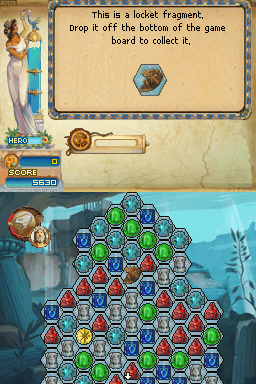
The first hour is easy to settle into because Heroes of Hellas 2 asks you to do one satisfying thing well: click, hold, drag, and release across matching hex tiles to carve out a chain. Clearing a large connected group triggers the pleasing cascade as tiles above tumble down and fresh pieces enter from the top. You are not merely hunting tidy three-tile matches; you are scanning for routes, trying to stretch a selection through the board, and watching for the chain length that earns a gold coin.
That coin is the small twist that keeps the boards from feeling entirely routine. Since it can match with any tile, it can rescue an awkward route or turn a merely decent chain into a much bigger one. Bombs, lightning rings, and hourglasses can join groups too, so a board can suddenly offer a strong escape from a tight spot. The immediate interaction remains simple, but the best moves come from pausing for a second to spot a long path rather than grabbing the first available cluster.
The sequel’s stronger idea is tying that puzzle success to Olympia’s population growth. Gold buys food, buildings, and fortifications to attract settlers, while the growing city rewards you with a palace assembled from your choices. It is a light city-building layer, not a demanding construction simulation, but it gives matches a useful destination. Instead of grinding stages for their own sake, you are feeding a visible campaign of expansion.
Stage variety helps, although the time pressure will divide people. Classic levels are the straightforward core, Locket stages lead to deity powers, and Treasure Hunter turns the pace up by challenging you to free as many chests as possible in one minute. Puzzle stages are the welcome counterweight: untimed logic challenges with a single correct solution. They let you slow down and think when the timed levels start to feel hectic. Hero, expert, and master bonuses reward quick completion, but restarts and five full skips keep one stubborn board from ending the journey.
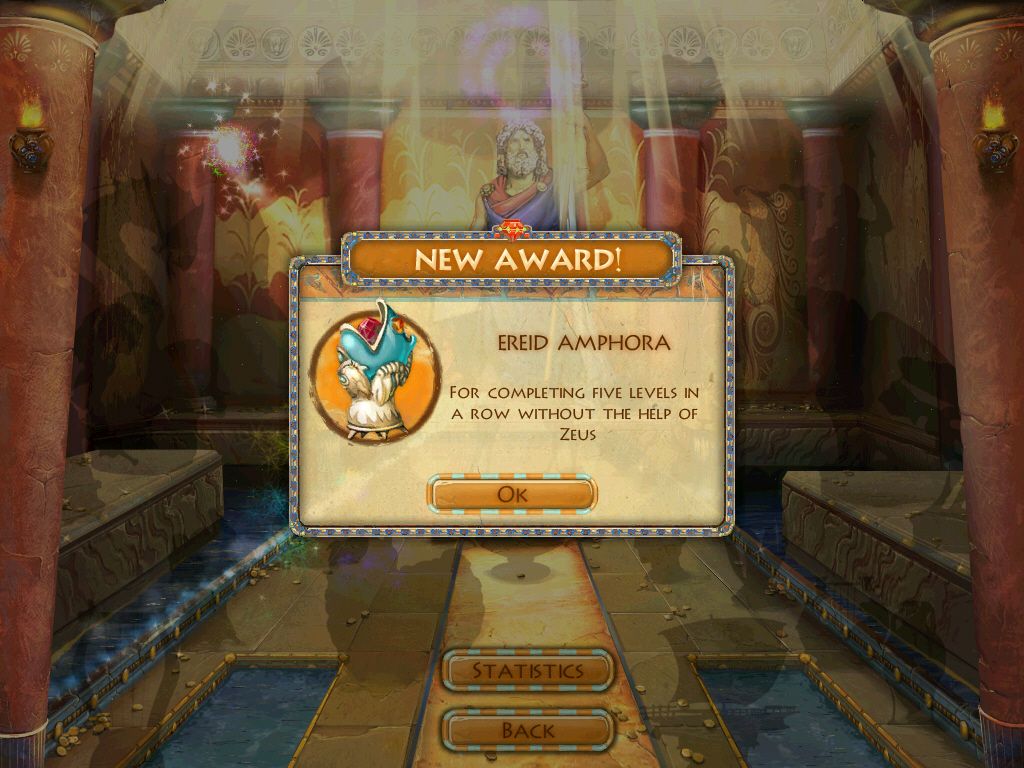
God powers add another layer without forcing you to wait for a completely full meter. You can use a partially charged power when you need help, accepting a weaker result, or hold out for a stronger intervention. That is a sensible bit of flexibility in a game where one rough board can otherwise sour the rhythm. Trophies for feats such as unusually long chains provide extra goals for anyone who enjoys squeezing mastery from a casual puzzle game.
Graphics
The boards use hex-shaped tiles, and their falling movement is central to what you watch: chains vanish, upper tiles drop into place, and new ones arrive from above. Dynamic effects accompany the action, giving coins, bombs, lightning rings, and hourglasses more punch when they enter a useful selection.
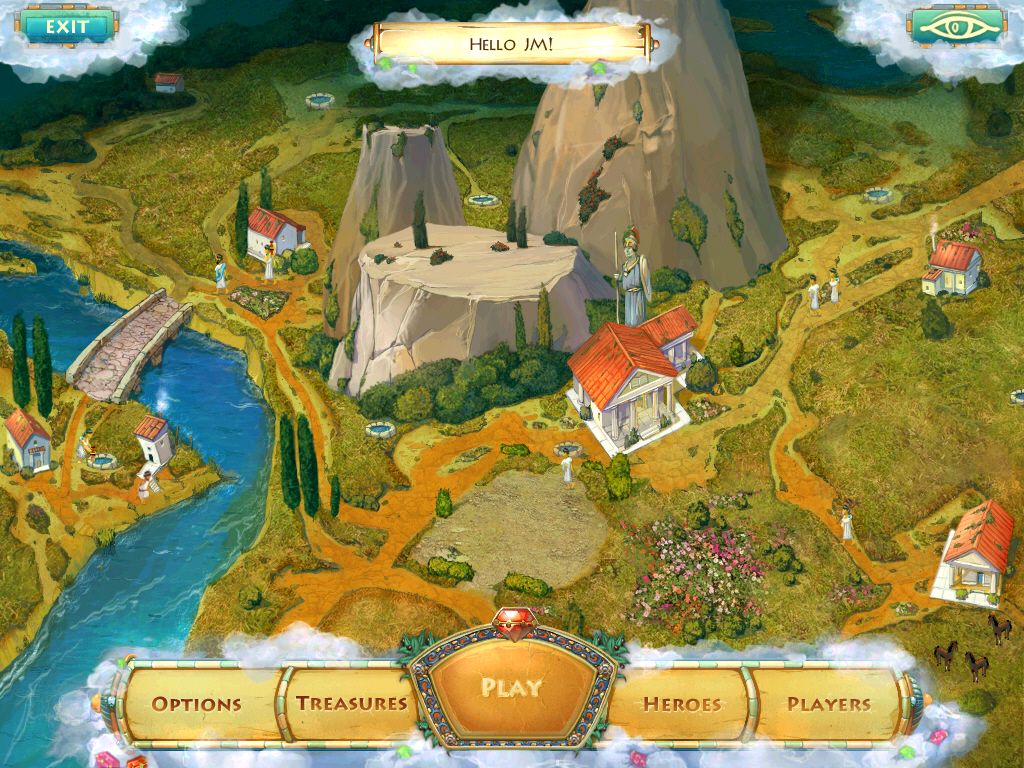
Outside the boards, Olympia grows from a small settlement toward a grander city, with palace elements chosen as you progress. That visual reward is modest but effective because it makes your accumulated gold feel tangible.
Story
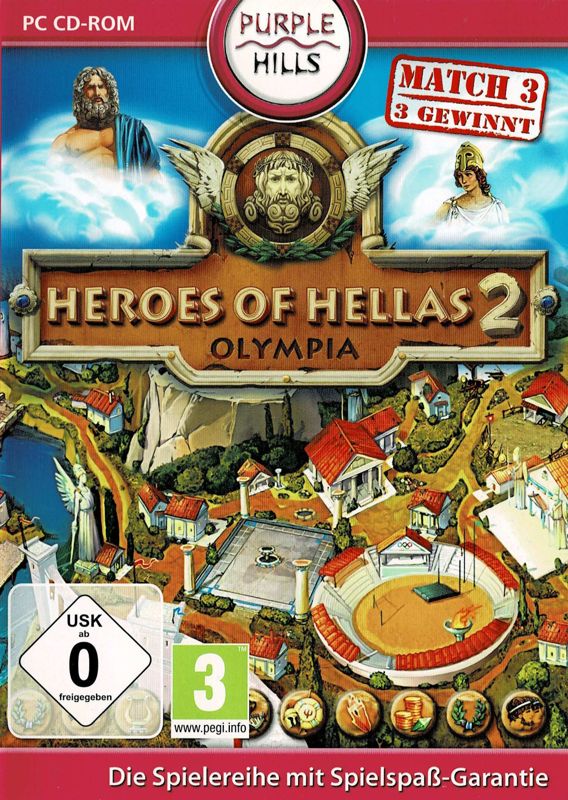
This is a clean classical-antiquity frame for the puzzles rather than a story-heavy adventure. Briarey, a multi-armed demon from Tartarus, has stolen the Rod of Discord and spread fear and corruption across Hellas. Olympia escaped the disaster, but it needs a ruler capable of turning its small settlement into a metropolis before the demon can be challenged.
The plot’s main job is to give the rebuilding campaign stakes, and it does that neatly. Buying supplies and expanding the city are not presented as random errands; they are the route toward restoring enough strength to recover the rod and bring peace back to Hellas.
Do not come expecting elaborate character drama. The gods matter chiefly through the powers you unlock by collecting locket pieces and charging their tiles, while optional hidden-object and jigsaw mini-games offer gold, wallpapers, and a little extra thematic flavor. The story works because it stays out of the way and lets the city’s gradual growth carry the sense of advancement.
Overall Experience
Heroes of Hellas 2: Olympia succeeds because it understands that a long tile-matching campaign needs more than a succession of boards. The city’s growth gives each session a forward pull, and the shifting mix of objectives prevents the central chain-making mechanic from becoming completely mechanical. When a long route produces a coin, triggers a cascade, and funds the next piece of Olympia, the loop clicks nicely.
Its limits are equally clear. The building side is a progression reward rather than a deep planning game, and several level types rely on a clock, so anyone who dislikes being hurried may prefer the untimed Puzzle stages or a lower difficulty. Still, the game offers easy, normal, and hard settings, restarts for failed tries, skips for roadblocks, and enough optional goals to let you decide how seriously to chase perfection.
Give it a chance if you want a more purposeful take on chain-based tile matching and enjoy watching puzzle earnings turn into a larger settlement. The campaign does not reinvent the genre, but it adds just enough variety, flexibility, and tangible progress to make the payoff worthwhile.


Reviews
There are no reviews yet.