 Retro Replay Retro Gaming History, Reviews & Emulation
Retro Replay Review
Gameplay
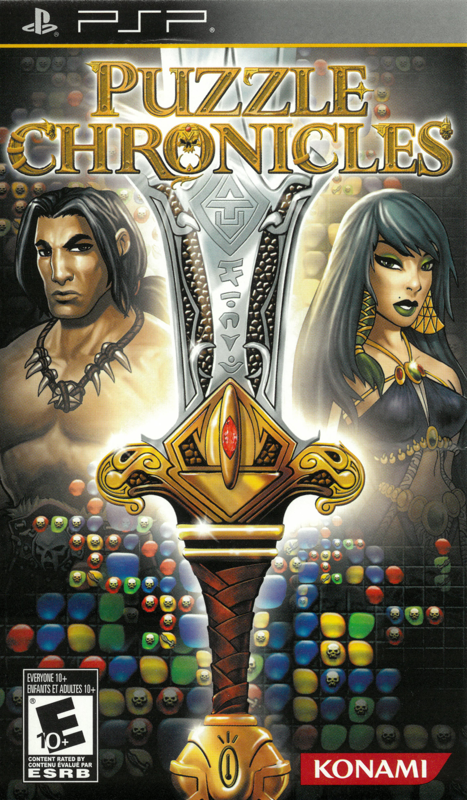
The first few battles make Puzzle Chronicles seem straightforward: line up three like-colored gems near the divider and try to squeeze the other side of the board. Then the real hook becomes clear. You are not merely chasing large clears; you are trying to create pressure in the right place, destroy rage gems, and move the dividing line before your opponent does the same to you. That territorial push-and-pull gives the game a more combative rhythm than a standard matching puzzle.
Its best moments come when several goals collide. Clearing gems earns mana, powers spells and items, and can build toward an attack from your Warbeast. A useful match is not always the flashiest one, because the color you clear may matter more than the immediate space you gain. When that starts to click, the board becomes a small tactical argument: push now, charge an ability, or deny the opponent room to recover.
The downside is that Puzzle Chronicles asks you to track a lot around a fairly simple matching foundation. The divider, rage gems, colored resources, spells, items, and companion attacks all make sense individually, but together they can make matches feel more procedural than instinctive. The game rewards patience and planning; if you want quick, breezy rounds, its extra layers may feel like clutter rather than depth.
Character progression helps sustain the campaign by making victories feed into a larger RPG loop. Five additional mini-games, including Warbeast upgrading and item crafting, also break up the central battles. They add variety, though the main board remains the reason to play. Treat the surrounding activities as seasoning, not a replacement for the puzzle combat.
Graphics
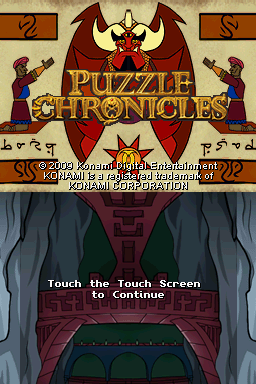
Puzzle Chronicles keeps the action focused on a side-view, fixed battle board split by its central divider. That divider is the key visual element: you can immediately see whose territory is shrinking and where a match might change the fight. The board-first layout suits a game that lives or dies on following the tug-of-war.
Story
The fantasy storyline gives the puzzle battles an RPG frame and carries you between maps and simple quests. It is there to keep progression moving rather than to compete with the board for attention, which is the right priority for this kind of game.
If you came from Puzzle Quest: Challenge of the Warlords hoping for another fantasy campaign built around matching, the lineage is easy to recognize. Puzzle Chronicles is more interested in putting its own divider-based contest at the center than in leaning solely on familiar match-three combat.
The story works best as motivation to continue building your character, improving your companion, and taking on the next encounter. Anyone looking for the puzzle battles first will be comfortable with that balance. Anyone expecting the narrative to carry the experience may find the RPG wrapper less compelling than the mechanical one.
Overall Experience
Puzzle Chronicles has a genuinely good central idea. Moving a shared boundary through targeted matches gives every battle a clear objective and a welcome sense of confrontation. It is a smarter twist than simply asking you to clear gems for damage, and it can make a hard-fought win feel earned.
Still, the game never feels as clean as its strongest idea deserves. The accumulating systems create choices, but they also slow the immediate satisfaction that makes match-three games so easy to sink into. You need to enjoy tinkering with resources and character growth, not just spotting obvious matches.
Give it a chance if you want an RPG puzzle game with more positional thinking than the usual color-clearing formula, particularly if Puzzle Quest and Puzzle Kingdoms left you wanting another variation on that theme. Skip it if you prefer your casual puzzlers fast, uncluttered, and self-contained. For the right mood, its tactical tug-of-war is worth learning; for everyone else, it is a respectable but somewhat overstuffed detour.


Reviews
There are no reviews yet.