 Retro Replay Retro Gaming History, Reviews & Emulation

Retro Replay Review
Gameplay
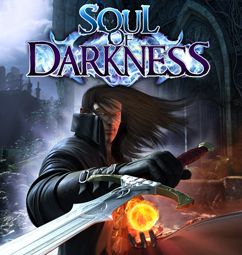
The first stretch of Soul of Darkness has a comfortable rhythm: cut through enemies with Kale’s fire sword, collect purple soul shards, and push onward through a linear side-scrolling level. That familiarity is not a criticism. On a handheld, the straightforward pace works well, and the vampire-hunting theme gives every encounter a little more flavor than a generic fantasy platformer.
What makes the game more interesting is the second weapon. The ice spear is not merely a replacement for the sword; it is a ranged option, a way to freeze water creatures and fountains into footholds, and even a temporary platform when it sticks in a wall. The fire sword activates contraptions that open doors, so switching tools becomes part of navigating a stage rather than a chore tacked onto combat. When these uses start clicking, the game feels much more deliberate than its simple left-to-right structure first suggests.
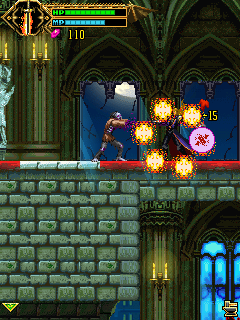
Weapon growth also gives you a reason to stay engaged with regular fights. Enemy kills yield soul shards, which feed upgrades to power, combo, critical, and magic, with level increases at set intervals. Since magic fuels a special attack—fireballs around Kale for the sword and a ranged strike for the spear—the progression has practical combat value instead of being a purely cosmetic number climb.
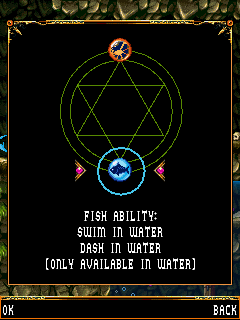
The structure does put a ceiling on the adventure’s sense of freedom. There are eleven levels, and this is a guided platformer rather than the kind of maze-like castle crawl that invites constant backtracking and open-ended route planning. Transformations add welcome variety, though: a beetle can squeeze through low gaps and walk on ceilings, while a fish handles water sections. Expect compact obstacle-solving built around the ability at hand, not a huge world designed for wandering.
Graphics
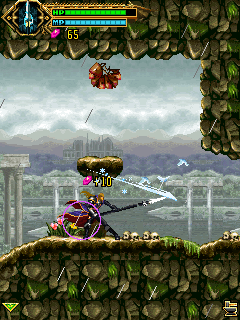
Soul of Darkness uses a 2D side-view format, keeping Kale, enemies, platforms, doors, and environmental obstacles in the same clear plane. That suits the spear-platform jumps and the ceiling-walking beetle sections, where being able to judge your route quickly matters more than visual clutter.
Story
Kale has a clean, personal reason to hunt vampires: they killed his parents when he was a child. The story gets more immediate because Lydia is not just a stranger in danger. Kale previously saved her after a vampire encounter left her without memories, they fell in love, and her nightmares draw them both to Ominos.
Ominos gives the setup its strongest hook. Lydia keeps dreaming of the small city, only for the pair to arrive and find it inhabited by death. When a vampire captures her and tells her it is time to return to her family, the rescue quest gains a useful question beyond “where did she go?” Her lost past is clearly tied to the place and to the vampires pursuing her.
That is a solid fit for an action platformer: direct motivation, gothic danger, and enough mystery to carry Kale from level to level. Don’t come expecting the story to displace the platforming as the main event. Its job is to give the chase stakes, and it does that effectively.
Overall Experience
Soul of Darkness succeeds when you treat it as a concentrated handheld action game with a few smart tricks up its sleeve. The sword-and-spear pairing is the reason to play it. Fire opens mechanisms; ice changes the terrain and extends your reach; both can be strengthened through the souls earned in battle. That combination keeps the action from becoming a flat stream of enemy encounters.
The comparison to later Castlevania games is useful, but the linear level layout matters just as much. You get the gothic vampire hunt, weapons with distinct uses, upgrades, and ability-based traversal, without committing to a large interconnected map. That makes it a good choice when you want a clear path and regular forward progress.
Its payoff is in that steady accumulation of options rather than in vast exploration. If you enjoy platformers where a new tool immediately changes how you look at doors, water, walls, and narrow passages, Kale’s trip through Ominos is worth taking. If the main thing you want from this style is a giant labyrinth to map and revisit, the focused eleven-level format will feel more modest.



Reviews
There are no reviews yet.