 Retro Replay Retro Gaming History, Reviews & Emulation
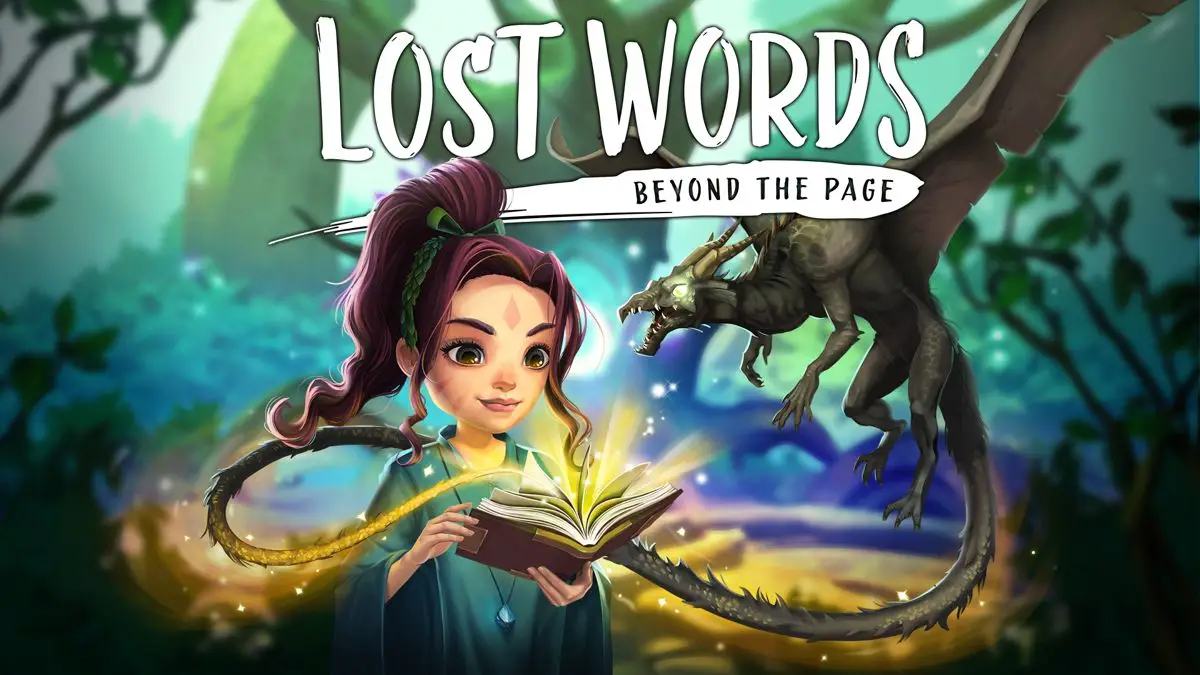
Game Overview
Gameplay
The best moments in Lost Words happen when you stop treating the text as background and start treating it as a physical place. Izzy can run across written lines, drop off the bottom of a journal page and reappear at the top, and rearrange certain words into temporary footholds. It is a clever way to make reading feel active without turning every page into a demanding platforming trial.
The journal sections have the more distinctive ideas. Words can sway or change color with the narration, and the cursor lets you drag phrases, complete sentences, rebuild images, or apply a word literally to the page. Using “cut” to clear grass is simple, but it captures the game’s charm: language has weight here, and each little interaction feels connected to the thought being written down. Reaching the door on each page gives these scenes just enough forward momentum.
Estoria shifts into a more conventional 2.5D puzzle-platforming adventure. Your spellbook gradually adds words such as “break,” “rise,” and “burn,” letting you alter obstacles and platforms as you travel through the fantasy world. The cursor also becomes a firefly companion, which helps the two halves feel connected rather than completely separate. The puzzles are generally accessible, and generous checkpoints mean that failed jumps do not become a source of punishment.
That accessibility is both the strength and limitation. If you want dense, brain-bending puzzle design or demanding action, the game may feel too gentle. Its optional fireflies offer a reason to look around, but the main route is focused on reaching the end of each level. Lost Words works best when you are willing to slow down and engage with its small, imaginative uses of text rather than chase a serious test of platforming skill.
Story
Izzy’s journal follows her attempt to process her grandmother growing old and sick, while the fantasy tale she writes echoes those feelings through a quest to restore stolen fireflies. That pairing gives the game more emotional purpose than its fairy-tale setup initially suggests. Small choices about Izzy’s feelings and parts of the fantasy story add a personal touch, though this is primarily a guided coming-of-age tale rather than a branching narrative built around major consequences.
Overall Experience
Lost Words: Beyond the Page is at its most affecting when a playful page-bound puzzle and a difficult feeling arrive together. The game understands that writing can be a way to make sense of grief, fear, and change, and it turns that idea into something you can directly manipulate. That is a more memorable hook than the individual jumps or environmental obstacles.
The two-part chapter structure also keeps the journey from becoming too one-note. The journal pages are intimate and experimental, while Estoria supplies a clearer sense of travel and adventure. Not every fantasy-platforming stretch is as fresh as the journal material, but the spellbook keeps it from feeling disconnected from Izzy’s writing.
Give this one a chance if you want a calm, story-led adventure whose puzzles serve an emotional theme. It is not a game built to challenge your reflexes or stump you for hours, and some of its simplest sections may feel slight. Still, the payoff is worth it for anyone who enjoys games that find a literal, playful way to turn words into part of the journey.
On Nintendo Switch, it makes the strongest case as a relaxed, reflective game to play in short chapters, then keep going because you want to see how Izzy’s real life and imagined world speak to each other. Its ideas are more powerful than its difficulty, and that is exactly the point.



Reviews
There are no reviews yet.