 Retro Replay Retro Gaming History, Reviews & Emulation
Retro Replay Review
Gameplay
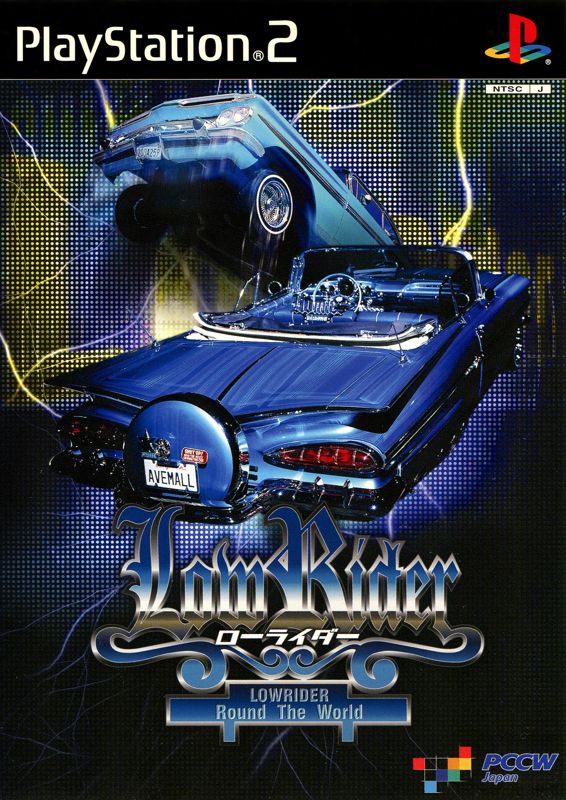
Lowrider grabs you with a premise most car games barely acknowledge: the point is not reaching the finish line first, but making a customized classic car move with swagger. You choose from 18 cars and enter contests built around hydraulic maneuvers including hopping, pancaking, and juggling. That makes the opening stretch feel immediately different from a conventional driving game; you are learning a form of automotive performance rather than simply finding the fastest route around a track.
The competitive setup gives those moves a reason to matter. Facing the computer is useful when you want to concentrate on your own execution, while another player turns the same routines into a much more direct bragging contest. Lowrider works best when you lean into that show-off energy. Pick a ride, give it some personal color, and try to make your next performance look more controlled than the opposition’s.
Its focus is also quite narrow. The game is built around a set of lowrider tricks and contests, not the broad buffet of activities that often comes with automotive games. Frustration can set in if you came expecting a racing game with lowriders as decoration, because this is fundamentally about the spectacle of the cars themselves. Go in wanting an unusual arcade-simulation hybrid, and its concentration starts to feel like a strength rather than a shortcoming.
Graphics
The cars are the stars: classic lowriders sit low to the ground and can be covered in the flashy colors and liveries associated with the scene. The custom paint feature matters because it lets your chosen car look like your own before it heads into a contest. With third-person play, the game keeps the vehicle and its movements at the center of the action.
Story
Lowrider does not need a grand plot to establish its point of view. Its subject is a US automotive subculture built around lowered classics, hydraulic movement, and elaborate paint, and the game stays close to that idea instead of dressing it up as a generic racer.
The closest thing to a narrative arc comes from your own progression through contests. A car begins as a choice from the garage, then becomes a personal statement once you put it through the paint feature and take it against the computer or another player. That is a modest framework, but it fits a game where style is part of the competition.
Music helps keep that focus grounded. The US release uses southern crunk, while the Japanese release uses Japanese hip-hop, a notable regional difference that gives the same car-show premise a different musical backdrop. Neither choice needs plot exposition; the soundtrack is there to keep the energy pointed at the cars and their performances.
Overall Experience
Lowrider is worth a look because it commits to an automotive niche that games rarely visit. There is real novelty in a PS2 car game where lowering a classic, dressing it in loud paint, and making it perform hydraulic tricks are the main event. That specificity creates a stronger personality than a bland collection of racing modes ever could.
The payoff depends on whether that niche speaks to you. If you enjoy lowrider culture, customization, or head-to-head score-chasing, the combination of 18 cars, contests, and a second-player option gives you a clear reason to revisit it. If you need variety outside those contests, the game may feel spent sooner than you hope.
Still, Lowrider earns credit for understanding its subject. It does not treat the cars as interchangeable machines; it treats them as the object of the game. For the right gamer, that directness is enough to make this an enjoyable, oddball detour from the standard PS2 driving lineup.


Reviews
There are no reviews yet.