 Retro Replay Retro Gaming History, Reviews & Emulation
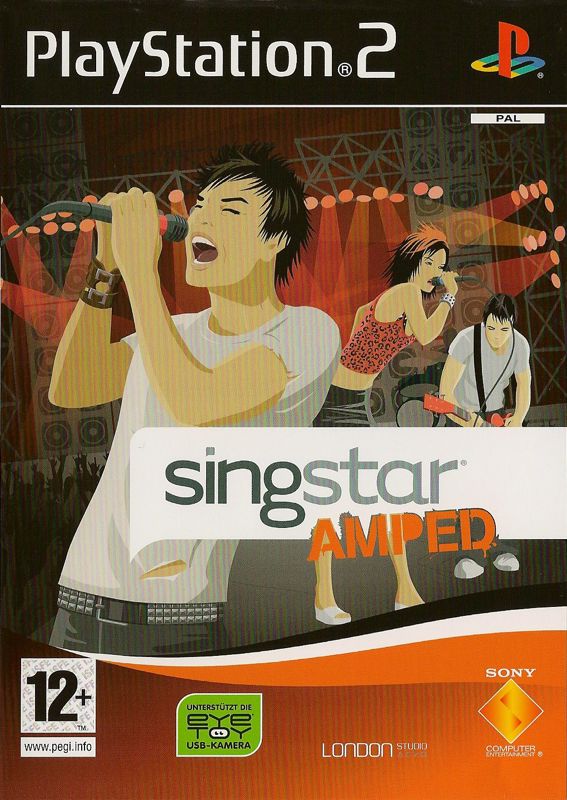
Retro Replay Review
Gameplay
The first song tells you exactly what kind of night SingStar: Amped wants to create. You are not trying to reproduce every lyric perfectly or mimic the original singer’s voice; you are trying to land notes at the right moment. That makes the game wonderfully approachable. A rough-but-enthusiastic vocalist can still contribute, and a confident singer has a clear reason to go back for a better score.
The lack of word recognition is more important than it sounds. You can forget a line, substitute nonsense, or sing in a different octave and remain in the contest so long as your pitch and timing hold up. That flexibility keeps a group moving instead of turning every mistake into an embarrassing failure. It also means the scoring can feel a little detached from a truly convincing performance: someone who knows the song inside out may lose to someone concentrating on note placement alone.
Rock is a good fit for this format because the set list leaves room for very different kinds of singers. “Blitzkrieg Bop” and “Breaking the Law” invite uncomplicated, loud participation, while “Creep,” “Come As You Are,” and “More Than a Feeling” ask for a steadier melodic ear. The hard part is not learning a complicated rule set; it is resisting the urge to treat every familiar chorus as a chance to shout. That is usually when your score starts slipping.
Regional differences are the biggest practical catch. Both editions share a few strong staples, including “Blink-182’s I Miss You,” “Cheap Trick’s I Want You To Want Me,” “David Bowie’s Changes,” and “Sublime’s Santeria,” but the US release leans into acts such as Alice in Chains, Nirvana, Pearl Jam, Radiohead, and Motörhead. The German release has its own slate with Beatsteaks, In Extremo, Mando Diao, Scorpions, and others. Check the actual disc before buying; the right version can turn this into a regular party favorite, while the wrong one can leave you with songs your group barely touches.
Graphics
SingStar: Amped is built around following your singing performance rather than lingering on elaborate visuals. The useful thing on screen is the pitch-and-timing feedback that lets you see whether your voice is actually tracking the song, especially once the friendly chaos of a group session starts making it hard to judge by ear.
Story
There is no scripted story pulling you from song to song. The game’s “story” is whatever happens around the microphones: the friend who confidently takes on Bowie, the person who discovers they cannot quite handle the high points in Boston, or the score that becomes an argument after a close round.
That blank slate suits karaoke. You do not have to sit through setup, characters, or a contrived excuse for the next track; you simply choose another song and carry on. For a party game, that directness is a strength because it keeps the focus on who is willing to sing next.
It also means there is little solo momentum beyond improving scores and working through songs you like. If you want a campaign or a reason to continue that goes beyond the music itself, Amped will feel thin. If a great chorus is enough reason, it has all the narrative fuel it needs.
Overall Experience
SingStar: Amped succeeds when you have people in the room who recognize the songs and are willing to be a little silly. The scoring is forgiving in the right places, demanding in the right places, and easy to understand without an explanation. You can hand someone a microphone, start “Born to Be Wild” or “Take Me Out,” and have a game going immediately.
The playlist is both the game’s personality and its limitation. There is real range within its rock focus, from classic staples like “Owner of a Lonely Heart” and “Gimme All Your Lovin’” to newer picks from Fall Out Boy, The Killers, and Yeah Yeah Yeahs. Still, this is not a broad all-purpose karaoke collection. It is for groups that want guitars, big choruses, and songs that are fun to belt even when the scoring exposes every missed note.
Give it a chance if you want a straightforward PlayStation 2 karaoke game with a strong rock bent and a scoring system that welcomes non-singers without making skill meaningless. The payoff is not depth in the usual video-game sense. It is the moment a room locks into a chorus, everyone takes a turn, and somebody unexpectedly posts the best score of the night.

Reviews
There are no reviews yet.