 Retro Replay Retro Gaming History, Reviews & Emulation
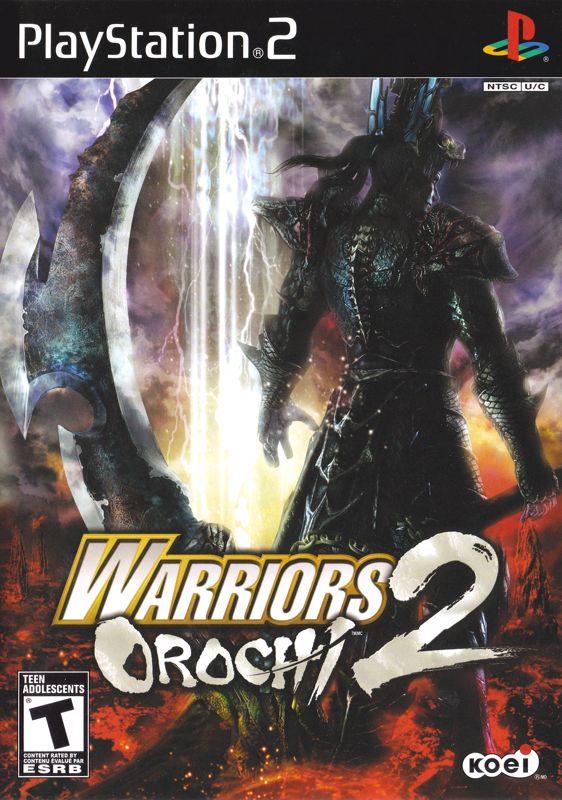
Retro Replay Review
Gameplay
The first hour delivers exactly what a Warriors crossover should: you pick fighters from an enormous pool and head into battles built around defeating enemy armies. There is immediate comfort in seeing Dynasty Warriors and Samurai Warriors characters sharing the same conflict, and the game does not make you wait to start experimenting with its central party system.
That system is the reason to play Warriors Orochi 2 rather than treating it as just another series entry. You take three warriors into battle and rotate between them, so a team can feel like a deliberate little all-star lineup instead of one hero carrying the whole campaign. With more than 90 playable characters to unlock and choose from, there is real room to change up who you use as you progress.
Weapon upgrades and unlockable characters give the fighting a useful long-term carrot, while multiple stages keep the campaign moving through its broad conflict. Still, the moment-to-moment goal remains battling vast armies, and repetition can set in if you need every stage to introduce a dramatically different challenge. This is a game for you if returning to a crowd-clearing battle loop feels satisfying rather than exhausting.
Graphics
Warriors Orochi 2’s main visual draw is sheer crossover density: Dynasty Warriors and Samurai Warriors fighters stand together on the same battlefields while armies fill out the conflict around them. The large cast gives the game plenty of recognizable faces, even if the focus stays firmly on getting bodies into battle rather than lingering on individual scenes.
Story
The sequel begins after Orochi’s defeat, when the brief peace starts to collapse. Former Orochi officers form their own armies, and a mysterious group works to bring the Serpent King back from the netherworld. It is a clean excuse to get Wu, Shu, Wei, and the Samurai forces back into the field.
That setup is more useful as crossover fuel than as a finely drawn drama. The fun comes from the collision of these two warrior casts and the chance to see their conflict continue, not from a premise trying to reinvent either series’ style of historical fantasy.
Dream Mode is the stronger draw for anyone who wants more narrative material beyond the main continuation. It expands Orochi’s story, and the North American version adds ten Dream Mode stages plus Benkei and San Zang, giving completion-minded fans a meaningful chunk of extra crossover content.
Overall Experience
Warriors Orochi 2 is easy to recommend to a specific kind of fan: someone who wants an oversized Dynasty Warriors and Samurai Warriors reunion with a flexible three-character team. The scope of the roster is its lasting strength, because it makes team-building and unlocking feel more personal than simply replaying the same fighter.
Its weakness is just as familiar. More characters, weapons, and stages can extend the ride, but they do not fundamentally change the hack-and-slash routine. If you are already tired of battling through large groups of enemies, this sequel is unlikely to win you back.
For everyone else, it lands as a solid but uneven pile of fan service. The team rotation and Dream Mode help it feel more substantial than a bare sequel, yet the payoff depends on how much you enjoy the Warriors formula itself. Go in for the crossover roster and the steady pleasure of building a favorite trio, and it can be a satisfying long campaign.


Reviews
There are no reviews yet.