 Retro Replay Retro Replay gaming reviews, news, emulation, geek stuff and more!
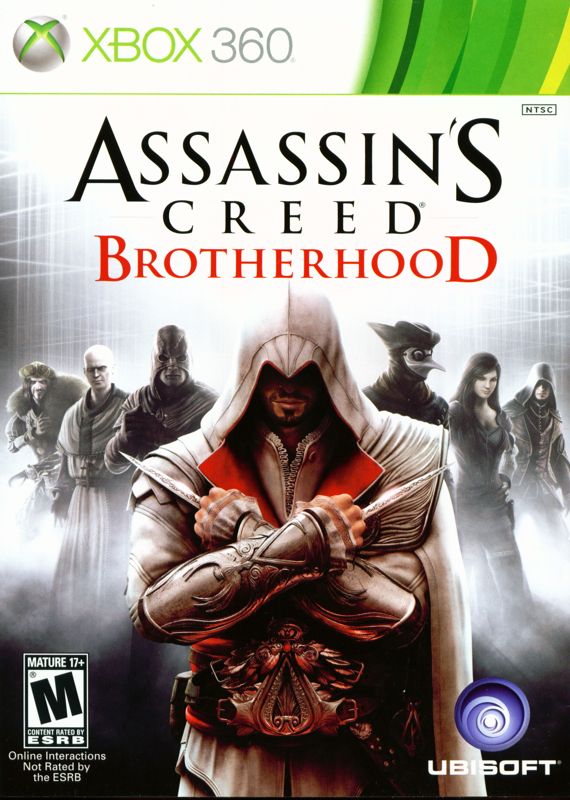

Retro Replay Review
Gameplay
Brotherhood’s best idea is that Rome is not merely a backdrop for Ezio’s missions; it is a city you steadily reclaim. Early on, the Borgia hold dominates the map, and the first hours have a clear, motivating rhythm: push into hostile territory, deal with a tower, then watch another piece of Rome become useful again. That loop gives even small bits of exploration a purpose beyond simply moving to the next story marker.
Burning all thirteen Borgia towers is the backbone of that progress. Each liberated area lets you spend money restoring shops, shortcut tunnels, and Roman landmarks, while banks collect the regular income those investments produce. It is a pleasantly tangible reward structure. You are not only earning money; you are turning that money into a Rome that is easier to move through and less controlled by the people you are fighting.
The mission-driven action still asks you to lean on assassin skills, stealth, and occasional puzzle-solving, but Brotherhood’s strongest pull comes from the larger campaign of liberation. If you enjoyed Assassin’s Creed II but wanted the world outside its main missions to feel more connected to your progress, this is an immediate improvement. If you only want a lean, direct action game, the money-and-restoration loop may feel like extra errands, though it does build toward a satisfying sense of ownership.
Multiplayer is a notably different kind of tension. As an Abstergo recruit, you track an assassination target while trying not to expose yourself as the hunter—and someone else is pursuing you at the same time. The need to blend in rather than charge straight at an opponent gives the mode its personality. Earning points to level up and improve abilities gives those careful, suspicious encounters a progression hook instead of making them feel like disconnected matches.

Graphics
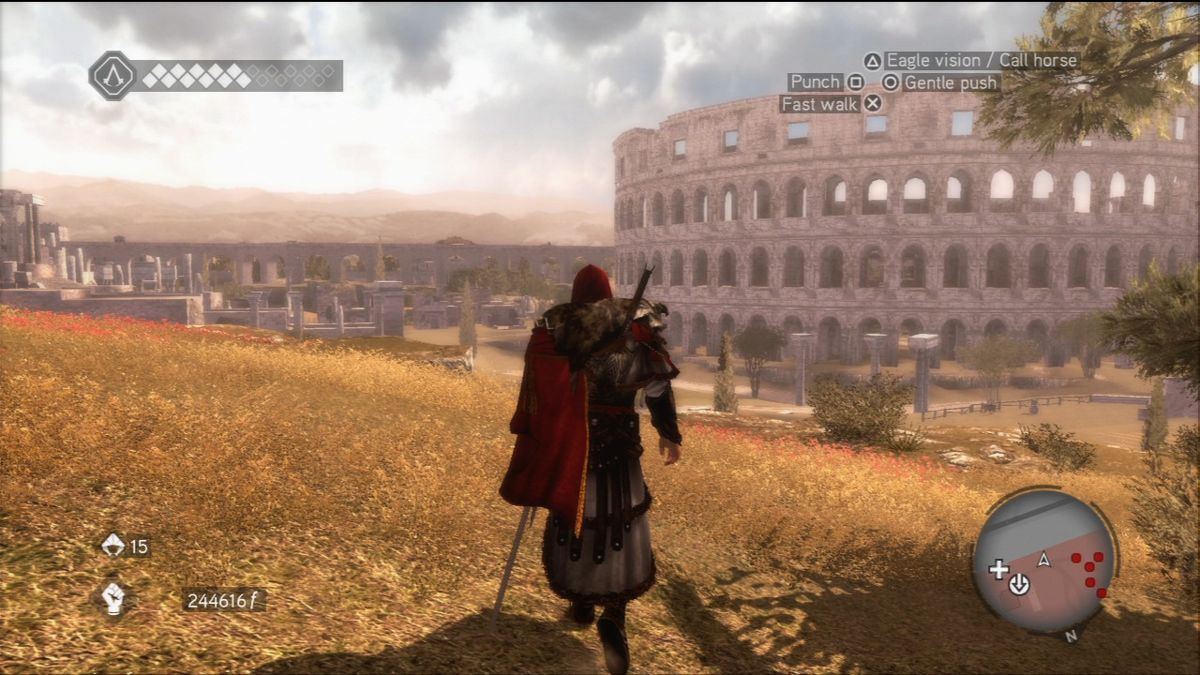
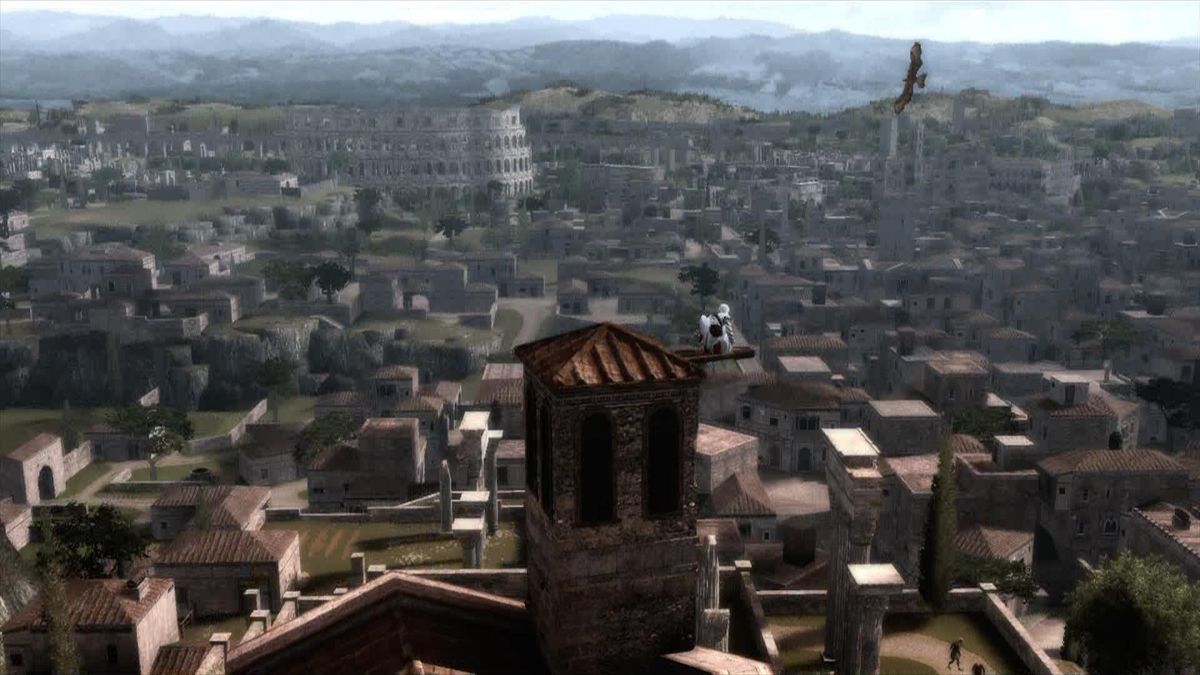
The behind-view camera keeps Ezio and the streets of Rome in focus, while Borgia towers provide obvious landmarks as you work across the city. Modern-day Monteriggioni contrasts with Ezio’s historical Rome, and the preserved site makes the jump between Desmond’s hiding place and the Animus sessions easy to place.

Story
Brotherhood picks up immediately after Assassin’s Creed II, so it works best when you already care about Ezio and the conflict surrounding the Piece of Eden. After an ambush at Monteriggioni costs him that artifact, Ezio returns to a Rome seized by the Borgia. The objective is simple enough to drive the whole game: free the city, confront the Templars’ control, and recover what was taken.
That direct continuation is a strength. Ezio’s personal setback and Rome’s oppression point in the same direction, so the story missions and city-liberation work rarely feel like they belong to separate games. Reclaiming districts has narrative weight because every restored area is another dent in Borgia authority.
Desmond’s modern-day thread remains part of the package rather than a detached framing device. He and the other Assassins are hiding from the Templars in modern Monteriggioni, using the Animus to dig further into Ezio’s memories and the search for the Pieces of Eden. Returning fans get a meaningful continuation on both timelines; newcomers should start with Assassin’s Creed II rather than expect Brotherhood to reintroduce every major relationship and conflict.
Overall Experience
Brotherhood is the kind of sequel that understands what was worth expanding. Its central joy is not just being Ezio on another series of missions; it is watching Rome slowly change because of what you have done. The towers, restoration projects, shortcuts, and bank income give the campaign a steady forward pull even when you take a break from the main story.
The game is at its best when you alternate between focused story work and a few purposeful detours through Rome. Clear a Borgia-controlled district, put your earnings back into the city, then head into the next mission with a little more of the world opened up. That cadence makes the campaign feel larger without losing its direction.
Give Brotherhood a chance if you want a stealth-action sequel with a stronger city-building sense of progress than its predecessor, or if Ezio’s story in Assassin’s Creed II left you wanting an immediate continuation. Its multiplayer concept is also more thoughtful than a simple combat arena, built around deception, pursuit, and the anxiety of being followed. Brotherhood earns its reputation as a confident sequel because Rome becomes more rewarding the more of it you reclaim.


Reviews
There are no reviews yet.