 Retro Replay Retro Replay gaming reviews, news, emulation, geek stuff and more!
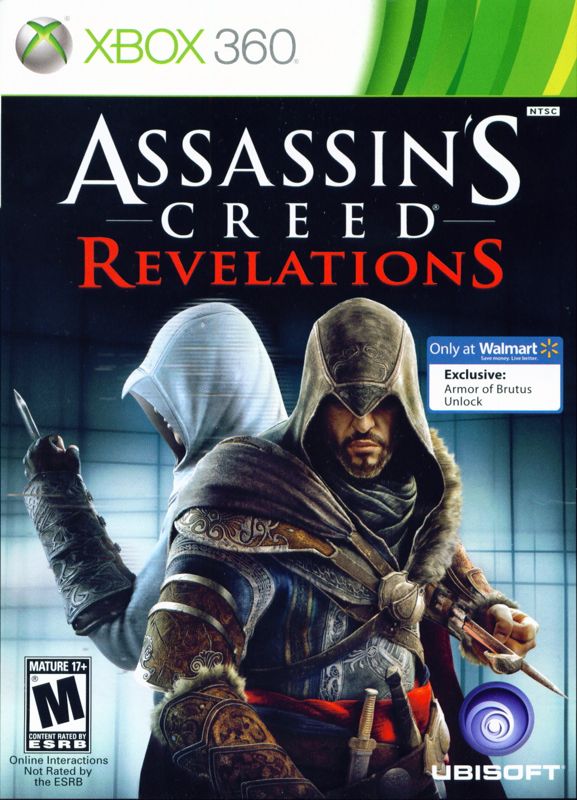

Retro Replay Review
Gameplay
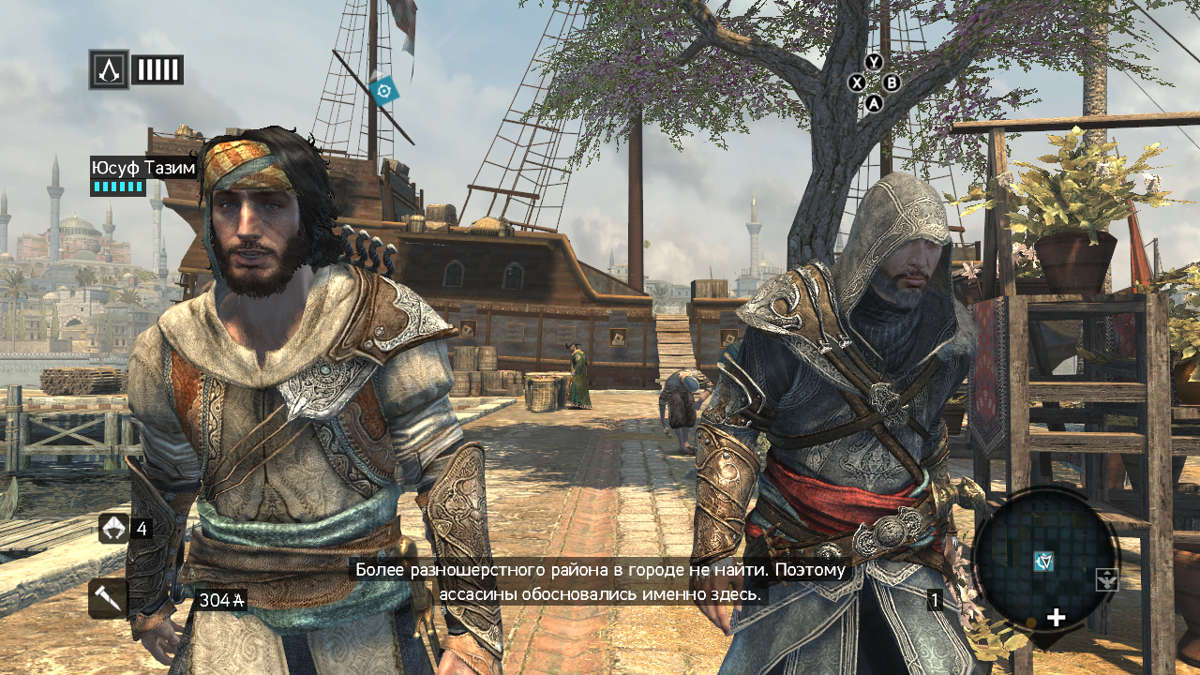
The first stretch of Revelations feels comfortably familiar if you know Assassin’s Creed: you climb, blend in, trail enemies, and look for the cleanest route through a guarded problem. Then the hookblade starts changing the rhythm. It lets Ezio use ziplines and pull foes close for combo attacks, and its faster traversal makes Constantinople easier to enjoy as a place you move through rather than merely cross on the way to the next mission.
Bomb crafting gives stealth a welcome bit of flexibility. With hundreds of possible variations, you can lean into the tools that suit your approach instead of treating every confrontation the same way. That breadth is useful because the game still centers its best moments on planning: spotting a route, staying unnoticed, and deciding when a direct attack is worth the risk.
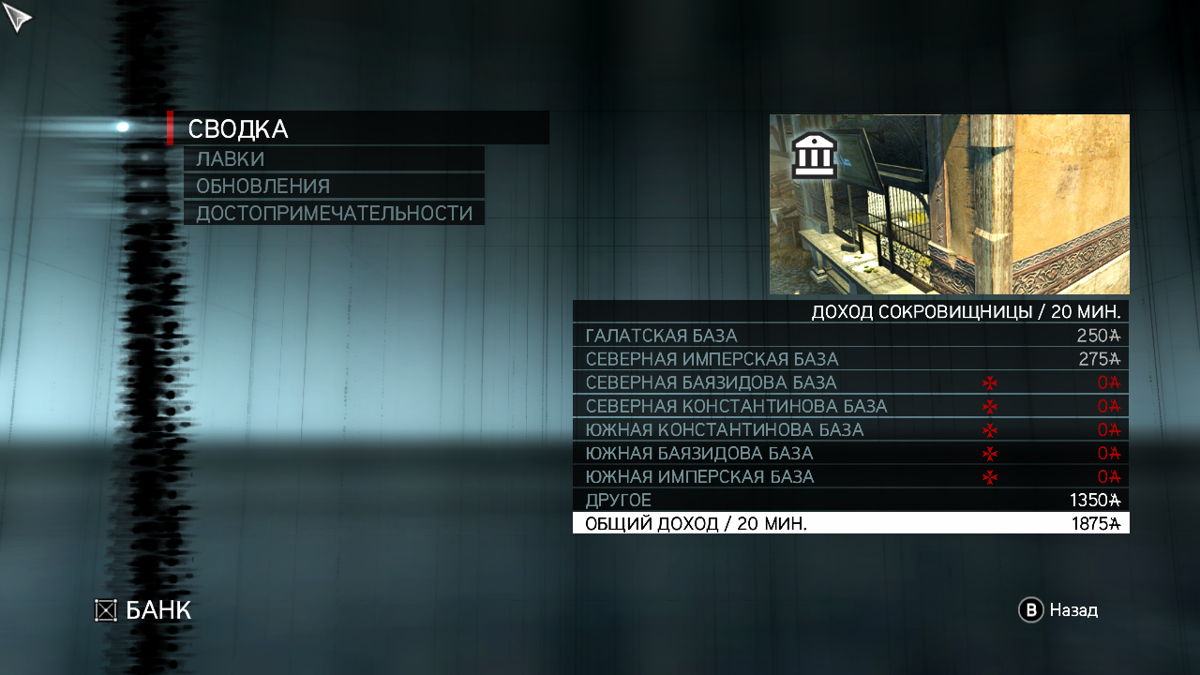
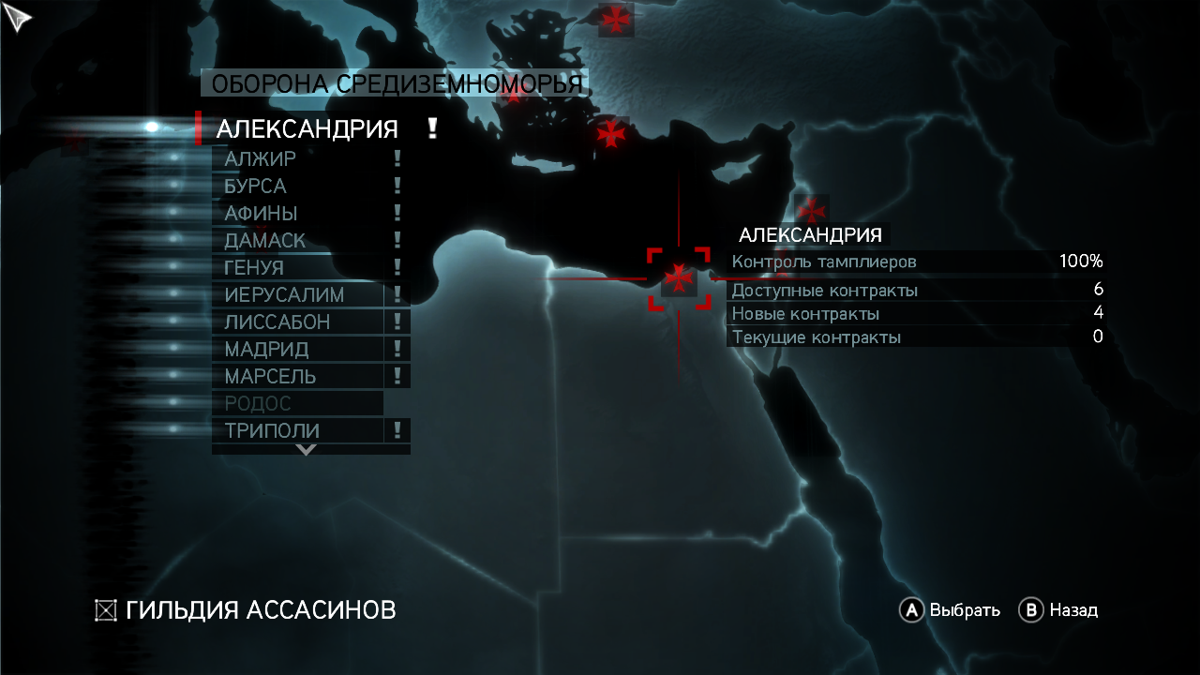
District capture returns, but holding territory now demands attention. Templars can attempt to take districts back, triggering tower-defense battles in which you direct Assassins from rooftops against soldiers and siege equipment. These sections are a sharp change from the usual behind-the-back action; some will enjoy the defensive puzzle, while others may see them as an interruption to Ezio’s freer rooftop work. The online mode is similarly substantial, with customized characters and weapons, guild creation, ranks, new modes, and a Deathmatch variant that removes the target compass in favor of line-of-sight awareness.
Graphics
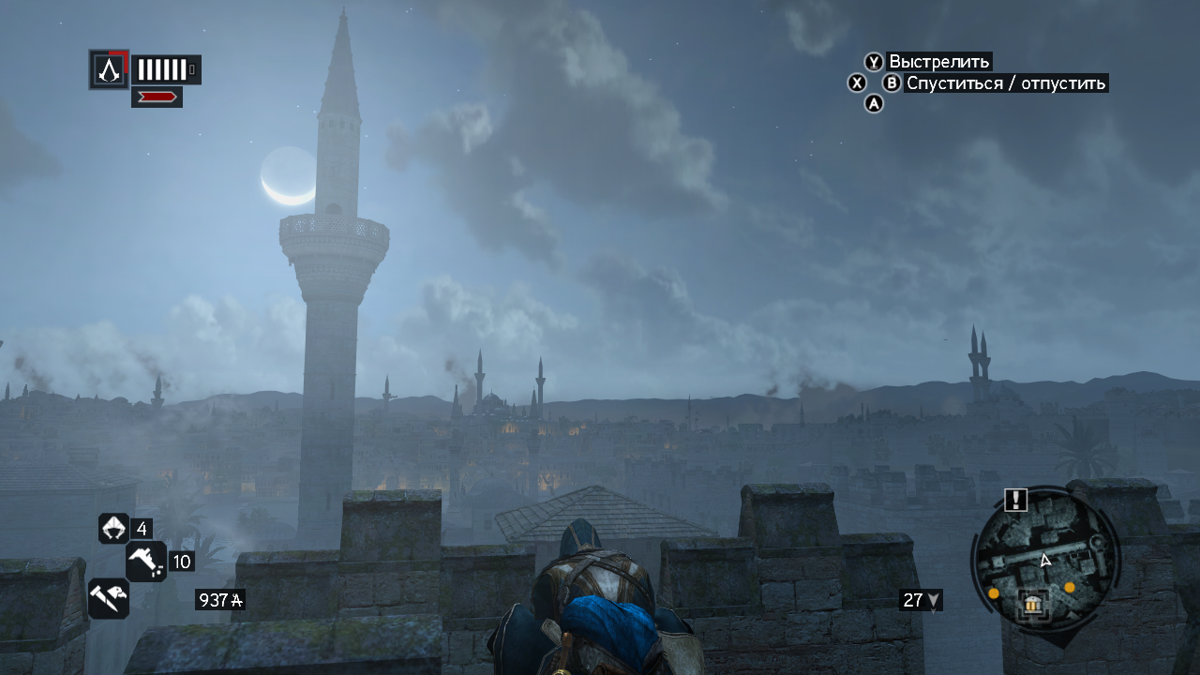
Constantinople is seen from the familiar behind-the-back perspective, with rooftops, streets, and ziplines forming the practical landscape of Ezio’s movement. The game also supports stereoscopic 3D for its gameplay and cinematics, if you are playing on compatible hardware.
Story
Revelations earns much of its power from letting Ezio’s long career matter. Now Grand Master of the Assassin Order after Italy’s Templar conflict, he is questioning the life he chose. His journey begins at Masyaf, where Templars have taken over and an ancient locked artifact requires five keys to open, then carries him to Constantinople amid a growing Templar threat.
That quest is not just another historical errand. Ezio follows the path of Altaïr, his spiritual mentor, and the search for answers gives the game a more contemplative pull than a straightforward city-saving adventure. If you want the broader context for the series’ foundations, it helps to revisit the original Assassin’s Creed.
Desmond’s thread runs alongside Ezio’s. Forced to stab an ally, he falls into a coma and enters the Animus again, reaching the Black Room in hopes of reassembling his fragmented mind through a key memory. The intertwined setup gives Revelations real weight: it is concerned with what these Assassins leave behind, not merely the next target on the map.
Overall Experience
Revelations is a strong late-series Assassin’s Creed because it knows the basic climb-and-stealth formula already works, then makes movement more satisfying with the hookblade and gives Ezio a story worth hearing out. Constantinople’s danger is not only in individual missions; the struggle for districts gives the Templar conflict a more persistent presence.
The extra systems can be a mixed blessing. Bomb crafting has room for experimentation, and the district-defense game adds variety, but neither necessarily matches the pure pleasure of slipping across rooftops and setting up a stealthy kill. You will get the most from it if you are happy to engage with a dense sequel that occasionally asks for your attention away from its core loop.
For fans invested in Ezio, Altaïr, and Desmond, the payoff is absolutely worth it. It ties a personal pilgrimage to a wider Assassin legacy while still delivering the open-world stealth action that made the series compelling. Newcomers can enjoy the city and its tools, but veterans will feel the revelations most keenly.


Reviews
There are no reviews yet.