 Retro Replay Retro Gaming History, Reviews & Emulation
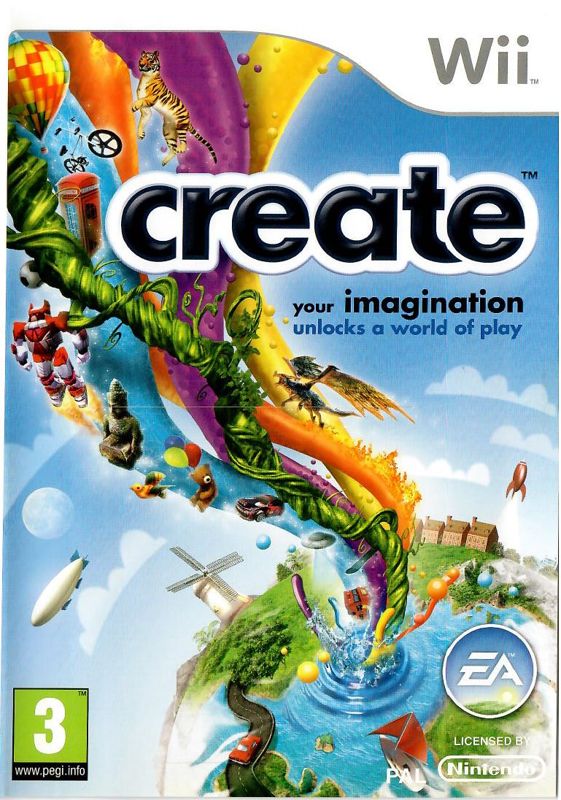
Retro Replay Review
Gameplay
The first hour of Create is easy to like because it asks you to play with a space rather than merely solve it. A scenario gives you a starting point—an amusement park is one example—and you can add objects, buildings, and animals, or start reshaping what is already there. Changing colours and textures, then layering on graffiti or stickers, gives even simple decorating a personal touch.
That open-ended side is tied to a campaign of 14 scenarios, and creativity points unlock the next challenge as well as more tools and objects. This creates a mild tension at the center of the game. You may want to casually fuss with a scene until it feels right, but progression asks you to turn that experimentation into points. If you enjoy working within prompts, that structure helps prevent the sandbox from becoming directionless; if you just want unlimited access from the outset, it can feel restrictive.
The strongest focused challenges are the incomplete contraptions. They ask for a particular outcome, such as getting a racing car from point A to point B, and you complete the setup by placing suitable objects into it. These puzzles give your experimentation a welcome purpose. There is a nice little spark in seeing a machine finally do what you intended, though the premise naturally favors trial, adjustment, and trying another arrangement over brisk, tightly authored puzzle solving.
Free play is where the game’s two halves make the most sense together. After unlocking tools and objects through the campaign, you can build your own worlds and upload them. That makes the campaign feel less like the destination and more like a guided introduction to the toy box. You will get more from Create if the act of arranging, decorating, and testing ideas is its own reward.
Graphics
The game uses a side-view, 2D-scrolling perspective, putting the objects you place and the contraptions you assemble front and center. Amusement-park scenery, buildings, animals, and vehicles give the scenes a playful assortment of things to work with, while colour changes, textures, graffiti, and stickers let you visibly stamp your choices onto each area.
Story
Create does not lean on a dramatic narrative; its campaign is built around a sequence of scenarios that need attention. You move from one themed space to the next with a practical goal: alter it, earn creativity points, and open the path onward.
That light framing suits a game about making things. The amusement-park setup works because it immediately gives your decoration and object placement some context without getting in the way of the work. You are not being asked to carry a plot forward so much as respond to a new creative prompt.
The result is breezy but not especially memorable as a campaign. The momentum comes from seeing what a new scenario lets you build and what it asks you to solve, not from a story hook. If you need characters or narrative stakes to keep you moving, the structure may feel thin; if you prefer a clean excuse to start tinkering, it does the job.
Overall Experience
Create is most enjoyable when you treat it as a creative puzzle box with a campaign attached, not as a deep construction game or a relentlessly clever puzzler. Decorating a scene, modifying its pieces, and then using objects to make a contraption work gives it a more varied rhythm than either activity would have alone.
Its main frustration is also its defining compromise: creative freedom is gradually meted out through unlocks and creativity points. That progression gives the 14 scenarios a reason to exist, but it can interrupt the carefree urge to simply build with everything. The payoff is better for patient experimenters than for anyone who wants immediate, unrestricted sandbox play.
At its best, the game captures the small satisfaction of turning an incomplete setup into something functional and making it look like yours in the process. At its weaker moments, it can feel caught between a decorating toy and a puzzle game without digging deeply enough into either. Still, if you enjoy playful trial and error and like having room to personalize the answer, it is a worthwhile curiosity. Everyone else may find its pleasant ideas wear out before the campaign does.


Reviews
There are no reviews yet.