 Retro Replay Retro Gaming History, Reviews & Emulation
Retro Replay Review
Gameplay
The first few fights make a clear case for Invincible Tiger: you are in a compact lane, enemies press in from either side, and Han Tao has just enough options to avoid feeling stuck with simple punches and kicks. Combining the two attacks produces combos, while holding the left stick changes their height. That basic structure is accessible, but it asks you to pay attention once enemies begin to crowd the screen.
The right-stick dodge and roll is the most important wrinkle. Escaping a hit or slipping away from opponents on both sides feels good, but leaning on it too hard leaves Han Tao dizzy and briefly unable to act. That is a sensible bit of pressure in a game where space is deliberately limited. The red interactive objects also help break up routine fighting: climbing a pillar or tree, kicking a bucket, or swinging from a branch gives each arena a few opportunities for a more theatrical counterattack. Picked-up swords add another welcome shift in rhythm.
The Yin Yang meter gives aggression and defense a shared consequence. Landing attacks feeds its white side, while blocking or taking damage affects the black side; health can be restored through Evil Souls or a vulnerable moment of meditation. Building enough meter for Hyperstate, where Han Tao becomes faster and stronger, creates a satisfying reason to stay composed rather than merely mash through encounters. Marked enemies are also worth pursuing before they vanish, since their souls can recharge health.
Five bosses ask for a more tactical approach than ordinary encounters, which is important because the regular fighting can become repetitive across the game’s levels. Co-op is the better way to stretch the formula. Sharing lives and the Yin Yang meter means you and a partner cannot simply play as two disconnected fighters, and the low-health player drawing enemy attention can turn a bad situation into a tense rescue. Time Trial and Endurance give you reasons to return if you enjoy mastering the combat flow, but the core experience remains a focused, confined brawler.
Graphics
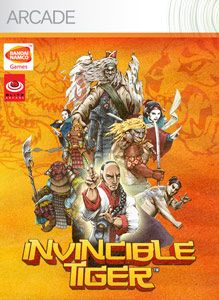
The game aims for the look of a 1970s kung-fu movie, with Han Tao fighting through 15 locations including ships, houses, and dojos. The side-view stages are built like shallow movie sets rather than wide roaming spaces, which suits the deliberately restricted left-and-right movement.
Red highlights make interactive scenery easy to spot in the middle of a fight. Optional Anaglyph 3D uses red/cyan glasses, while Digital 3D works with compatible 3D TVs and some HDMI-connected 3D monitors.
Story
Story mode gives Han Tao a path through the game’s sequence of martial-arts encounters, but the draw is the genre framing rather than an elaborately described narrative. The kung-fu-film styling does useful work here: it makes swords, dojos, ships, branches, and sudden environmental attacks feel at home in the same game.
The supernatural side is present in the Soul system and the energy released after placing three souls before an idol. It adds a touch of mysticism to the fighting without displacing the hand-to-hand focus.
Do not come to it expecting the story to be the main reward. The strongest narrative pleasure is simply inhabiting a brisk revenge-movie-like martial-arts setup through Han Tao’s successive fights and boss confrontations.
Overall Experience
Invincible Tiger is at its most enjoyable when you treat it as a compact kung-fu brawler with a few systems to manage, not an expansive action game. The combat starts simply, then becomes more involving when you use low attacks, dodges, weapons, environmental attacks, souls, and Hyperstate with some discipline.
Its confined stages are both the game’s character and its ceiling. They make fights immediate and keep opponents in your face, but they also leave less room for the action to evolve when the basic encounter pattern repeats. The tactical bosses and multiple modes help, though they do not entirely erase that limitation.
Give it a chance if you want a martial-arts beat-’em-up that works especially well with a friend and rewards a little more care than constant button pressing. Solo players can still have a solid time, but co-op, Time Trial, and Endurance are where its straightforward fighting framework has the most staying power.


Reviews
There are no reviews yet.