 Retro Replay Retro Gaming History, Reviews & Emulation

Retro Replay Review
Gameplay
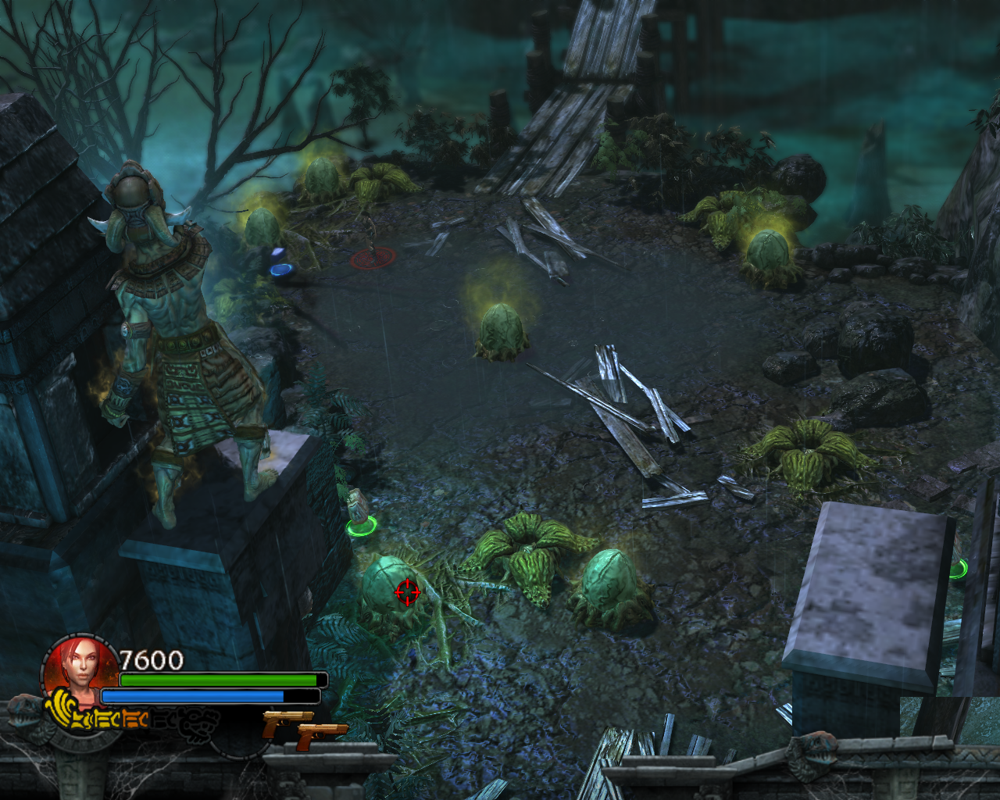
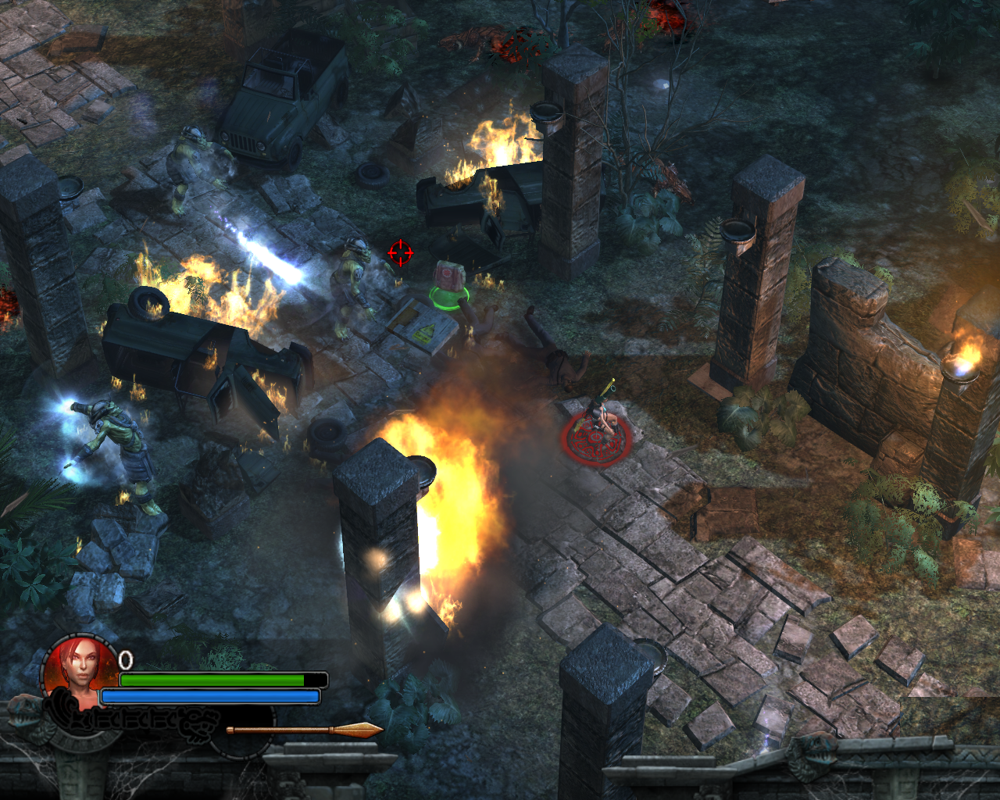
The first stretch gets straight to the good stuff: Lara enters a Mayan tomb, a relic unleashes Xolotl, and the route ahead is full of enemies and traps. From its diagonal-down view, the game feels less like a traditional Tomb Raider expedition and more like a quick, focused action-platformer. That change suits it. You spend less time waiting for the adventure to get moving and more time figuring out the next hazardous room.
The grappling hook is at the center of that momentum. Reaching higher ground is not just a matter of making a jump; the hook, Totec’s spear, and the layout of the room ask you to think through your route. Physics-based environmental puzzles give the platforming a useful extra layer, so progress comes from paying attention rather than simply pushing forward.
Co-op is where the premise becomes more interesting. With Totec alongside Lara, his shield can help create routes that Lara could not manage alone, and the two characters’ tools make cooperation part of the problem-solving rather than a separate bonus mode. Offline co-op is worth prioritizing if you have someone willing to communicate, since the satisfaction comes from turning a tricky obstacle into a shared solution.
Collectibles and challenge rooms add a small RPG-like loop through relics and arsenal upgrades. They are a welcome reason to engage with more than the direct path, though the real draw remains the immediate rhythm of action, jumps, and puzzle rooms. If you want an enormous character-building system, this is not that game; if you want upgrades to give the tomb-running some extra purpose, it does the job.
Graphics
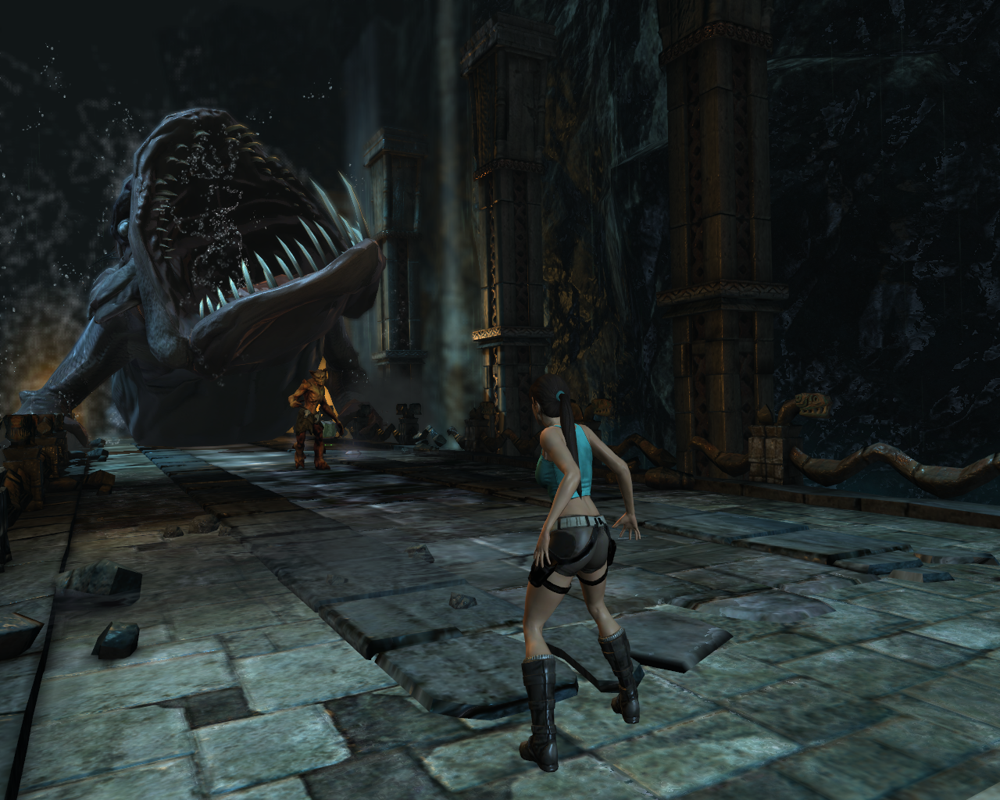
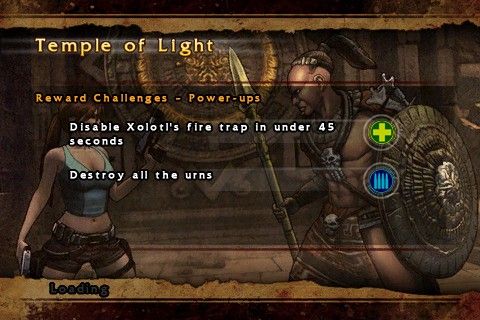
The isometric camera keeps Lara, Totec, enemies, platforms, and traps in view at once, which is especially helpful when you are plotting a jump or lining up a tool-assisted route. The Mayan tomb setting gives the game a fitting home for its relics, ancient demon, and obstacle-filled rooms.
Story
This is a clean, old-school adventure setup: Lara finds a magical relic while exploring a tomb, accidentally releases Xolotl, and has to stop the ancient demon with Totec’s help. It gets Lara into danger quickly and does not waste the premise on unnecessary complication.
Totec has a practical role in the story as the guardian who imprisoned Xolotl long ago, and that history gives his partnership with Lara a natural reason to exist. More importantly, it lines up with the co-op design: he is not merely standing beside Lara in the fiction, but bringing the spear and shield that matter during play.
Do not come in expecting a densely layered narrative. The story is a sturdy thread tying together tombs, traps, enemies, and the chase to contain Xolotl. For a game built around moment-to-moment traversal and puzzles, that directness is a strength rather than a disappointment.
Overall Experience
Lara Croft and the Guardian of Light works because it understands the value of a tight adventure. The action does not crowd out the platforming, the puzzles are rooted in the tools you use to move forward, and the isometric viewpoint makes it feel like a distinct Lara Croft side trip rather than a diluted version of the larger series.
Its best audience is anyone who enjoys action games that regularly ask for a little spatial thinking. You need to be willing to pause at a ledge, a trap, or an environmental puzzle and consider how the grappling hook or Totec’s equipment changes the situation. That is where the game starts to click.
Bring a co-op partner if you can, but there is enough in Lara’s own movement tools, challenge rooms, and upgrades to make the solo route worthwhile. The plot may be lean, yet the payoff is the steady pleasure of mastering another dangerous room. It is a smart, energetic download-sized adventure that still has a strong reason to be played.



Reviews
There are no reviews yet.