 Retro Replay Retro Gaming History, Reviews & Emulation
Retro Replay Review
Gameplay
The first hour of Way of the Samurai 3 is all about realizing how little the game protects you from yourself. You are a lone samurai dropped into a regional power struggle, but nobody forces you into a sensible path. Join the Fujimori Clan, throw in with the Ouka Clan, help the people of Takatana, or decide the whole place is not worth your time. You can even make a brutally short run out of killing both faction leaders. That volatility is the hook: Amana feels less like a checklist and more like a place where your behavior keeps changing the temperature of every encounter.
Its sword fighting has more to chew on than a simple slash-and-dodge routine. Weapons have differing quality and durability, and the selection runs from swords to hammers and spears. Unlockable offensive, defensive, and special moves carry over into new games, which makes failure and fast endings less punishing than they first seem. The choice between lethal and blunt attacks is especially smart. Killing can hurt your reputation, while defeating someone non-lethally leaves room for another meeting later. That turns combat into part of your role-playing rather than a separate activity.
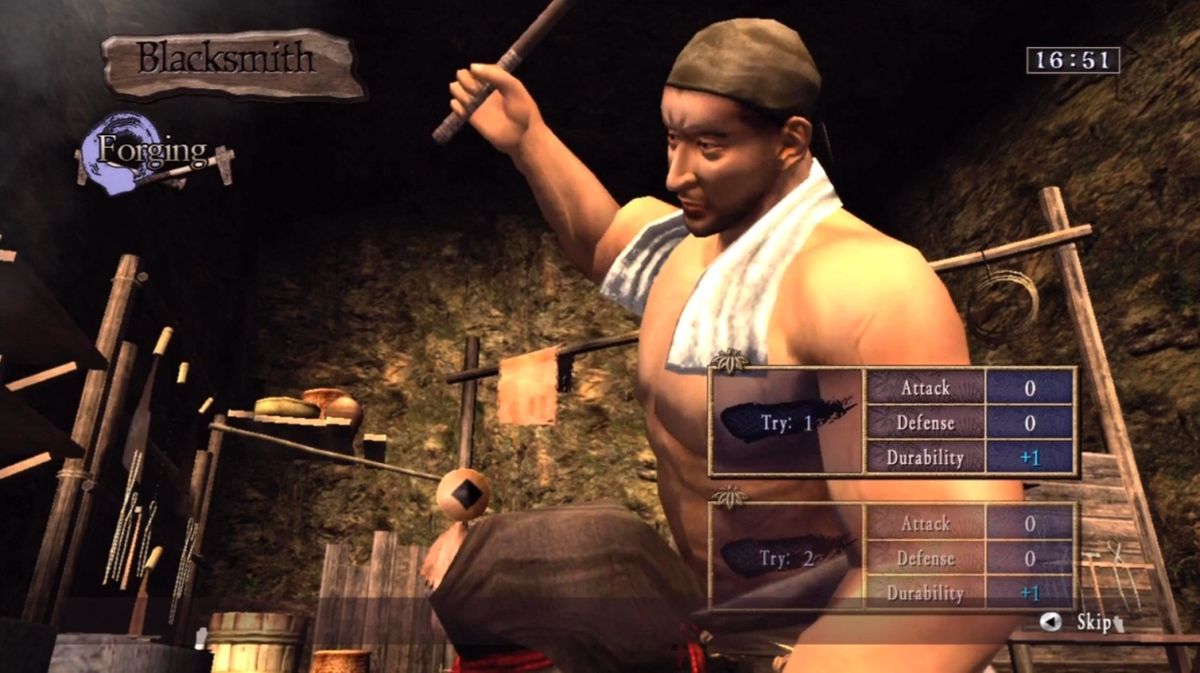
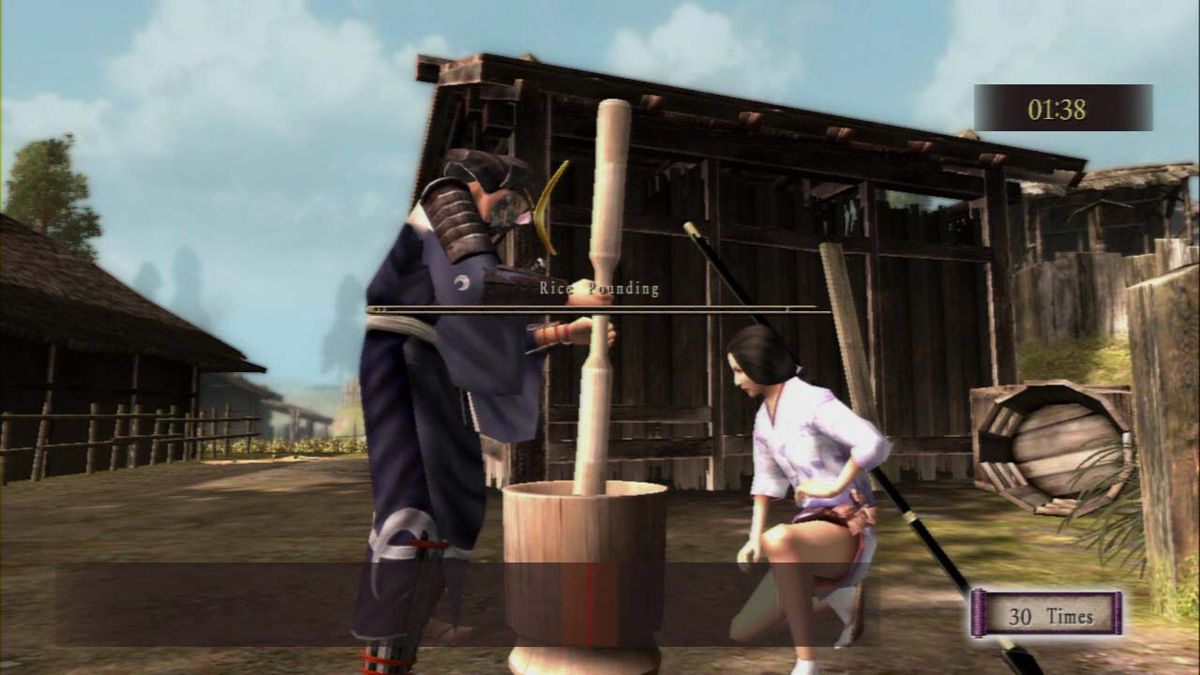
There is plenty of smaller-scale business around the fighting: jobs, shops, blacksmith upgrades and forging, companions, vegetable chopping, fish filleting, and the practical limits of carrying only three weapons. A companion can help in battle and unlock two-person work and mini-games, while a home in Takatana gives you a place to rest and store gear. Not every activity carries the same excitement, but these details give a repeat run texture. The day-and-night cycle matters because residents follow their own routines, so timing and wandering can change whom you meet.
Frustration arrives when you expect control over every outcome. You can anger people by bumping into them, dialogue offers broad choices rather than careful negotiation, and committing to one job at a time limits how much you can juggle. Yet that awkwardness is closely tied to the game’s personality. Follow the map’s marked next scenes if you want a clearer route, but give yourself permission to ruin a run. The game gets more rewarding once you stop treating every confrontation as something to optimize.

Graphics
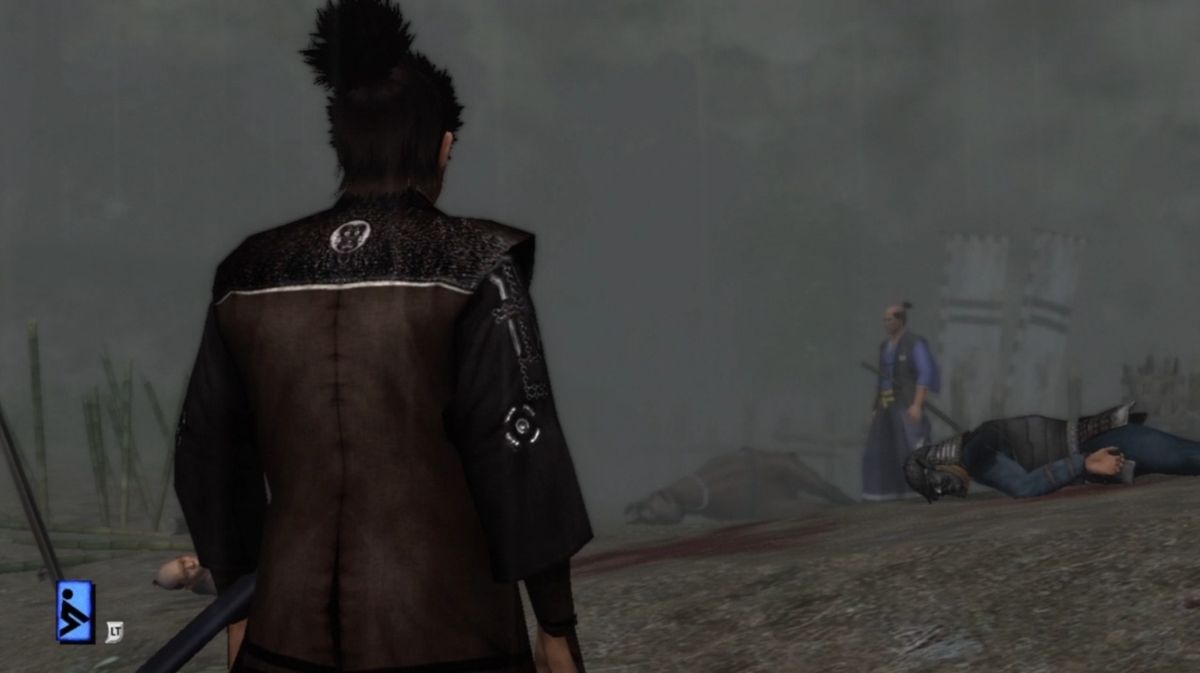
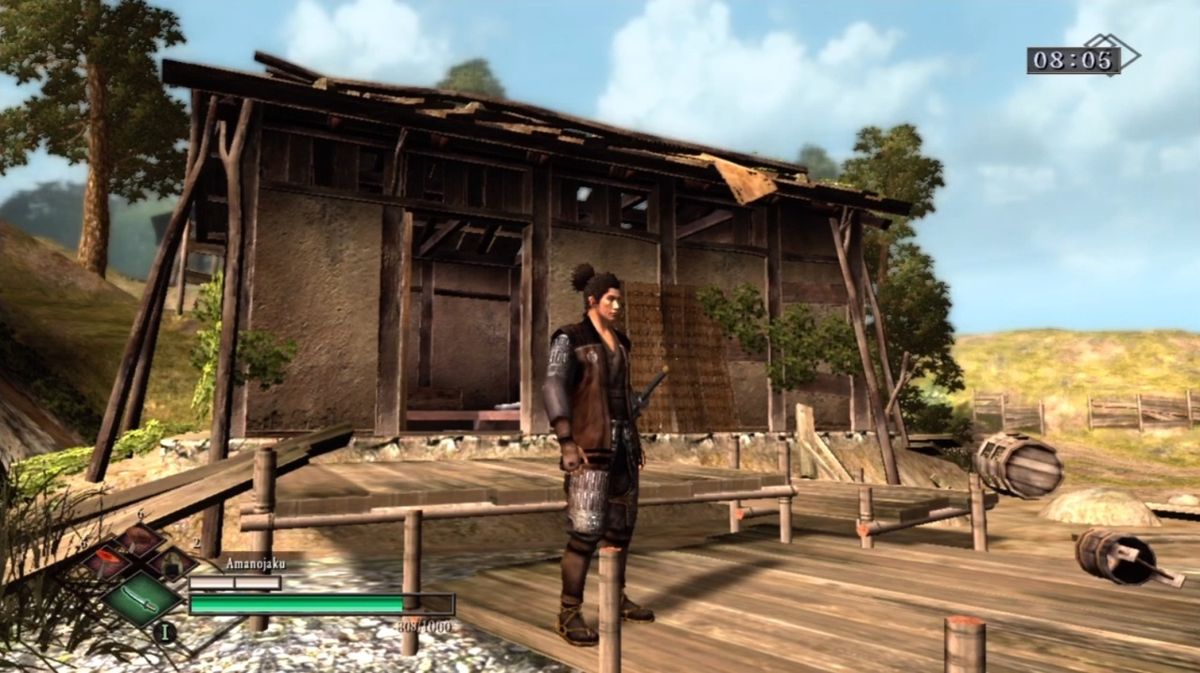
The game keeps the camera over your samurai’s shoulder as you travel across Amana’s eight zones, then puts the emphasis on seeing your chosen weapon and the people around you during confrontations. The useful visual distinction comes from the gear itself: swords, hammers, and spears make your fighting style legible at a glance.
Story
Amana has a strong setup: Shuzen Fujimori has seized power from Lord Sakurai, the Fujimori rule through force, and former Sakurai allies have formed the Ouka Clan. Into that unrest walks a samurai who survived a major battle and has no fixed obligation to anyone. It is familiar territory for a samurai tale, but the game wisely makes your allegiance the central question instead of handing you a predetermined cause.
What distinguishes the story is not a single definitive route but the sheer number of ways it can bend. More than 20 endings are possible, and choices affect relationships with the region’s groups. A merchant may give you an item if you beg, for example, but lose respect for you in return; that can reduce the Samurai Points you earn when a run ends. Small acts have consequences that are tangible enough to make you think twice, even when they are silly.
The writing framework works best as a replayable chain of alternate outcomes. You can be a loyal enforcer, a defender of Takatana, a fighter for the old order, or an opportunist trying to escape Amana altogether. Partners add another personal thread, ranging from paid assistance to romance and even living together in your Takatana home. Do not expect one long, carefully guided epic. Come for the pleasure of seeing what changes when you take a different side, spare a foe, or pick a fight at exactly the wrong time.
Overall Experience
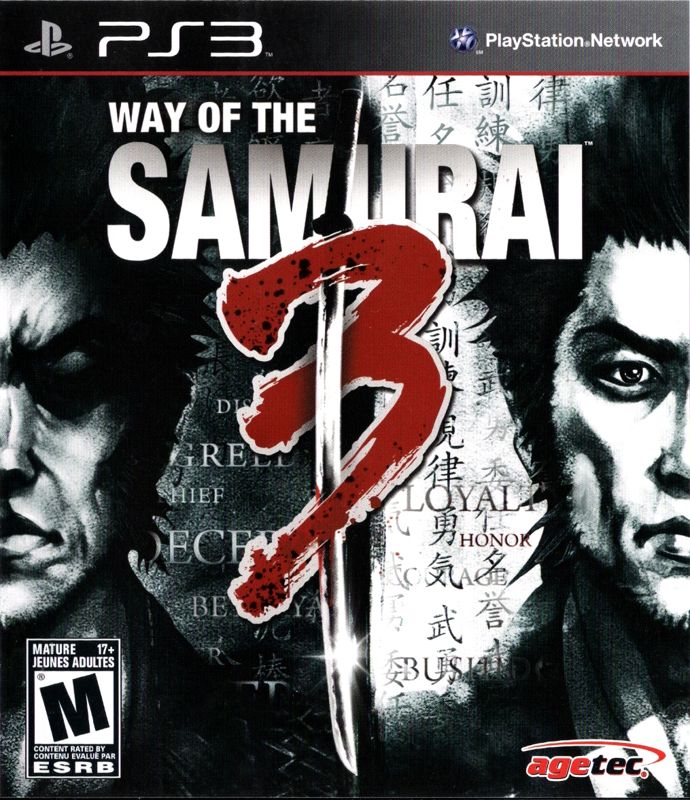
Way of the Samurai 3 is an uneven but memorable samurai role-playing game built around permission to make trouble. Its best moments are not about reaching an ideal ending; they are the surprising pivots, when an impulsive attack, a choice in conversation, or a non-lethal victory sends your run somewhere unexpected. Few games make a short playthrough feel so much like a story you personally derailed.
It is less satisfying if you need a smooth, linear campaign or want every system to feel equally refined. The ability to end a run quickly, the scene structure, and the many consequences can make Amana feel abrupt rather than sweeping. But the persistent move unlocks and alternate endings give you a reason to return with more knowledge and a new plan. A disappointing outcome is often just material for the next attempt.
Give it a chance if you enjoy action RPGs where role-playing means accepting inconvenient consequences, not merely choosing dialogue colors. The 6.3-level roughness is real, but so is the charm of a game willing to let you become a ruthless killer, a reluctant peacekeeper, or an embarrassment who begs merchants for handouts. It rewards curiosity, tolerance for chaos, and a willingness to see a flawed run through.


Reviews
There are no reviews yet.