 Retro Replay Retro Gaming History, Reviews & Emulation


Game Overview
Gameplay
Persona 5 divides its time between ordinary student life and trips into supernatural Palaces, and that split is the reason the game stays so involving. By day, the protagonist attends Shujin Academy and decides how to spend free time: sports, fishing, gym visits, movies, television, outings with friends, part-time work, and more. None of these activities are just empty filler. They make the school-year structure feel personal, because each day asks what kind of life this new student is building outside the next big heist.
The Confidant system gives those choices real weight. Spending time with other characters strengthens relationships and brings benefits tied to Personas, so getting to know the cast feeds directly back into the dungeon side. It is a smart incentive to engage with the quieter scenes rather than rushing from Palace to Palace. Fans of Shin Megami Tensei: Persona 4 will recognize the social-sim foundation, while Persona 5 makes relationship building a central part of its Phantom Thieves routine.
Palaces are a major improvement for anyone who wants dungeons with a stronger sense of place. Each one takes physical form from a corrupt person’s desires and uses a fixed layout rather than random floors, giving repeated visits a more deliberate feel. Battles also put demon negotiation front and center. Talking to a demon during battle can persuade it to join the party as a Persona, or can yield money and items instead. Fusion in the Velvet Room remains the deeper long-term hook, letting you combine Personas into stronger options. Guns return as well, though their limited ammunition means they are another resource to consider instead of a solution to every fight.
Graphics
Shujin Academy, Cafe Leblanc, the opening casino heist, and the supernatural Palaces give Persona 5 contrasting settings. The familiar places and distorted desires suit a journey split between student life and the Phantom Thieves’ operations. Personas and demons supply the stranger side of the screen, fitting a story where people confront hidden ugliness behind familiar faces.
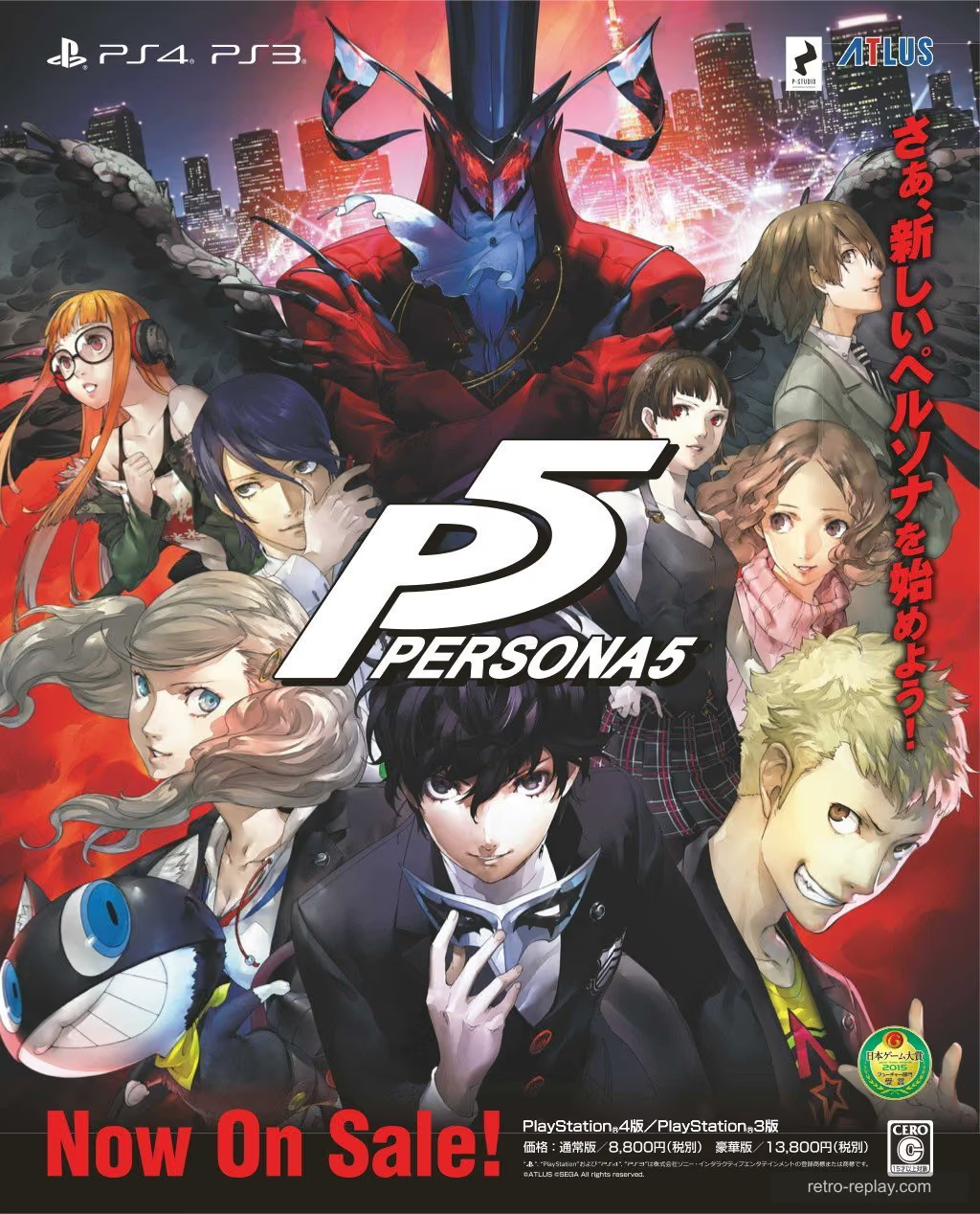
Red is the dominant color associated with Persona 5, matching the Phantom Thieves’ rebellious tone. The presentation has a bold, lively character that suits a group living double lives rather than a subdued school drama.
Story
Persona 5 begins at a breaking point. The Phantom Thieves are trapped during a casino heist, their leader is arrested, and an interrogation becomes the frame for the story. From there, the protagonist recounts how he landed in Tokyo: after defending a woman from harassment by a powerful politician, he is charged with assault, placed on probation, and forced to leave his old school.
He arrives at Shujin Academy carrying the consequences of an accusation that has already marked him. He stays above Cafe Leblanc under the supervision of Sojiro Sakura, then begins meeting classmates and forming friendships alongside his involvement with the Phantom Thieves of Hearts. It is an effective setup because the protagonist’s anger is not abstract. His new life is shaped by adults with power and a punishment that feels badly out of proportion to what he did.
The central idea of entering Palaces born from corrupt desires gives the story a strong picaresque drive. The Phantom Thieves are not simply wandering through fantasy dungeons; they are pushing back against people whose private wants have become destructive. The interrogation framing also adds tension from the start, since the game tells you that this group will eventually be cornered. The story is long and spends substantial time on school routines and relationships, so it asks for commitment, but that slower time with the cast is what makes the larger heists matter.
Overall Experience
A Palace gives a heist a shape you can learn, with a particular person’s corruption built into the place you are exploring. Returning with a stronger party feels purposeful because the layout is recognizable. The acid-jazz soundtrack and harder boss-battle music help give the changing pace its character.
The tradeoff is pace. This is a full school year, not a short run of dungeon expeditions, and its many day-to-day activities can feel slow if you only want combat and fusion. Palace layouts are fixed, which gives them purpose and identity, but it also means revisiting them will not produce the changing floor plans associated with earlier dungeon design. Limited gun ammunition further asks you to think about when to spend a useful tool.
For anyone who enjoys a long JRPG built around character relationships, party-building, and a strong sense of progression, Persona 5 is an easy game to get absorbed in. Its best quality is how naturally the ordinary and extraordinary feed one another: spend time strengthening a friendship, gain a useful edge for Personas, then carry that growth into the next heist. The commitment is substantial, but the cast gives those quieter evenings a purpose. Atlus’s localization discussion offers a useful look at bringing that extensive script into English.









Reviews
There are no reviews yet.