 Retro Replay Retro Gaming History, Reviews & Emulation
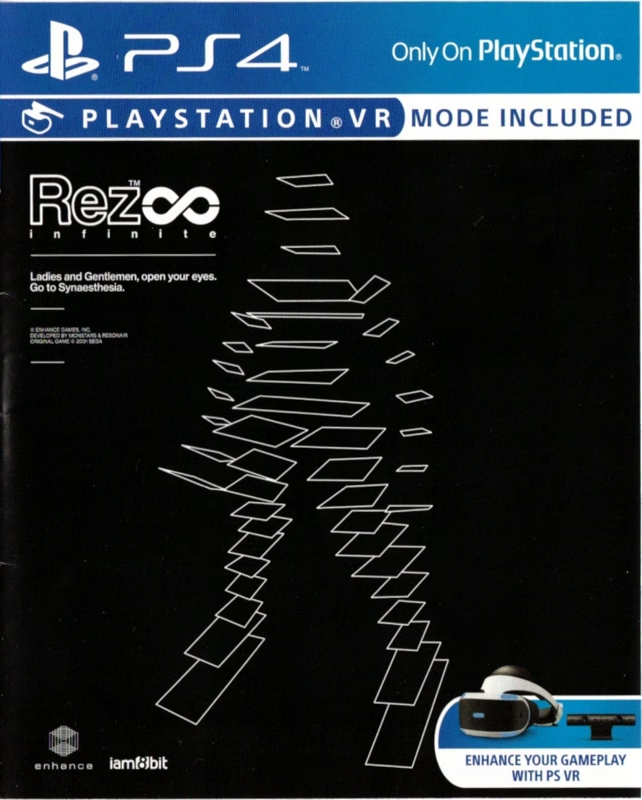
Game Overview
Gameplay
Rez Infinite is at its best when you stop treating it like a conventional shooter and start trusting its rhythm. You guide your avatar along predetermined routes, paint up to eight foes with the targeting cursor, then release a volley in time with the music. The first few encounters can feel almost too simple, but precision quickly becomes satisfying. A well-timed chain deletes a formation and adds a new musical response, turning accurate aim into part of the song rather than a separate task.
That structure gives the five core areas a sharp, forward-driving feel. Enemies are not just obstacles; they are opportunities to keep the track building. Bosses break up the flow with multi-phase encounters that demand more attention, and the gradual evolution of your avatar gives successful runs a welcome sense of rising power. Damage matters, though. Taking hits knocks your form backward, and enough mistakes end the attempt, so the game can become frustrating if you chase targets recklessly instead of reading the incoming threats.
Overdrives are the pressure valve. Saving one for a crowded moment and clearing the screen can rescue a run that is slipping away. Area X changes the mood completely by letting you fly freely rather than following rails. It is not merely a bonus tacked onto the original game: its open movement, original music, and particle-heavy action make it feel like a looser, more exploratory answer to the focused structure of the main areas. The core campaign is still the more disciplined rhythm game, but Area X is a strong reason to keep playing after the credits.
Graphics
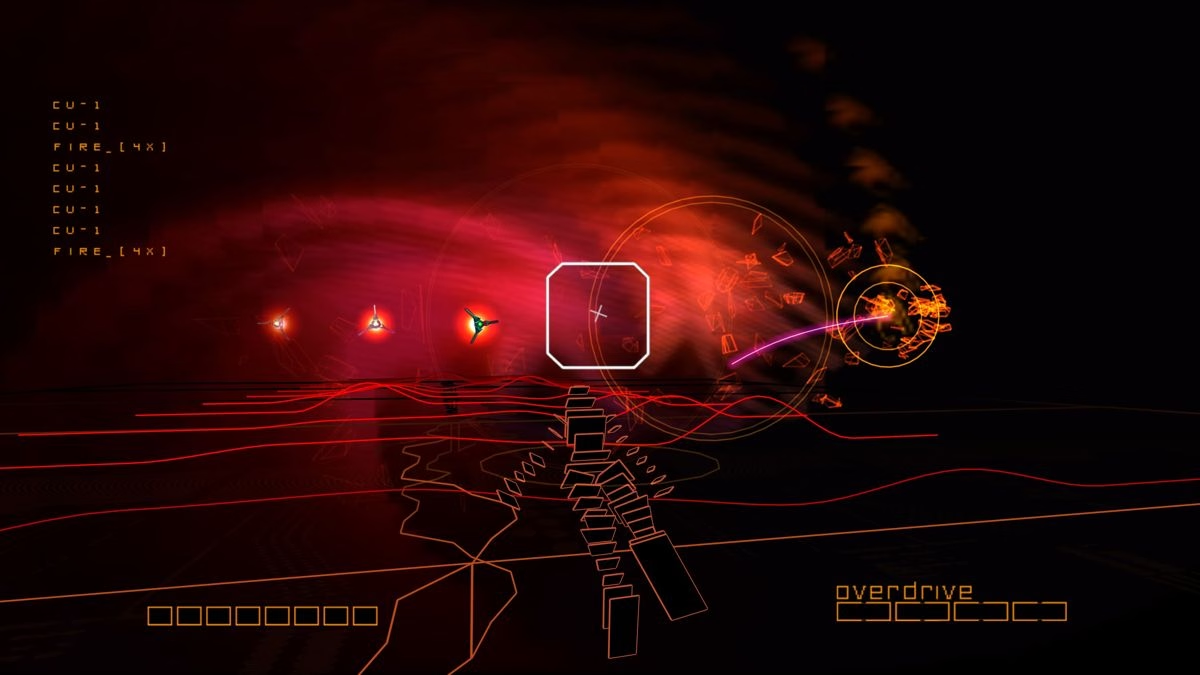
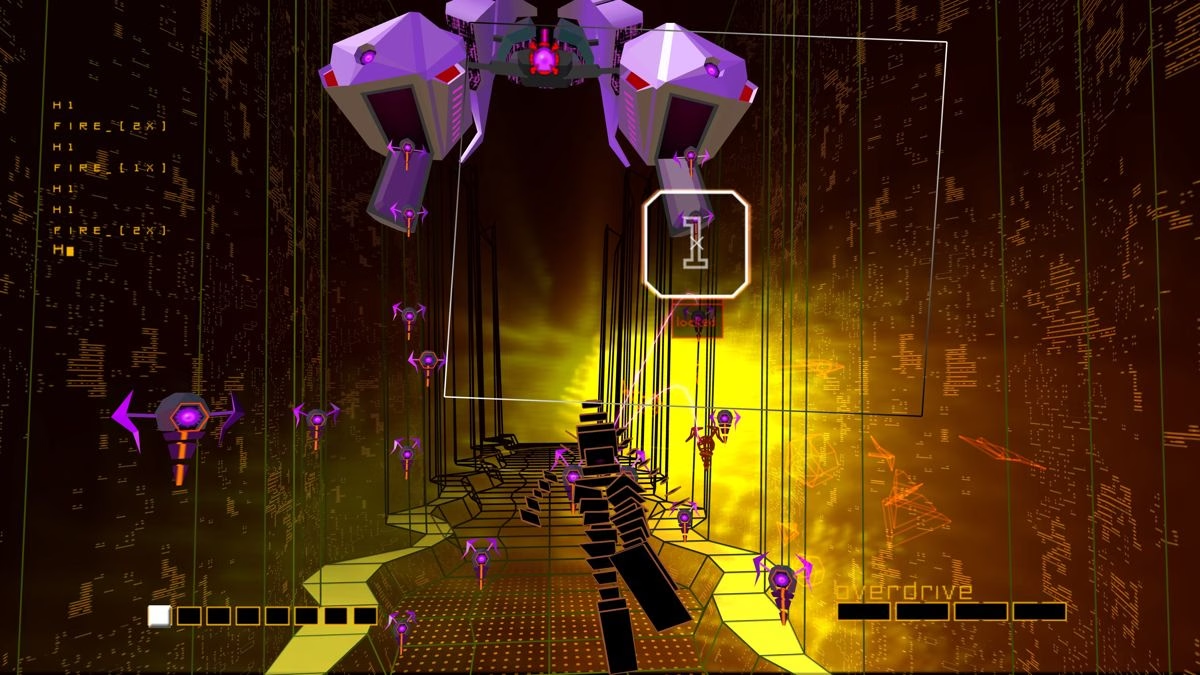
The PlayStation 4 version makes the old wireframe cybernetic look crisp and striking. One area floods the horizon in red, with glowing targets floating over thin geometric terrain; another places chunky purple drones and hovering mechanical shapes inside a tall gold-lit corridor. The contrast between sparse black space, neon enemy markers, and bright bursts of color keeps targets clear without flattening the strange scenery around them.
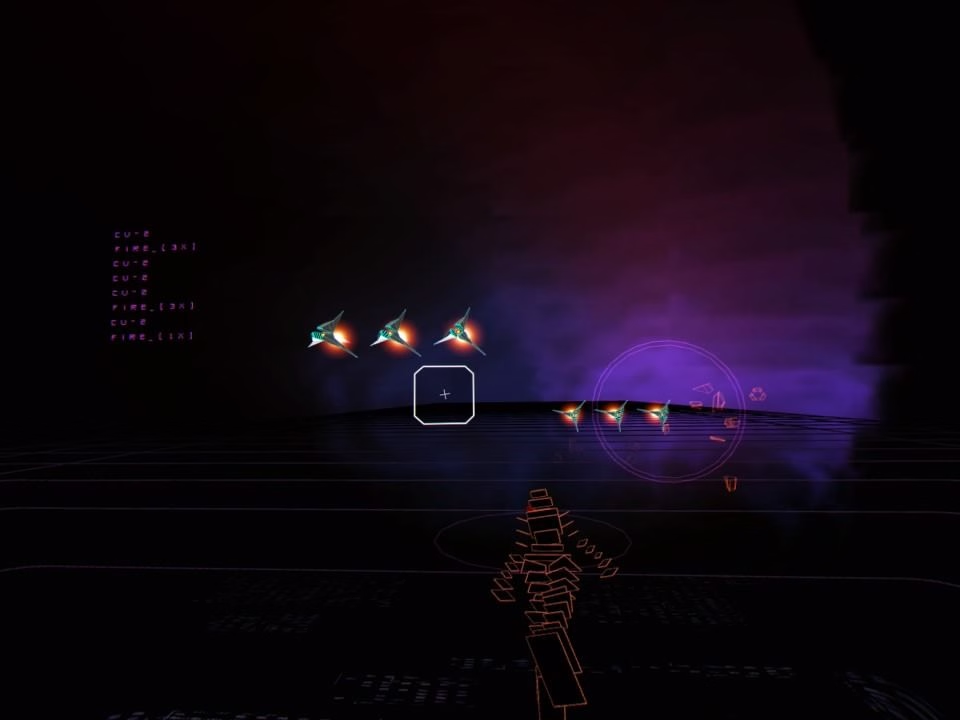
The avatar’s layered, skeletal forms and the abstract enemies look intentionally digital rather than realistic, and that choice still works. In VR, formations of small glowing craft feel more immediate as they hang in the dark purple distance. Area X pushes the image further with particles and more dynamic movement, but the main game’s clean lines and shifting color palettes remain memorable in their own right.
Story
You enter Project-K as a hacker trying to reach Eden, an artificial intelligence attempting to shut itself down, while hostile security entities fight back. The story is deliberately light and abstract, which suits the game’s music-first approach. It gives your journey through firewalls and deeper system layers a purpose, but the emotional payoff comes more from the climb through the stages than from dense exposition.
Overall Experience
Rez Infinite remains special because it makes a familiar act, locking onto enemies and firing, feel physical and musical at once. Its controls and rules are easy to grasp, but the satisfaction comes from learning how aggressively you can target without losing the beat or leaving yourself exposed. A rough run can feel brittle, especially after your avatar degrades from damage, while a clean one feels unusually graceful.
The original content is concise, so do not come in expecting a huge shooter campaign or a story packed with twists. Come for tightly authored stages that reward replay, strong electronic music, and a style that refuses to look or sound like most action games. VR is an especially natural fit because the spatial scale makes threats feel closer, but the traditional display version still carries the same locked-in rhythm.
If you enjoy rail shooters, rhythm games, or experimental action games that value mood as much as mastery, this is an easy recommendation. Area X broadens the package without weakening what made Rez work in the first place. It is a polished remaster of a distinctive idea, and it still has the confidence to be brief, demanding, and wonderfully odd.


Reviews
There are no reviews yet.