 Retro Replay Retro Gaming History, Reviews & Emulation
Retro Replay Review
Gameplay
Shadow of the Colossus grabs you with contrast. One minute, you are riding Agro through a huge stretch of quiet country with only a sword beam to guide you. The next, a creature that looks more like a moving ruin than an enemy rises in front of you, and you have to figure out how a small human being could possibly bring it down. That first successful climb is still an incredible moment: you stop treating the colossus as a boss to hit and start reading it as a living route.
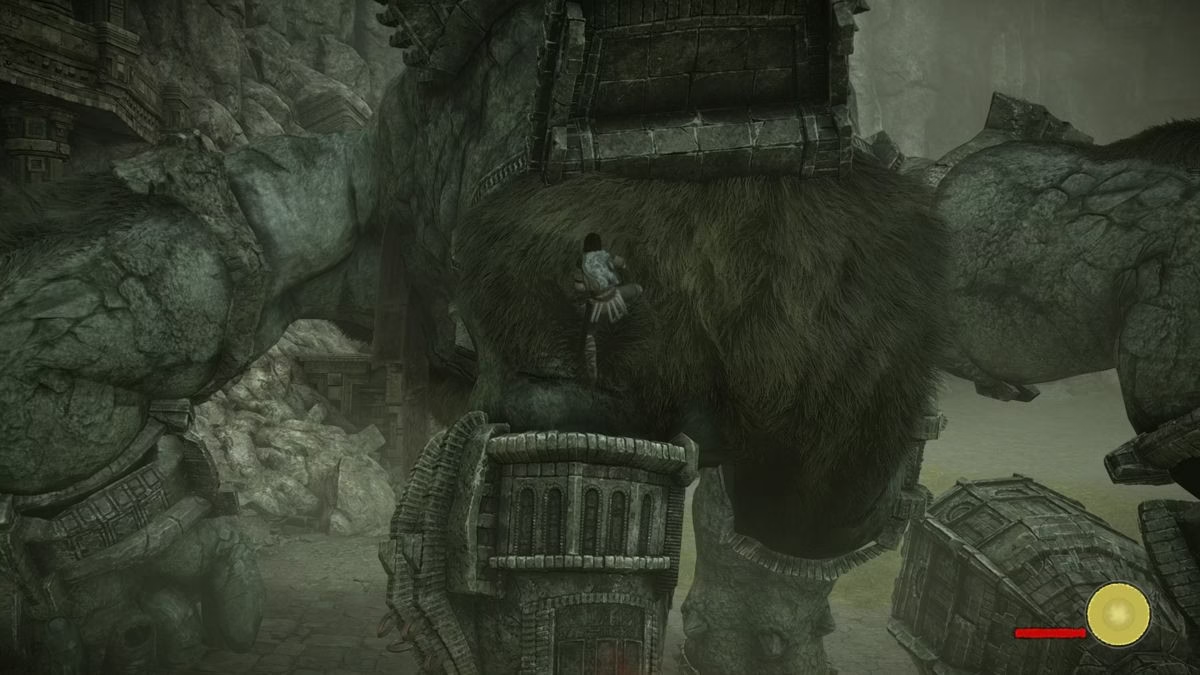
Every battle is a puzzle built around observation. You study the terrain, look for a way onto the creature, then manage Wander’s grip as it bucks, turns, and tries to shake him free. Glowing weak spots give each fight a clear final objective, but reaching them can be a small adventure of its own. The sword and bow are simple tools, yet the encounters get a surprising amount of mileage out of them and the surrounding ruins.
Agro is central to the rhythm rather than a disposable way to cross a map. Riding through plains, woods, lakes, and old stone structures gives you breathing room after each intense climb. That deliberate travel can become frustrating if you want constant action, and the inherited camera and climbing awkwardness can make a missed grab feel harsher than it should. Still, patience is usually rewarded, both by the next confrontation and by optional fruit and lizards that gradually improve health and stamina.
Graphics
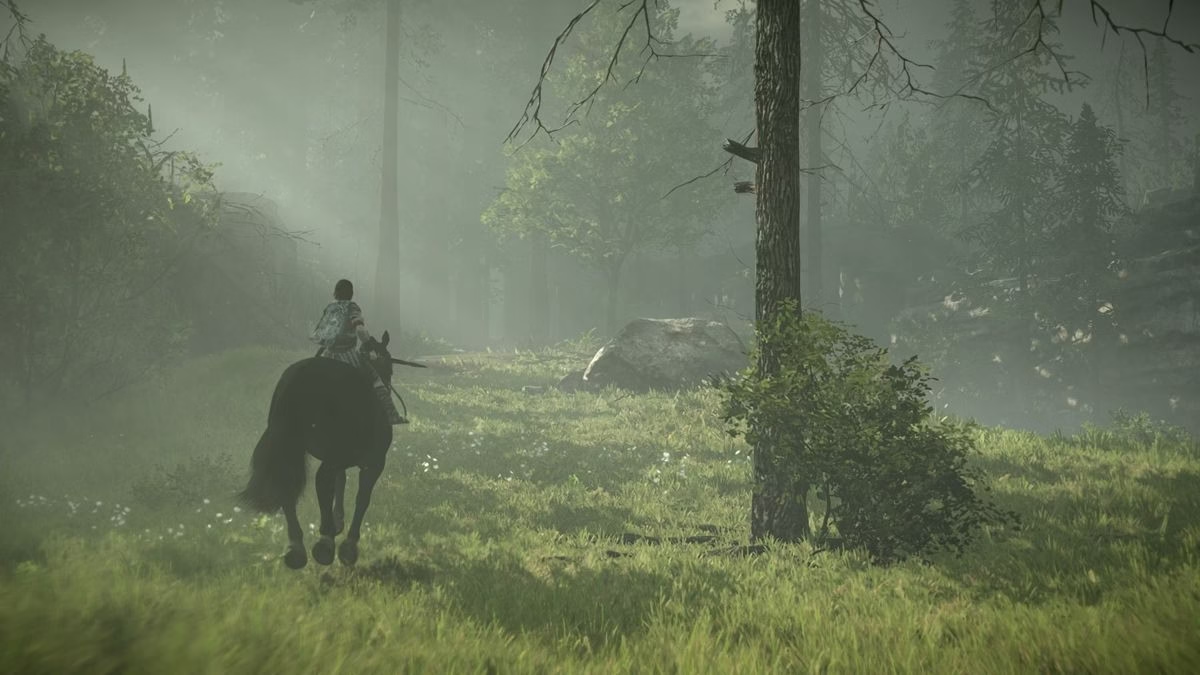
The rebuilt PS4 world makes the scale land immediately. In the forests, Agro carries tiny Wander past tall trunks, leafy undergrowth, grass, and mossy boulders under pale green light. The muted greens and grays fit the lonely land without making it look lifeless.
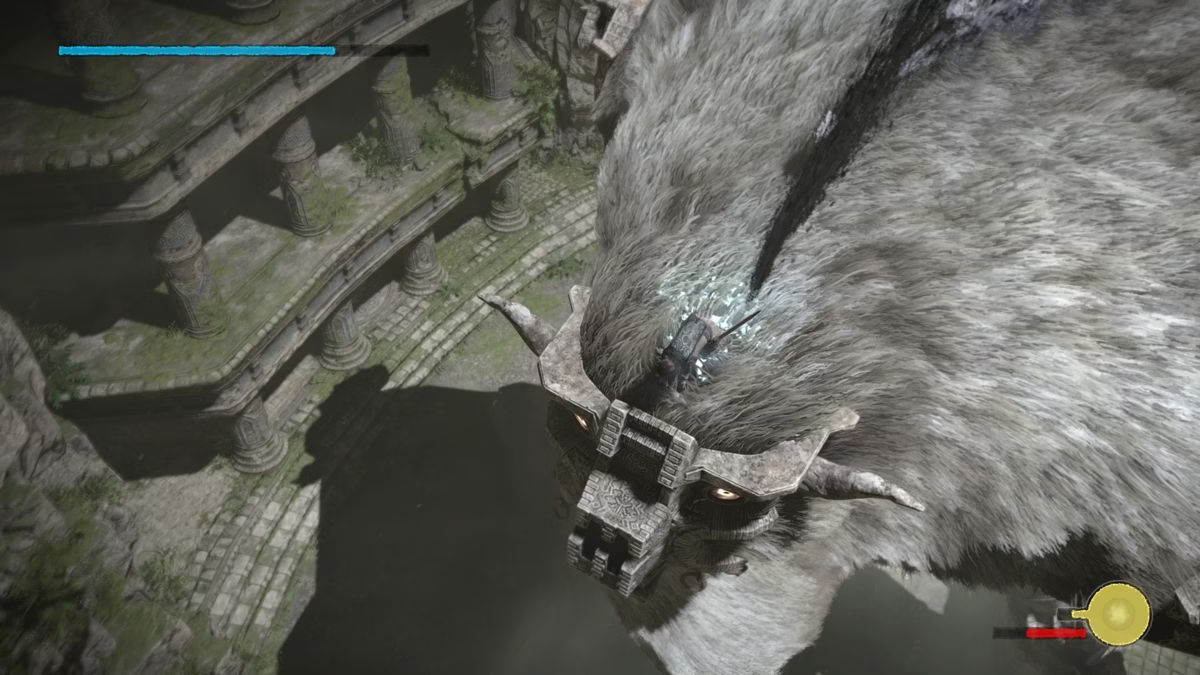
Up close, the colossi have dense fur, cracked stone armor, carved ornaments, and enormous faces that make Wander look impossibly small. One overhead view of a glowing sigil on a furred head, with ruined arches far below, captures why these climbs are so memorable. This is a ground-up remake of the 2005 PlayStation 2 original, not that older version with a fresh coat of paint.
Story
Wander enters a forbidden land with Mono, hoping to restore her life. A mysterious voice gives him one condition: destroy sixteen colossi. It is a clean setup, but the game wisely lets the emptiness around Wander carry much of the emotion. There are no towns full of quest givers or regular packs of enemies to dilute the journey.
That isolation gives even the smallest scenes extra weight. Agro is your only steady companion across the land, while each new colossus feels like an interruption to a private pilgrimage. The story does not need to explain every corner of the world for the place to feel ancient, sad, and a little threatening.
The restraint is the point. You are given a goal and room to sit with what accomplishing it means, rather than being buried in exposition. If you like games that leave space for your own reaction, this is far more affecting than its spare dialogue suggests.
Overall Experience
This remains one of the strongest arguments for making fewer, more purposeful battles. Sixteen encounters do not sound like much until you realize each one has to earn its place, and these generally do. Quiet exploration builds tension, the climb turns that tension into effort, and finally reaching a sigil delivers a burst of relief that ordinary combat rarely matches.
The remake’s modernized controls help, but they do not erase every rough edge inherited from the original design. The camera can fight you at bad moments, and long rides will test anyone who needs a rapid stream of rewards. Go in ready to slow down, pay attention to the environment, and accept that a little friction is part of the climb.
For gamers willing to meet it on those terms, Shadow of the Colossus is absolutely worth playing. It is lonely, beautiful, occasionally aggravating, and consistently memorable in the way its giants force you to think with your hands and eyes. For background on this PS4 rebuild, PlayStation’s remake developer feature offers useful context.



Reviews
There are no reviews yet.