 Retro Replay Retro Gaming History, Reviews & Emulation
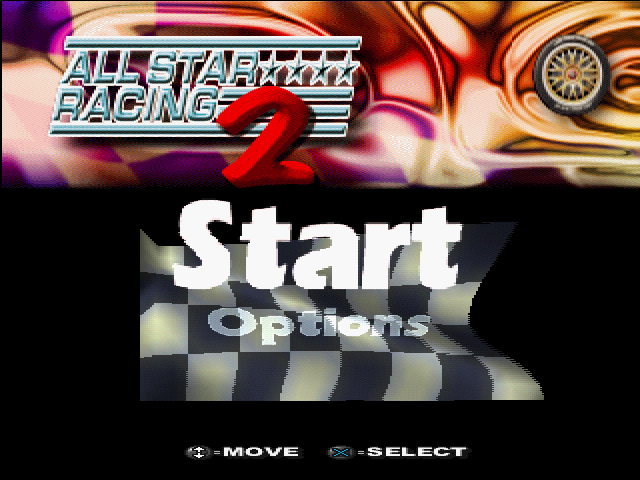
Retro Replay Review
Gameplay
All Star Racing 2 opens with a simple, immediately understandable challenge: select a race type, line up against five opponents, and try to take first. There is no barrier between you and a race, which suits the game’s arcade-minded setup. You can jump from superbikes to karts, GP cars, and tractor-trailer trucks without needing to learn a complicated career structure or unlock your way to the interesting stuff.
That four-way vehicle split is the game’s strongest idea. A bike, kart, open-wheeled racer, and truck naturally suggest different kinds of handling and racing rhythm, so changing modes should help prevent the track list from feeling entirely samey. Each mode has five tracks, giving you 20 track-and-vehicle combinations to work through rather than one small pool used by every machine.
Still, the structure is lean. Every race comes down to beating the same five-racer field, and the mode selection does not turn into a broader championship or progression framework. You can set races from three to 15 laps, which is useful: choose three when you want a quick test of a new vehicle class, or extend the distance when you want the race to matter more. Difficulty settings from easy through hard give you a practical way to tune the opposition as well.
Vibration is optional, and the game supports both first-person and behind-the-vehicle viewpoints. The latter is likely the sensible starting point when you are learning the tracks and judging rivals, while the first-person angle is there for anyone who prefers a closer driving view. This is a pick-up-and-play racer first, not a game built around layers of customization or a huge competitive ladder.
Graphics
The game puts its vehicle variety front and center: superbikes, karts, GP cars, and full tractor-trailer trucks all appear in multiple colors. First-person and behind-view camera options let you choose between watching your vehicle work through a race or driving from a tighter viewpoint, and the different vehicle shapes should at least give each mode a distinct look on track.
Story
There is no narrative detour here. All Star Racing 2 is focused on individual track races and the immediate task of finishing first against five rivals.
That stripped-back approach fits a game meant for quick sessions. You choose the vehicle category, set the race length and difficulty, and get on with it rather than sitting through story scenes or character business.
The downside is that winning does not appear to carry a larger dramatic or career-driven payoff. Your motivation is the familiar racing-game loop of improving your result, trying a tougher difficulty, and seeing how each vehicle class changes the feel of the event.
Overall Experience
All Star Racing 2 is easy to understand and potentially easy to enjoy in short bursts. Its best argument is not depth; it is the chance to race four very different vehicle categories under one uncomplicated ruleset. Swapping from a nimble-sounding kart race to a truck event gives the game more range than its modest format initially suggests.
Frustration can set in if you expect the variety to grow into a substantial racing campaign. With five tracks per mode and one basic objective, the repeat play comes from longer lap counts, higher difficulty, and your preference for the different vehicles—not from a large set of modes or evolving goals.
Give it a chance if you want a no-fuss PlayStation racer and the prospect of bikes, karts, GP cars, and trucks on the same disc sounds genuinely fun. Skip it if you need extensive progression, a major story, or a racer designed to occupy you for dozens of hours. For a casual competitive lap around a compact selection of events, it has a clear, honest purpose.


Reviews
There are no reviews yet.