 Retro Replay Retro Gaming History, Reviews & Emulation
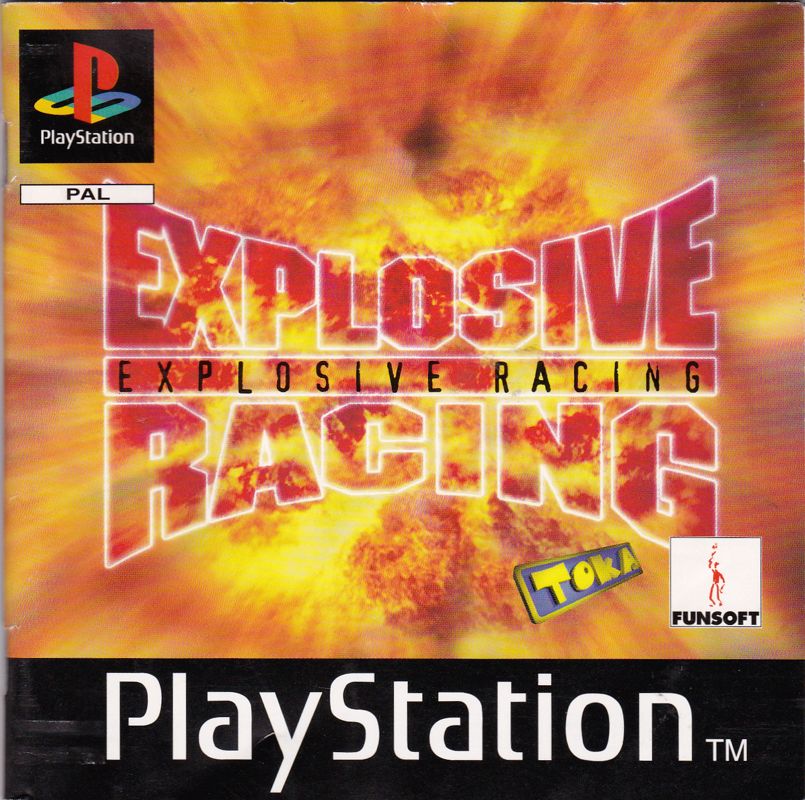
Retro Replay Review
Gameplay
The first few races make Explosive Racing’s priorities plain: get moving, find the next checkpoint, and do not throw away your run on a bad corner. This is an arcade racer built around time pressure, where reaching checkpoints restores the clock and every collision turns a manageable race into a scramble. That structure gives even familiar laps some urgency, because you cannot comfortably settle in behind the opposition and wait for an easy opening.
Its drifting is the part that asks for a little patience. Turns make your vehicle slide in a Sega Rally-like fashion, so you need to anticipate corners rather than react at the last second. When it starts to click, carrying a controlled slide through a bend feels much better than cautiously crawling around it. When it does not, crashes can feel especially costly because they hurt both your position and your remaining time.
Starting with two tracks, six vehicles, Practice, and Championship gives you a focused entry point rather than dumping everything on you at once. Progression matters here: clearing modes in the right ways opens further tracks, vehicles, and modes, which gives repeated runs a tangible purpose. Cars and motorcycles also add welcome variety, while headlights are a useful option when a course gets dim.
The two-player option uses the PlayStation Link Cable, making it a more specialized way to compete than a typical shared-screen race. For solo play, the track-learning loop is the stronger reason to stick around. You will get the most from Explosive Racing if you enjoy shaving mistakes out of runs and unlocking your way beyond the initial set of events.
Graphics
The action is shown from behind the vehicle, keeping the road ahead and the immediate approach to corners in view. Cars and motorcycles give the races different silhouettes, and the optional headlights suit the moments when track visibility darkens.
Story
Explosive Racing frames its campaign through competition rather than a character-driven tale. Your forward momentum comes from taking on Practice and Championship events, then turning successful clears into access to more tracks, vehicles, and modes.
That makes the game’s story, such as it is, a simple racing climb: begin with a limited garage and limited circuit selection, prove you can handle them, and expand your options. It is a clean fit for an arcade racer because the reward is immediately useful on the road.
The absence of elaborate detours keeps attention on improvement. Each newly unlocked vehicle or track reads as another step in your racing career, even if the real drama remains the next checkpoint arriving with the clock running down.
Overall Experience
Explosive Racing is at its best when you accept that it wants you a little tense. The clock prevents sleepy races, the sliding asks you to commit, and the threat of a crash gives every rushed corner weight. It can be frustrating when one mistake unravels a promising run, but that pressure is also what makes a cleaner attempt satisfying.
The sequel’s broader vehicle selection and unlock-driven structure give it more to work with than a one-note checkpoint sprint. Motorcycle races provide a change of pace from cars, and the expanding list of tracks and modes encourages you to keep pushing beyond the opening pair of courses.
At 6.7, this is a respectable arcade racer rather than an essential one. Give it a chance if you like late-1990s racing games that demand track familiarity, controlled drifting, and quick recovery under a timer. Skip it if you want relaxed cruising or races where a single crash does not immediately put your whole run under pressure.

Reviews
There are no reviews yet.