 Retro Replay Retro Gaming History, Reviews & Emulation
Retro Replay Review
Gameplay
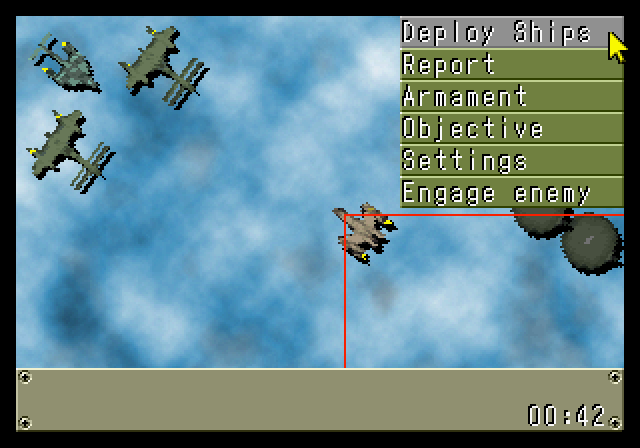
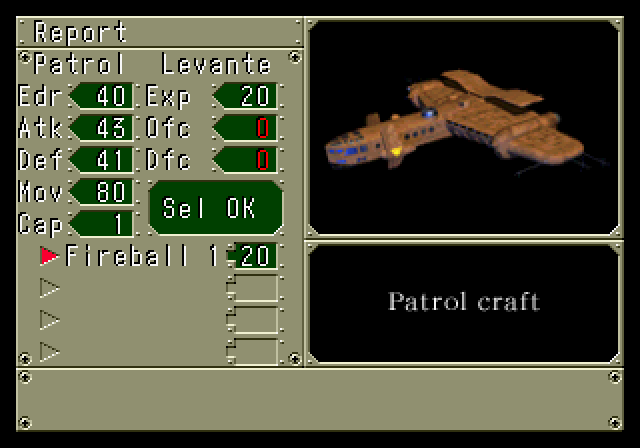
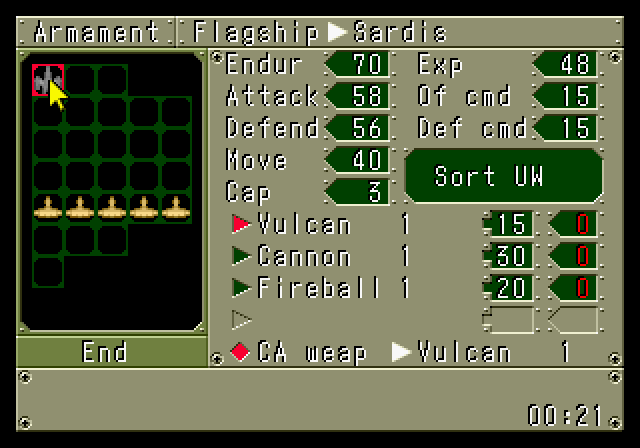
The first hour asks you to think in formation lines and weapon ranges rather than grand empire management. You deploy your ships, arm them, and decide whether to move individual units or commit a whole formation. That is a solid foundation for a turn-based strategy game: each move can either set up an attack or leave a ship exposed when the turn ends.
Combat is admirably direct. Get close enough, select a weapon, pick a target, and fire. There is little mystery about what you are trying to do, which makes it easier to settle into the game’s rhythm. The pressure comes from positioning your squadron well before firing begins, not from wrestling with an overcomplicated battle system.
That straightforwardness is also where the limitations show. Once you understand the sequence of deploying, moving, and shooting, the routine can feel rigid. Ending a turn only after your units have moved or attacked gives the battles a measured pace, but it may test your patience when you want a quicker response to an enemy’s position.
The objective-driven missions help prevent the campaign from becoming a single endless series of battles. Reaching an objective moves you on to the next mission, giving the game a clear sense of progression. If you enjoy carefully advancing a small force through defined tactical problems, that structure works; if you want broad freedom to experiment, it may feel narrow.
Graphics
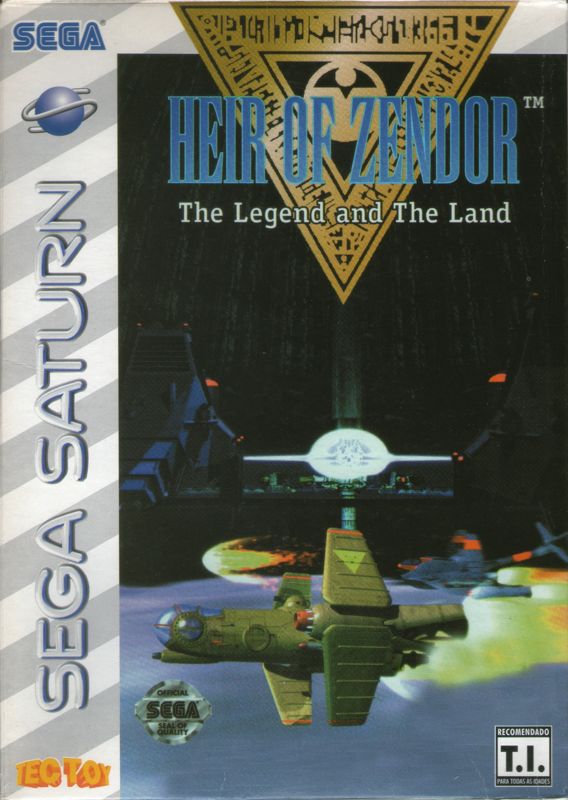
Zendor’s floating continents and the ships crossing between them give the sci-fi setting a distinctive image. The game uses top-down and behind-the-action views, fitting its focus on watching squadron movement and then directing attacks at closer range.
Story
You command the Zendorian Squadron of the Royal Alliance Expeditionary Forces as the Prince of Zendor, with the campaign built around defeating the Five Kings. It is a clean military premise, and it gives each mission a reason to exist beyond simply clearing another map.
The setting does more than supply a few fantasy-sci-fi nouns. Zendor’s continents float because of anti-gravity ore, while water has become the crucial resource left on Terra Sancta after the Great Wars. That scarcity gives the struggle a useful political edge: control of the planet is tied to something worth fighting over.
Still, the story’s role is mainly to frame the strategy. The memorable part is the campaign goal and the world’s resource conflict, not a deeply detailed drama. Treat it as motivation for the missions, and it does its job.
Overall Experience
Heir of Zendor is a modest, focused strategy game that rewards patience more than flair. Its best moments come when a formation move puts your ships in the right place and an attack plan finally comes together. You are constantly weighing movement against the chance to strike, and that basic tension remains satisfying.
Its slower, more prescribed turn structure will not suit everyone. The game can feel like it is asking you to carry out the same careful checklist each round, especially when you already know where your forces need to go. That friction keeps it from rising above the middle of the pack.
Give it a chance if you have a soft spot for mid-1990s console strategy, mission-based campaigns, and deliberate squadron combat. The floating-world premise and clear tactical rules make it worth a look, particularly as a sequel to Gotha: Ismailia Seneki, but the payoff is best for gamers happy to meet it at its own unhurried pace.


Reviews
There are no reviews yet.