 Retro Replay Retro Gaming History, Reviews & Emulation
Retro Replay Review
Gameplay
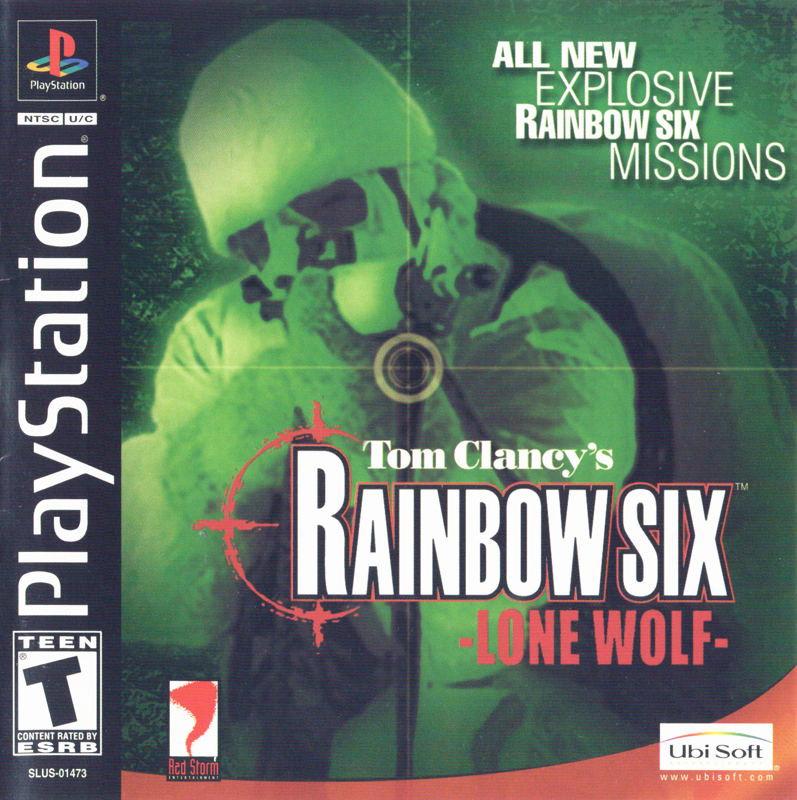
The defining idea in Tom Clancy’s Rainbow Six: Lone Wolf is right there in the name. Ding Chavez goes in alone, and that is more than a story wrinkle: it changes the emotional texture of the tactical shooting. There is no sense that a teammate will smooth over a bad call. The pressure sits squarely on you.
That makes the game a sharper fit for anyone who wants Rainbow Six tension without its usual team focus. The first stretch should quickly establish whether that trade works for you. If you enjoy being personally responsible for every push through a dangerous operation, the solitary premise has real pull. If you loved the series chiefly for coordinated squad work, it can feel like an intentional subtraction rather than a thrilling evolution.
The PlayStation controls were revised to make use of the analog Dual Shock controller, a sensible change for a first-person tactical shooter. Along with eight new weapons, it gives this standalone release some practical reason to exist beyond its new scenario. Still, do not approach it expecting a wholesale new Rainbow Six: this is a concentrated variation on familiar tactical ground.
Graphics
Lone Wolf arrives with an improved graphic engine, which matters because its lone-operative concept asks the game to carry more of its tension through the immediate space around Chavez. You are not watching a team execute a plan; your attention is directed toward the threat in front of you and the risk of being the only one there.
The upgrade should be understood as refinement, not a radical break from the original game. This is a release positioned as a standalone add-on, and its visual improvements serve that role: they help make the return trip feel updated rather than completely unfamiliar.
For a PlayStation tactical shooter, that is the right priority. The graphics do not need to sell an entirely different identity; they need to support the tighter, more isolated mission premise. Anyone demanding a dramatic technical leap may come away underwhelmed, but the improved engine is a welcome part of the package.
Story
The setup is clean and appropriately Tom Clancy-like. Taking place after the original Rainbow Six, the story sends Ding Chavez to Norway to infiltrate a terrorist group importing weapons illegally. It has the concise geopolitical hook this series needs, putting the operation ahead of unnecessary melodrama.
Making Chavez the sole operative gives the premise a more direct line than a broader team assignment. You are not merely attached to Rainbow as an institution; you are inhabiting one agent’s dangerous job. That focus helps the standalone format, even if the story’s basic outline is more functional than expansive.
Returning fans will get the most out of its placement after the first game, since it explicitly continues from those events. Newcomers can still understand the immediate objective, but they should know this is not presented as a fresh starting point for the series. It is a follow-up mission built for people willing to step back into Rainbow Six territory.
Overall Experience
Rainbow Six: Lone Wolf succeeds when you accept its narrower ambition. Rather than replacing the original, it takes one major part of its identity—the tactical danger—and removes the team safety net. That is a bold enough adjustment to make the action feel meaningfully different, even within a modest standalone add-on.
Frustration is likely to set in for anyone expecting the series’ familiar cooperative-minded structure. Going solo is the point, but it also means the game gives up some of what makes Rainbow Six distinctive. The payoff is a more concentrated test of nerve and control, not a richer simulation of a full counter-terrorist unit.
Recommended for Rainbow Six fans who want another operation and are curious about carrying the burden alone, especially on PlayStation where the Dual Shock-focused control changes are relevant. Everyone else should treat it as a specialized side entry: worthwhile for its isolated tactical angle, but not essential unless that angle sounds more exciting than having a squad at your back.


Reviews
There are no reviews yet.