 Retro Replay Retro Gaming History, Reviews & Emulation


Retro Replay Review
Gameplay
The first few minutes of Fruit Ninja are wonderfully legible. Pineapples, pears, apples, mangoes, and strawberries are tossed upward; you cut through them with a swipe; your score climbs. There is no long runway before the game asks you to perform. You are immediately judging the path of the fruit and trying to draw a clean line through as much of it as possible.
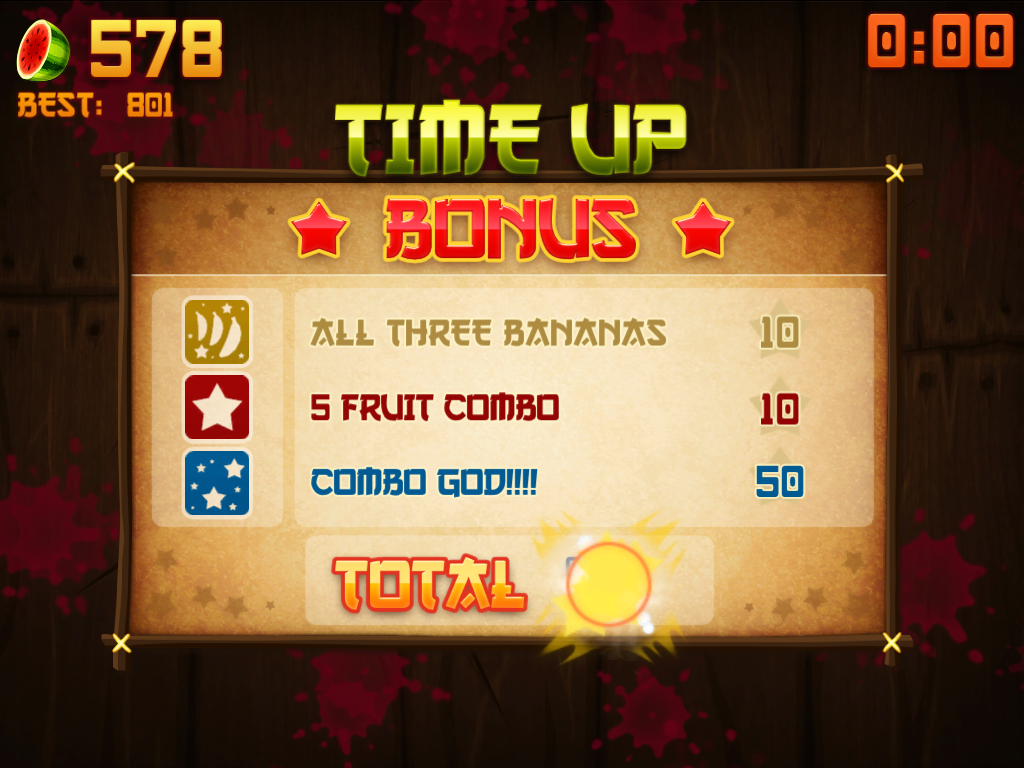
The smart wrinkle is that not every swipe should be treated equally. Slice three or more fruits in one motion and you earn a combo bonus, so the instinct to slash at every target gives way to a more deliberate hunt for grouped fruit. A random critical cut worth 10 points instead of one adds a welcome little jolt, but combos are the stronger reason to stay composed rather than flail.
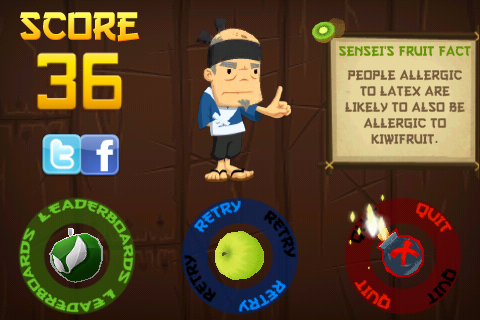
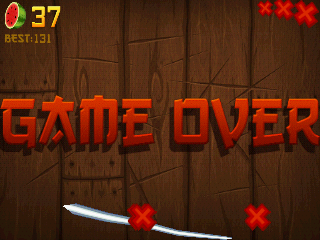
Classic Mode gives that discipline real consequences. Three missed fruits end the run, and hitting a bomb ends it immediately, creating the familiar arcade tension of protecting a promising score. Zen Mode removes both threats and gives you 90 seconds to score freely. Start with Zen if you want to settle into the rhythm; return to Classic when you want every hurried decision to matter.
Graphics
The visual job here is clarity, and the airborne fruit has to be readable at a glance. Distinct fruit shapes and familiar colors make it easy to parse a busy toss quickly: you can pick out an apple, pear, or strawberry and plan a line before it falls away.
That simple presentation helps the action more than an overloaded screen would. Your eye is trained to look for fruit that can be linked into one sweep, then to spot the bomb that can ruin the attempt. The visual hierarchy supports the score chase instead of getting in its way.
There is also a cheerful immediacy to seeing ordinary fruit turned into targets. The game does not need elaborate scenery to sell its fantasy; the image of a rising cluster and the invitation to cut across it is enough to make another attempt feel tempting.

Story
Fruit Ninja tells its story through the run rather than through characters or plot. A round begins with possibility, builds as a score gathers momentum, and becomes tense when a bomb or a missed fruit threatens to end it. That is a small-scale arcade narrative, but it fits the game’s fast pace.
Classic Mode has the clearest dramatic shape. Early slices are about finding rhythm; later on, a high score makes every fruit feel like an opportunity and every bomb like a test of nerve. The rules create the stakes cleanly, without asking you to stop playing to absorb extra context.
Zen Mode changes the mood from survival to pure accumulation. With danger removed, the 90-second clock becomes the central pressure, turning the session into a focused sprint for efficient cuts and better combos. If you need a story with a developed cast or a larger journey, this is not that kind of game; its payoff is the tale you make out of one increasingly valuable run.
Overall Experience
Fruit Ninja remains effective because it understands the value of a rule you can grasp in a second and improve at for much longer. Cutting fruit is immediately gratifying, but the scoring system quietly asks for better timing, cleaner grouping, and restraint around bombs. That combination gives a tiny arcade premise more staying power than it first appears to have.
The two main modes make the same core action serve different moods. Zen is the easy recommendation for a relaxed, timed score attack, while Classic supplies the stakes that make personal-best attempts memorable. Frustration arrives when a promising run ends on a bomb or a third miss, but that sting is also what makes a clean follow-up run feel earned.
This is a strong fit when you want short sessions with a clear goal and immediate feedback, not a sprawling action game. Its 7.2 score feels fair: the concept is narrow, yet it executes that narrowness with real arcade confidence. For some useful background on the game’s path from simple idea to hit, read Halfbrick’s Fruit Ninja history.



Reviews
There are no reviews yet.