 Retro Replay Retro Gaming History, Reviews & Emulation

Retro Replay Review
Gameplay
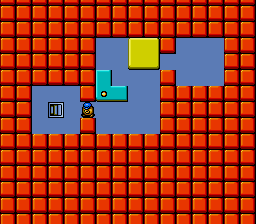
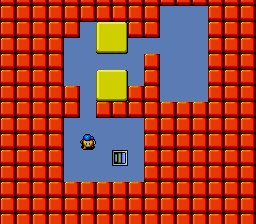
Puzzle Boy starts with a rule set you can grasp in seconds: walk through a maze, push boxes, and reach the exit. The trouble, naturally, is that boxes cannot be pulled back. A push that looks harmless can trap a box against a wall, block a corridor, or ruin the only route through the room. That simple restriction gives even early puzzles a pleasingly tense, deliberate rhythm.
The first hour is likely to alternate between quick wins and the sudden realization that you have poisoned a solution several moves ago. There is no undo function here, which makes Puzzle Boy harsher than many modern puzzle games. You need to think ahead, especially before pushing anything into a corner or through a narrow passage. Restarting is part of the process, and your patience with that loop will largely determine whether the game feels satisfyingly rigorous or unnecessarily punishing.
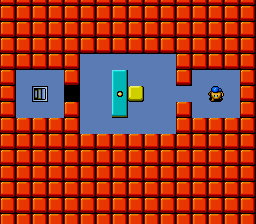
Boxes are not the only concern. Holes and revolving doors add extra spatial problems, forcing you to consider not merely where a crate belongs but when and from which direction you should approach it. Once this starts clicking, the game becomes less about random experimentation and more about reading the entire maze before committing. That is where Puzzle Boy is strongest: it rewards care, memory, and the stubborn pleasure of untangling a room that initially seemed impossible.
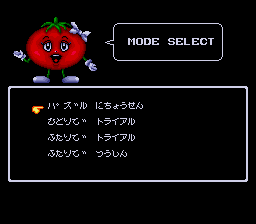
The main level mode is the reason to play, with 100 levels spread across four difficulty-rated sets. Each completed set leads to the same ending, so the reward is less about narrative progression than the satisfaction of clearing a demanding batch of puzzles. Challenge mode, which asks you to finish ten levels against a time limit, shifts that thoughtful pace into something more pressured. Split-screen multiplayer is an interesting change of pace, though the core design is at its best when you can stop, study the layout, and own every decision.
Graphics
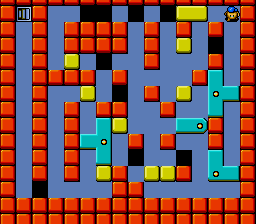
Unlike Kwirk’s isometric view, Puzzle Boy uses a straight top-down perspective. That makes the maze layouts and box positions immediately clear: you can see the lanes, corners, holes, revolving doors, and exit without translating an angled view in your head. The graphics were changed for this version, but the useful part is the direct overhead camera, which suits a game built around planning exact pushes.
Story
There is very little story to carry Puzzle Boy forward. You are in a maze, trying to reach the exit, and the game keeps its attention on the puzzle in front of you.
Finishing a level set earns an ending, but every set shares that same payoff. That makes the endings a modest marker of completion rather than a reason to push through the tougher stages. The real narrative is the one you create through failure and discovery: the box you pushed too soon, the reset you reluctantly accept, and the route that finally works.
That stripped-down approach fits the game. Puzzle Boy does not interrupt its puzzles with elaborate context or try to make its maze escape more dramatic than it is. If you need a story hook, it will feel dry; if you want puzzles to speak for themselves, the lack of distraction is welcome.
Overall Experience
Puzzle Boy is a solid, demanding Soko-Ban variant with a strong central loop and enough levels to justify serious time. Its top-down view makes the board state easy to parse, while holes and revolving doors ensure the puzzles do more than recycle basic crate-pushing ideas. When a solution comes together after several failed attempts, it delivers the exact clean rush this genre is built on.
The missing undo function is the major friction point. You will make an error, recognize it immediately, and still have to restart rather than simply rewind one move. For some gamers, that makes every push feel meaningful. For others, it adds too much repetition to puzzles that are already designed to make you fail. Go in ready to plan before acting, not to improvise your way out of trouble.
If you like compact, logic-first puzzle games and can tolerate old-school severity, Puzzle Boy is worth your time. Start with the level mode and let its escalating sets teach you how cautiously to handle its spaces; save timed challenges for when the basic rules feel natural. It is not warm or forgiving, but it is satisfyingly exacting, and its many mazes give that precision room to grow.


Reviews
There are no reviews yet.