 Retro Replay Retro Gaming History, Reviews & Emulation

Retro Replay Review
Gameplay
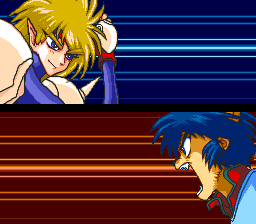
The first thing you notice is that Kanketsuhen is not content to merely replay Gaia no Fukkatsu with cleaner edges. It retains much of the same progression and the same areas, but it rebuilds the part you spend the most active time with: combat. That matters. Rather than watching fights unfold on the original’s isometric battle screens, you see the player-controlled characters attack enemies from an over-the-shoulder third-person view. The change gives battles a more direct, character-focused feel.
The turn-based structure keeps the pace deliberate, so this is not a reinvention that turns the game into an action RPG. What it does do is make individual encounters feel less detached. Seeing your character physically engage the foe is a modest change on paper, but it is the kind that makes repeated fights easier to stay invested in.
Equipment is the other meaningful improvement. Being able to equip weapons and armor gives the game more of the traditional RPG-lite depth that the earlier version lacked. You have more reason to think about how your party is prepared instead of simply moving from story beat to story beat. If you enjoyed the original’s route but wished it had given you more ownership over combat and character setup, this version addresses exactly that complaint.
There is still a trade-off: the remake does not radically change the journey’s structure. Since the story progression and the places you traverse are mostly preserved, returning players should come for the revised moment-to-moment play and expanded scenes, not a wholly different adventure.

Graphics
The battle camera is the clearest visual upgrade. Over-the-shoulder fights put characters and enemies front and center, letting you watch attacks land rather than viewing combat from the original’s isometric angle. Cutscenes also have more presence thanks to the added scenes and voiced dialogue.

Story
Kanketsuhen follows largely the same story as Gaia no Fukkatsu, which makes it a revision rather than a narrative replacement. That can be reassuring if you want the original tale preserved, but it also means the new material has to earn its value in the margins.
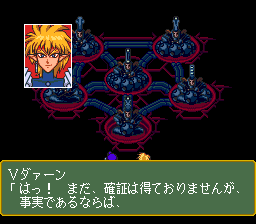
Fortunately, added cutscenes and expanded dialogue are the right places to spend that effort. They do not reroute the central progression, yet they make room for the cast and the ongoing events to register more clearly. Voice acting during cutscenes helps these moments land with more personality than plain text alone could manage.
The CD audio is another strong fit for this sort of story-led RPG. It gives major scenes a little more ceremony and helps the game feel less like a dry mechanical rewrite. You are still following the established route, but the remake gives that route a fuller dramatic frame.
Overall Experience
This is the stronger choice for anyone drawn to the premise of Gaia no Fukkatsu but wanting a more conventional RPG layer around it. Equipment, redesigned battles, voice work, and CD music all push in the same direction: making an existing adventure feel more substantial without discarding its foundations.
Its limitation is also its point. Kanketsuhen preserves the original story progression and much of its traversal, so it will not surprise you with a radically new campaign. The payoff is refinement rather than reinvention, and that is enough when the combat overhaul is so central to how the game feels.
Give it a chance if you like older turn-based RPGs and want an anime-styled, story-forward game whose remake work focuses on the fundamentals. Skip it only if preserving the basic shape of the earlier adventure sounds like a drawback; this is a careful rebuild, not a clean break.


Reviews
There are no reviews yet.