 Retro Replay Retro Gaming History, Reviews & Emulation


Retro Replay Review
Gameplay
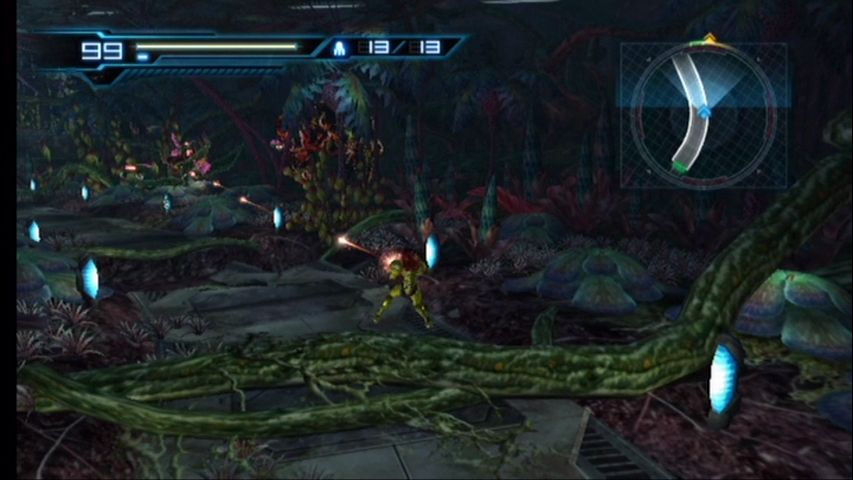
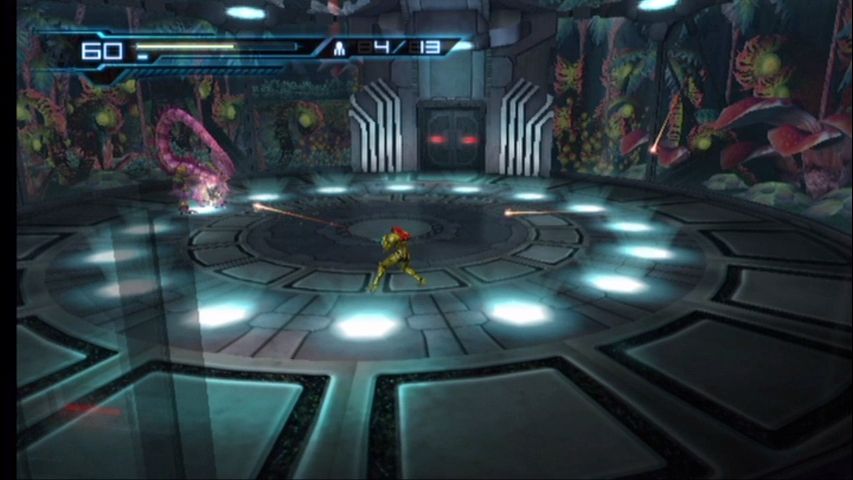
Other M feels strange for about five minutes, then surprisingly immediate. You hold only the Wii Remote, move through side-scrolling spaces, and generally aim Samus in the right direction while her standard shots find their mark. That streamlined setup gives fights a quick, almost arcade-like rhythm. Samus is much more mobile than in older Metroid games, with dodges, grapple attacks, and finishing moves pushing combat toward the speed associated with Team Ninja.
The clever wrinkle is the snap into first-person view: point the Remote at the television and you can line up targets, lock on, and fire missiles. It creates a satisfying break in perspective during combat, even if switching attention from the side-view action to the screen-pointing stance takes a little acclimatization. Small rooms also shift to an over-the-shoulder view for exploration, while the Morph Ball returns for tight spaces with the camera pulled in close.
There is still a proper Metroid urge to search around for collectible upgrades, and that familiar hunt gives the game more texture than a straight action run. The frustration is that Samus often possesses suit abilities but will not use them until Adam authorizes them. As a story device it is clear enough; as a player-facing restriction, it can make you impatient when the answer to an obstacle seems obvious. Other M works best when you accept its guided pace and lean into its rapid combat rather than expecting the freer rhythm of the older games.

Graphics
The game moves among side-scrolling action screens, first-person aiming, and close over-the-shoulder exploration rooms. The tightly framed Morph Ball camera makes confined passages feel especially close, while the first-person view gives missile targeting a direct, screen-centered focus.
Cinematic scenes are a major part of the package, carrying both the opening recap of Super Metroid’s finale and much of the character-focused drama aboard the station.

Story
Set after Super Metroid and before Metroid Fusion, Other M begins after Samus has recuperated and answered a distress signal from a troubled space station. She soon encounters her former military commander, Adam Malkovich, and joins his Federation soldiers in investigating what is happening. That setup gives the adventure a more staffed, military context than the lonelier journeys many fans associate with Samus.
The bigger change is how insistently the game wants to explain Samus. Cutscenes, spoken dialogue, and internal monologues dwell on her memories, her connection to Adam, and her view of the unfolding mission. If you have wanted more direct access to Samus as a character, there is a lot here to chew on.
That comes at a cost. The authorization structure is woven into the plot, so story and progression are tightly linked, but it also turns Adam into a constant presence in decisions that might otherwise feel like yours. Whether that bothers you depends on how much you value Metroid’s traditional sense of isolated self-reliance. This is not a quiet blank-slate Samus; it is a strongly authored interpretation of her.
Overall Experience
Metroid: Other M is a good game with an unusually specific idea of what a Metroid game should be. Its strongest argument is the combat: fast, simple to operate, and energetic without asking you to master a crowded controller layout. Once dodges, automatic fire, and first-person missiles become second nature, encounters have a clean forward drive.
Its weakest point is that the same desire for control carries into the narrative and progression. The station investigation, Adam’s command, the frequent cinematics, and the equipment authorizations make this a more directed journey. That can be engaging when you want a tightly paced action game, but it may grate if your favorite part of Metroid is discovering the route and setting your own tempo.
Give it a chance if you are curious about a side-scrolling Metroid filtered through Team Ninja’s action sensibilities, or if you want a version of Samus given far more dialogue and emotional context. Skip the expectation that it will recreate the open-ended solitude of Super Metroid. Meet it on its own terms, and its sharp combat and unusual perspective shifts make the trip worthwhile.


Reviews
There are no reviews yet.