 Retro Replay Retro Gaming History, Reviews & Emulation

Retro Replay Review
Gameplay
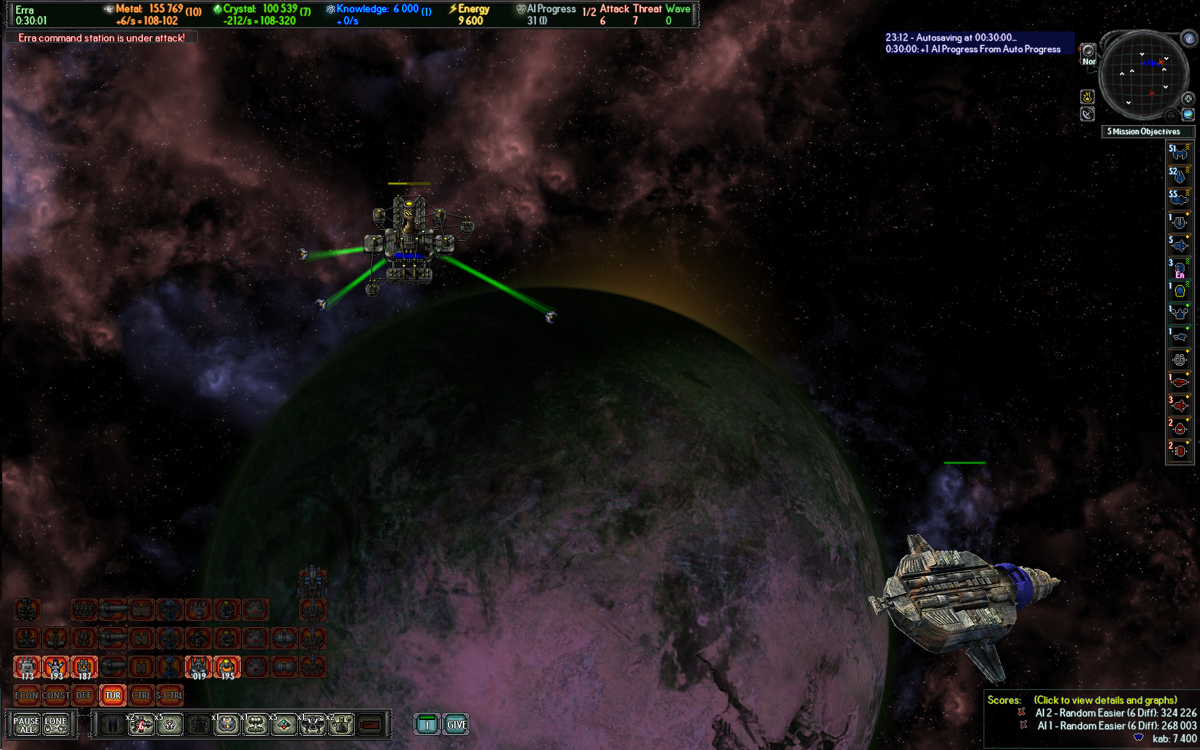
The first hour of AI War: Fleet Command can feel like being handed the controls to a war you are already losing. You have a home command station that cannot fall, nearby planets linked by wormholes, and two AI opponents whose response to your expansion is the central problem rather than a background nuisance. That is an excellent foundation for real-time strategy. Every decision to seize another planet asks a question: is its knowledge, resources, or captured infrastructure worth making the AI angrier?
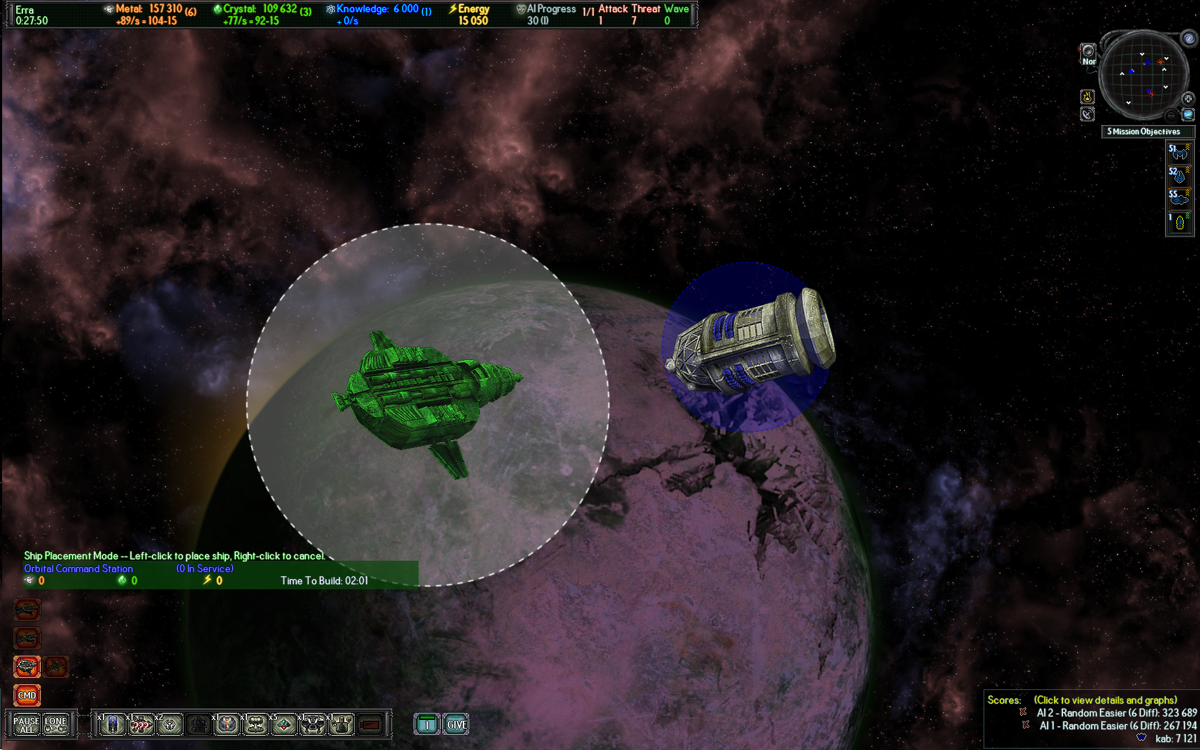
What starts to click is the rhythm of reconnaissance and restraint. Scouts matter because pushing blindly into a new system is an invitation to feed ships into defenses you did not understand. Knowledge runs out on individual planets, so research is not simply a matter of building labs and waiting; eventually you need to reach farther. Metal and crystal feed ship production, energy keeps ships operating, and factories can convert resources when your economy is out of balance. It is a lot to track, but the systems connect in a way that makes expansion feel like a calculated risk instead of routine map painting.
The battles can grow from manageable skirmishes into crowded wars of hundreds or thousands of units. Basic bombers, cruisers, fighters, and frigates give you a starting force, while research and captured AI factories or stations widen your options. Units automatically attack once enemies are in range, with manual target selection available when a particular threat needs to die first. That lets you focus on where a fleet should go and which planet matters most, rather than demanding constant individual orders.
Frustration arrives when a good-looking conquest turns out to be strategically reckless. AI Progress rises as you expand, empowering the forces sent against you, so grabbing territory without a plan can turn defense into a desperate repair job. Turrets around wormholes are a sensible answer, and destroying AI data centers can reduce the pressure, but the game does not let you treat defense as an afterthought. If you enjoy strategy games that punish greed and reward reading the map, that tension is the point. If you want a breezier RTS campaign, it can feel exhausting.
Graphics
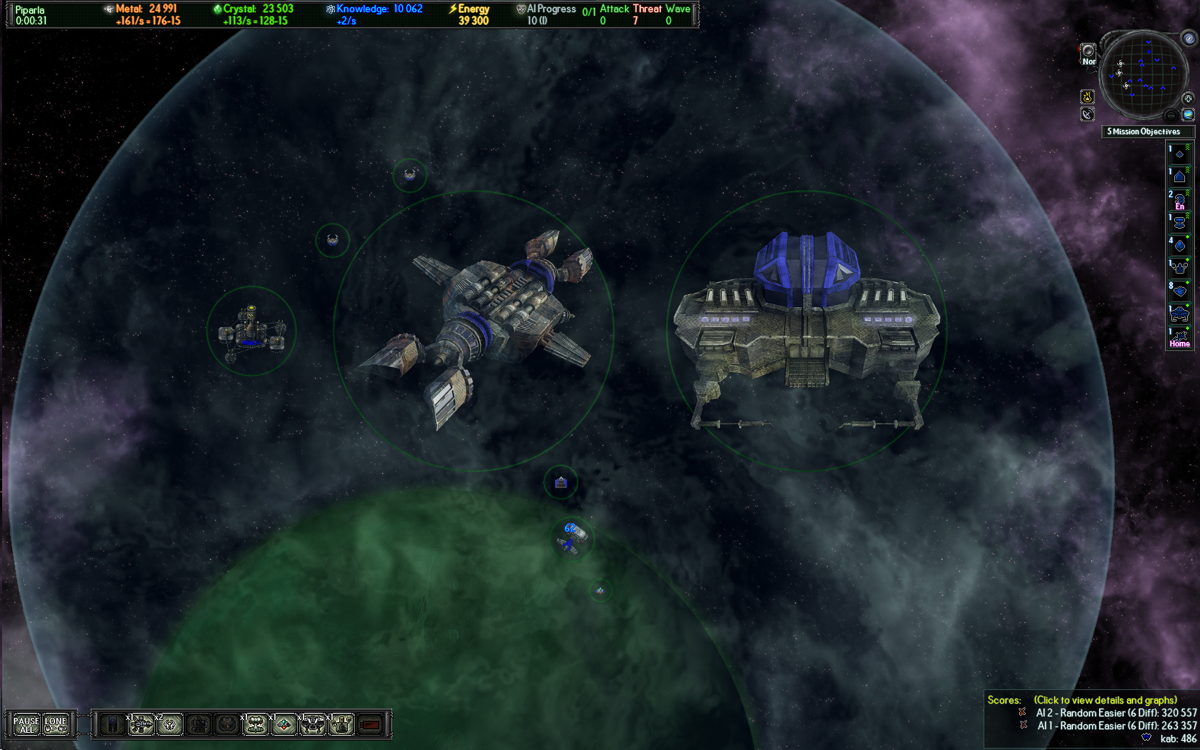
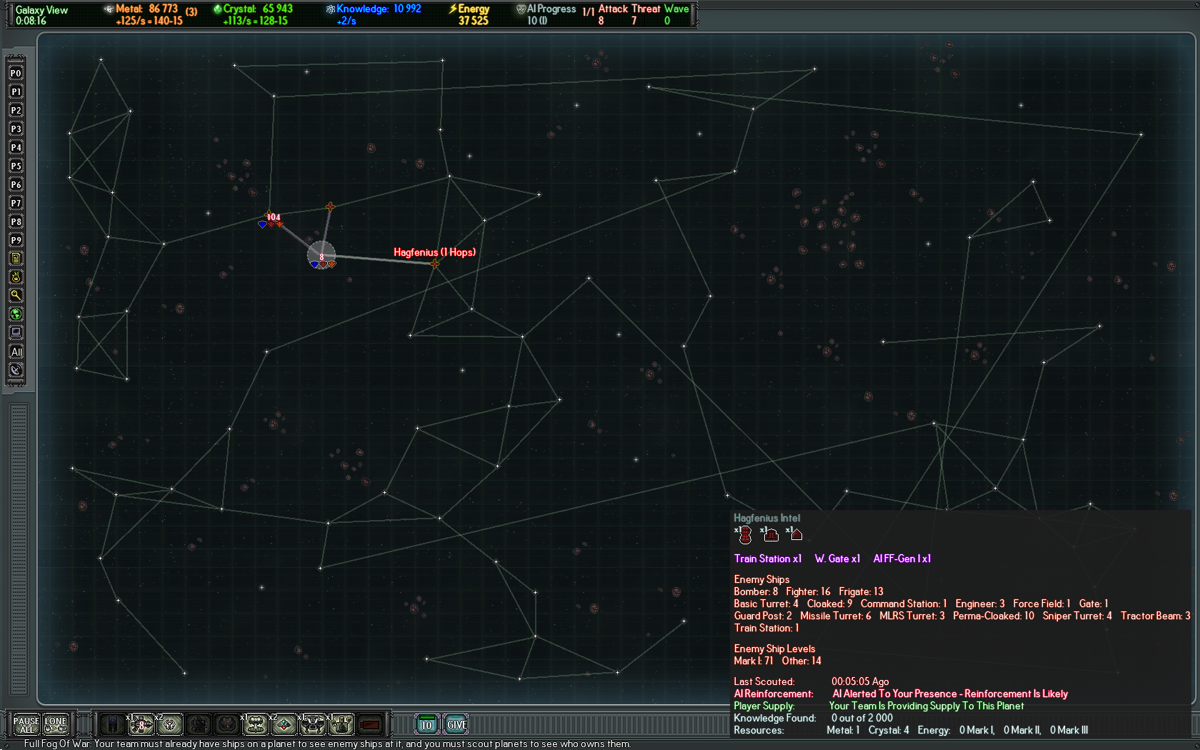
AI War: Fleet Command uses a top-down space battlefield view built for keeping track of fleets, installations, planets, and wormhole approaches. The large-scale fights are the visual draw: massed ships and defensive lines give the galactic war a suitably busy tactical look, while the overhead perspective keeps the important movement legible.
Story
The setup is direct but effective: after an eight-hundred-year human civil war, humanity has to cooperate against the AIs it once used. Those AIs learned to cooperate too, then turned on their former masters. It is a familiar science-fiction reversal, yet it gives the campaign’s defensive posture some welcome urgency. You are not building an empire from safety; you are trying to break an enemy command network before it breaks yours.
The two AI-controlled opponents are more than a narrative excuse for multiple enemy factions. Their distinct tactics and non-human rules reinforce the story’s key idea that these are not conventional rivals following the same priorities you do. The campaign’s procedurally generated galaxy also helps the conflict feel less like a scripted march and more like a hostile strategic problem that must be understood anew.
Do not come in expecting a character-led space opera. The story works as context for the strategic pressure: human cooperation is necessary, the enemy has a long memory, and overreaching can revive the very danger you are trying to contain. That is enough to keep the war focused.
Overall Experience
AI War: Fleet Command earns its strongest moments when you stop treating each planet as a prize and start treating it as a liability, a resource source, or a route the AI can exploit. That change in mindset is the payoff. Capturing a world, fortifying its wormholes, using its knowledge, and deciding whether to press farther or consolidate creates a satisfying strategic loop with consequences.
The cooperative option is especially well matched to the design. Up to eight people can take on the campaign together, which suits a game where scouting, defending, researching, and moving fleets can all demand attention at once. Even alone, though, the game has a clear identity: this is a grand-scale RTS about managing escalation, not merely producing the largest army.
Give it a chance if you like hard strategy games that make information, logistics, and self-control as important as combat. The learning curve is real, and the sheer volume of units and decisions can be intimidating. But if you enjoy earning a victory through careful planetary choices instead of simply snowballing, AI War: Fleet Command offers a tense, unusually thoughtful war against an opponent that is designed to play by its own rules.


Reviews
There are no reviews yet.