 Retro Replay Retro Gaming History, Reviews & Emulation
Retro Replay Review
Gameplay
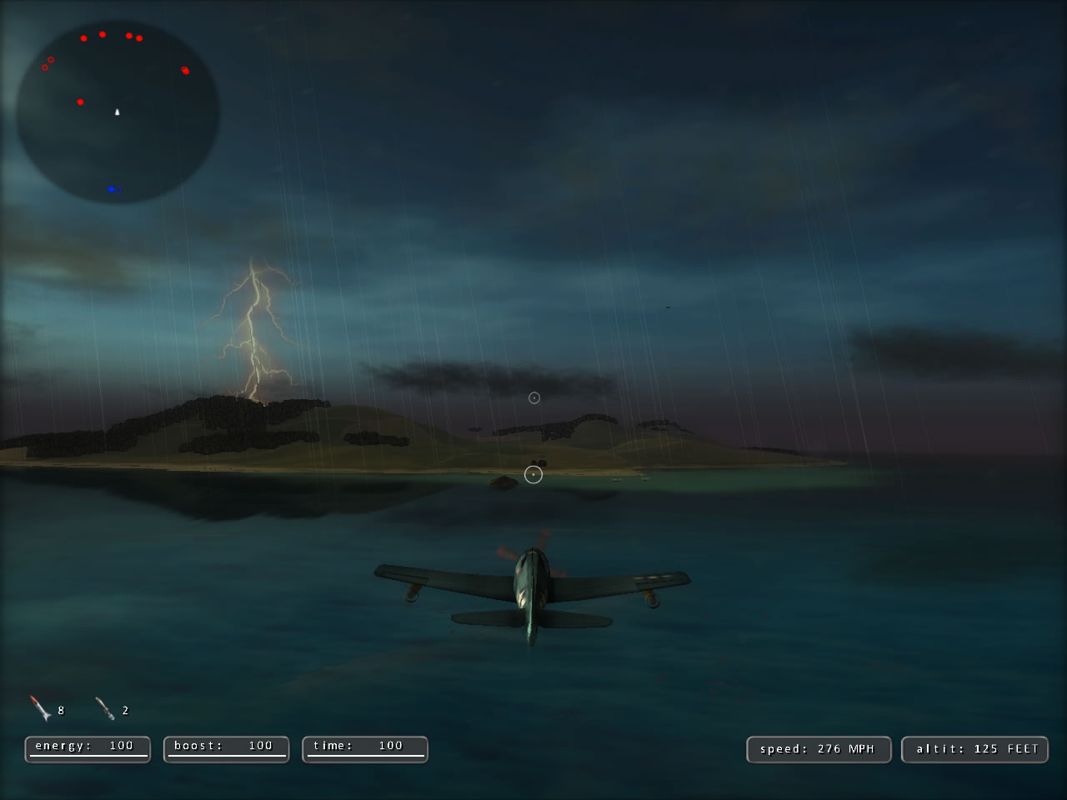
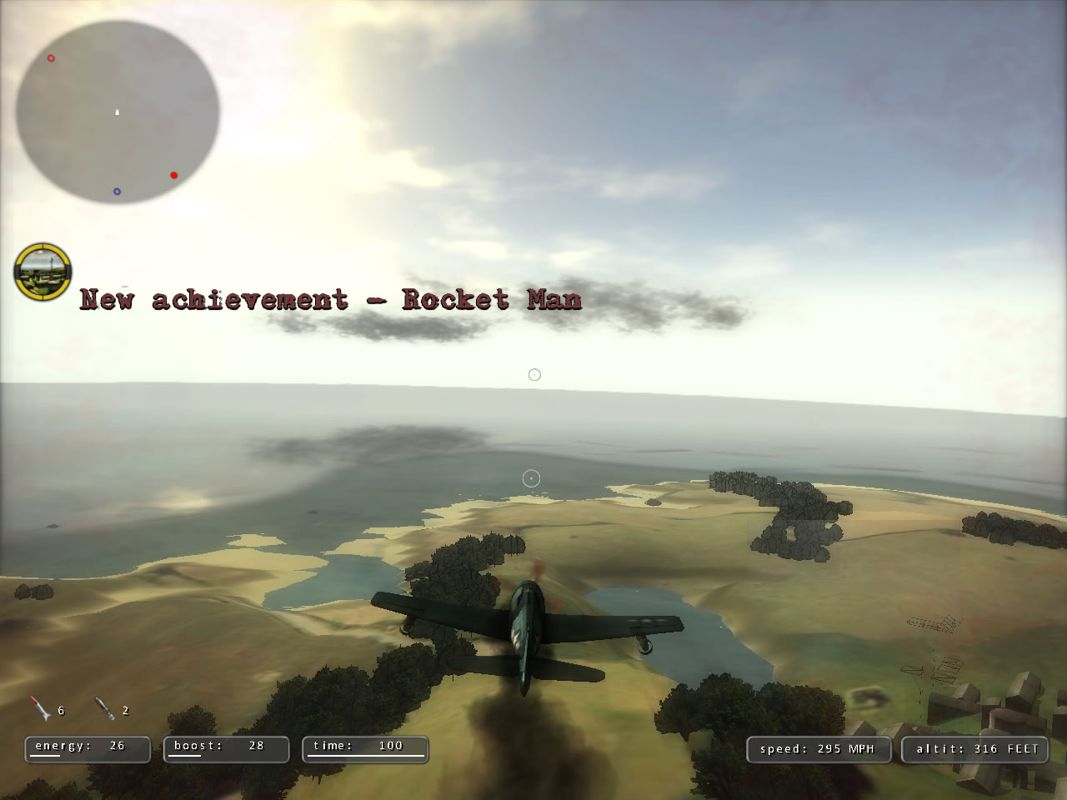
The first few missions have a clean, immediate rhythm: take off from the carrier, use the radar to locate enemies, and get your guns on target. Air Aces: Pacific is an aerial combat game with an arcade lean, so you can concentrate on the chase instead of being buried in simulation detail. The double crosshair and enemy health bars make the act of pursuing a target fairly direct, while the red dots in the top-left radar keep opponents from disappearing completely when the fight gets messy.
Weapon selection gives each engagement a little more thought than simply holding the machine-gun trigger. Guns have unlimited ammunition, which makes them your dependable answer to enemy aircraft. Rockets and torpedoes are limited, so spending them matters; torpedoes are especially valuable when naval targets enter the mission. The rechargeable boost is another small but welcome decision point. Burn it to close on a fleeing fighter or save it for a moment when position really matters.
The campaign asks you to complete several objectives per mission, and getting safely back onto the carrier is part of the job rather than an afterthought. That makes a battered late-mission return more tense than a simple victory screen. Some sorties also give you a wingman, while others leave you alone, creating a modest change in how exposed you feel in the air.
Frustration can set in because there is no repairing damage once you are underway, and there are no power-ups to bail out a rough run. You need to fly with some restraint instead of treating every target as a reason to charge in. Destructible objects and buildings can be shot, but the damage does not persist, so they are momentary targets rather than a lasting tactical concern.
Five aircraft are available, though only one starts unlocked. That gives you something to work toward, but the core loop remains the same: manage speed, conserve limited ordnance, finish the objectives, and land safely. If that sounds satisfying, the game’s straightforward structure is more of a virtue than a limitation.
Graphics
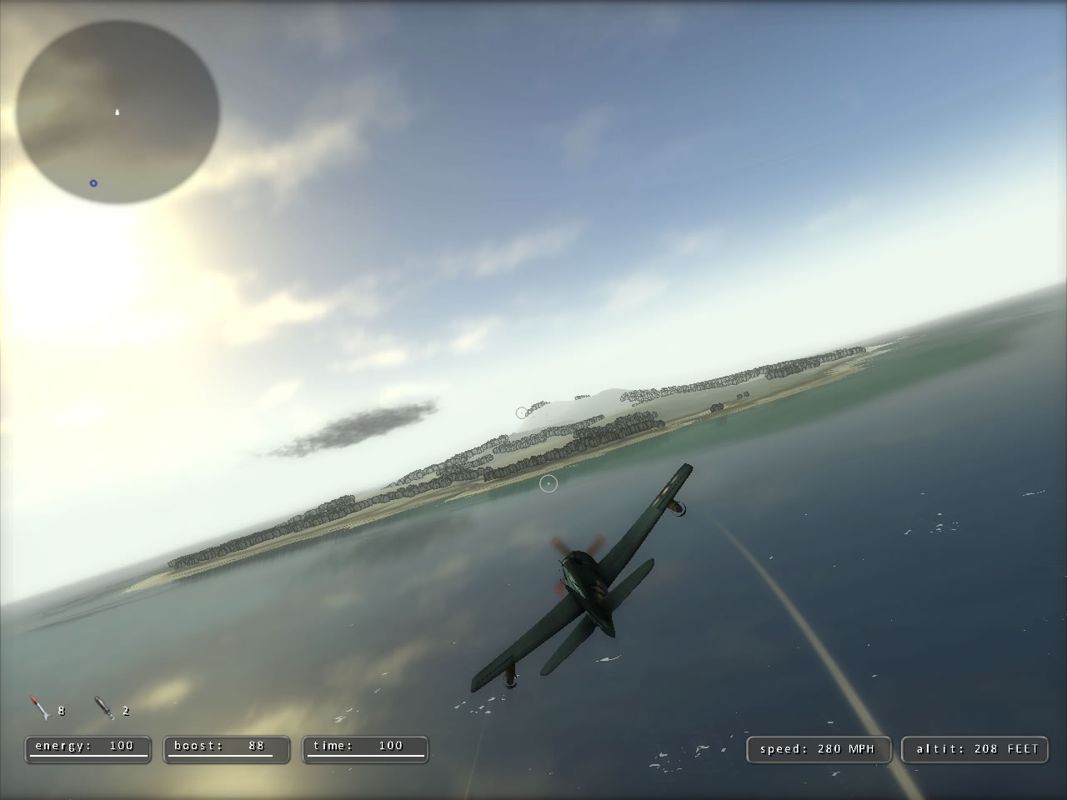
The game uses a behind-the-aircraft viewpoint, keeping your fighter, the open sky, enemy planes, ships, and carrier operations in the same line of sight. The radar mini-map sits in the top left, while crosshairs and enemy health bars stay visible during combat, so it is easy to understand where the next fight is developing and whether your shots are paying off.
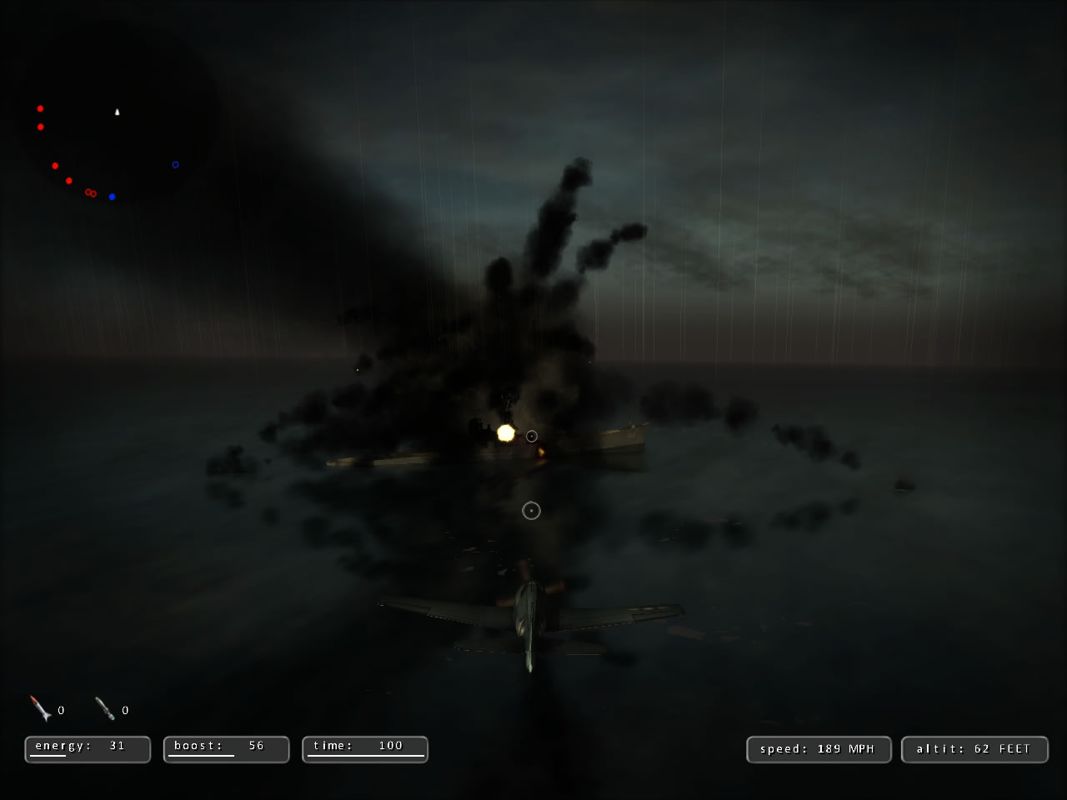
Aircraft carriers, naval enemies, buildings, and other objects give missions targets beyond opposing fighters. Watching a torpedo run develop against a ship should be more immediately legible than trying to pick a target out of a purely air-to-air scramble.
Story
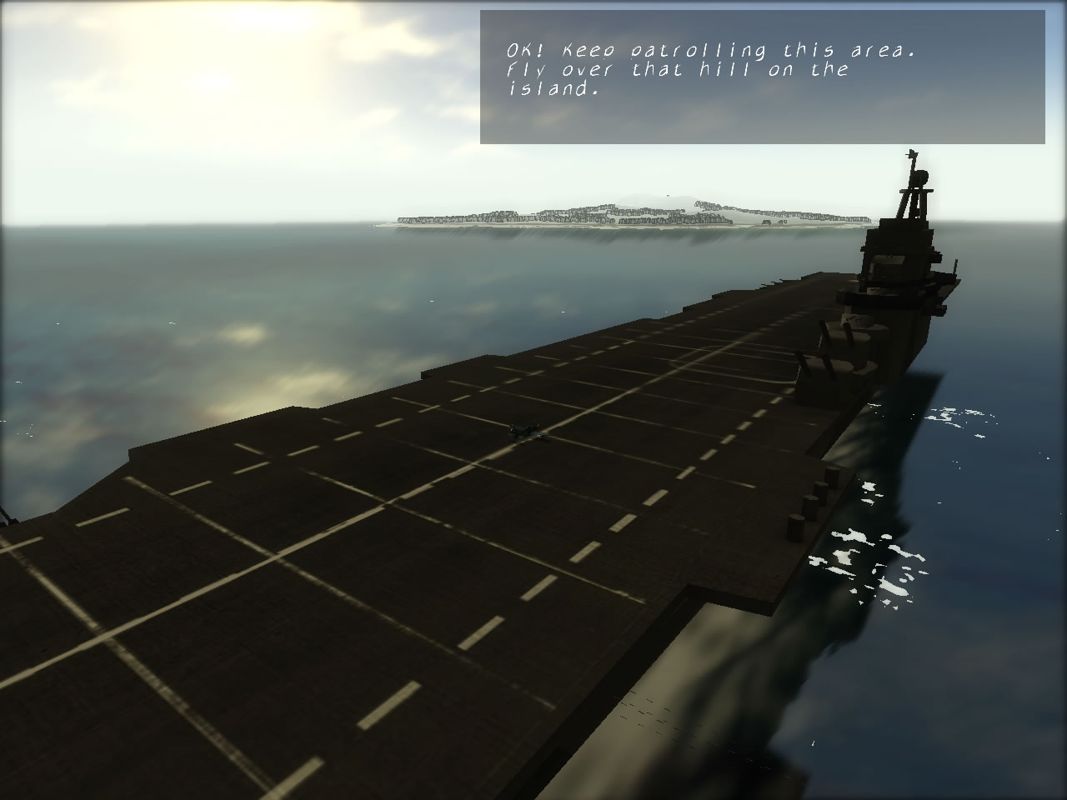
This is a World War II campaign built around fighting Japanese forces from an aircraft carrier. Its story role is functional: it gives the sorties a clear military direction and moves you from one set of mission objectives to the next.
Do not come to it expecting a character-led war drama. The supplied squadron context is you, your fighter, and, on certain missions, a wingman. The meaningful moments come from how a sortie unfolds: whether you finish the required targets, whether your plane survives the damage it takes, and whether you can make the carrier landing.
That spare framing fits the arcade approach. Rather than stopping the action for elaborate narrative detours, the campaign keeps pulling you back toward the next launch. If you enjoy World War II air-combat scenarios mainly as a reason to get into another dogfight, it does the job.
Overall Experience
Air Aces: Pacific is for you if you want a compact, objective-driven World War II flying game that values immediate combat over detailed simulation. The strongest part is the pressure created by several objectives, finite rockets and torpedoes, and the need to return to the carrier alive. A mission can go well in the middle and still demand a careful finish.
Its limitations are plain, but they are consistent with its focused design. You will not repair damage during a mission, find power-ups, or leave permanent marks on the environment. That makes careful flying and sensible use of boost more important than brute-force experimentation.
Give it a chance if carrier launches, radar-guided dogfights, and a final landing sound like a satisfying loop. The payoff is not complexity for its own sake; it is the simple pleasure of surviving a mission with your objectives complete, your limited ordnance spent wisely, and enough control left to bring the fighter back aboard.


Reviews
There are no reviews yet.