 Retro Replay Retro Replay gaming reviews, news, emulation, geek stuff and more!
Retro Replay Review
Gameplay
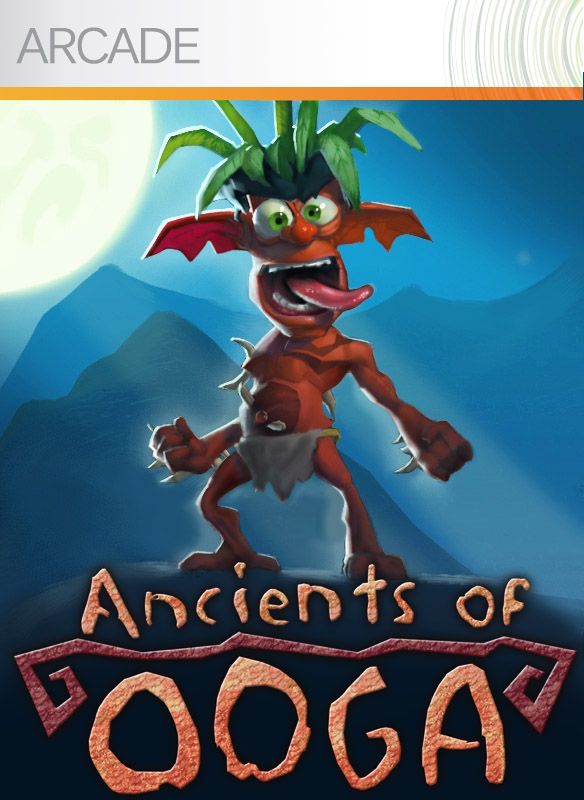
The first hour of Ancients of Ooga is a welcome surprise because it refuses to let its platforming stay simple for long. You control the Spirit of Ooga rather than one fixed hero, possessing nearby Ooganis and swapping again whenever another body has the right skill. That constant change gives even basic progress a puzzle-game rhythm: getting past an obstacle is less about a perfect jump and more about identifying which creature, object, or environmental interaction solves the next step.
Its best ideas arrive when several Ooganis have to cover one another’s weaknesses. Different bodies can pull levers, turn wheels, stand on pressure plates, spit fire, swim faster, summon floods, cross lava, or slow time. The game asks you to think in sequences, often using one character to prepare a route before moving into another. There is no permanent party member to protect, which makes the possession system more flexible than a rigid multi-character platformer; you are encouraged to improvise with whoever is around.
Chewing objects adds another entertainingly strange layer. An Oogani can hold one swallowed item at a time, carry it up a ladder, and bring it back up later by puking it out. Items can also restore health, trigger effects, or be thrown; peppers produce fire, some fruit sends an Oogani to sleep, and beans allow hovering. It is clever, but this is also where frustration can creep in. With a single-item limit and many possible uses for bodies and objects, the solution is not always something you will stumble into immediately.
The fixed side camera keeps the action rooted in 2D platforming, though you can move into the foreground and background instead of following a single flat lane. That extra depth suits the puzzles, yet it can make a route feel less immediately obvious than it would in a purely side-on game. The map and quest overview are helpful when you need to reorient yourself across the villages. Bring a friend if you can: two-player cooperative play fits the stop-and-start problem solving naturally, especially when one person can test a thought while the other keeps track of the wider setup.
Graphics
Ancients of Ooga uses 3D character models but frames most challenges with a fixed side view. The Ooganis, Boolis, lava-walking routes, ladders, wheels, and pressure-plate puzzles are presented clearly enough for you to follow the action, while the ability to move toward or away from the camera gives each area a little more space than a flat platformer.
Story
The story is deliberately silly in a way that matches the game’s swallowed-object antics. The Ooganis ignore their chiefs, befriend the Boolis, gorge themselves on intoxicating slugs, and wind up fat, lazy, and enslaved after the betrayal. It is not trying to build a grave fantasy epic; it gives you a ridiculous downfall and lets the comedy come from how far these creatures have fallen.
You enter as the Spirit of Ooga, summoned by the few Ooganis still interested in freedom. Possession is not merely a mechanical excuse here. It also makes you an active force rebuilding a scattered resistance, one borrowed body at a time. Visiting seven villages gives the campaign a sensible road-trip structure, and reviving each village’s chief provides a concrete reason to finish its set of challenges.
Don’t come for nuanced character drama. The narrative works better as a loose, goofy frame for puzzles about bodily abilities, environmental hazards, and bizarre edible tools. That framing is enough to keep the mission clear without getting in the way: free the Ooganis and undo the mess created by their spectacularly bad judgment.
Overall Experience
Ancients of Ooga is at its most enjoyable when you stop treating it like a clean, forward-driving platformer and start treating every room as a toy box. Possess an Oogani, inspect the obstacle, test what can be chewed or thrown, and look for a character whose ability changes the problem. Once that mindset clicks, the game’s busy collection of systems feels playful rather than arbitrary.
It does ask for patience. The emphasis on objectives across about 50 levels, the need to switch bodies, and the odd one-item stomach inventory can slow momentum when you just want to press ahead. Some gamers will find that density charming; others will see a pile of clever ideas competing for attention. The payoff is strongest for anyone who enjoys pausing to decode a route and then watching a plan come together.
At a 6.7, this is a likable but uneven puzzle-platformer rather than an essential classic. Its possession hook is strong, the cooperative option is well suited to its collaborative puzzles, and its bizarre sense of humor gives it personality. Give it a chance if you want an offbeat platform adventure built around experimentation. Skip it if you need crisp, immediate momentum and solutions that rarely make you stop and think.


Reviews
There are no reviews yet.