 Retro Replay Retro Gaming History, Reviews & Emulation


Retro Replay Review
Gameplay
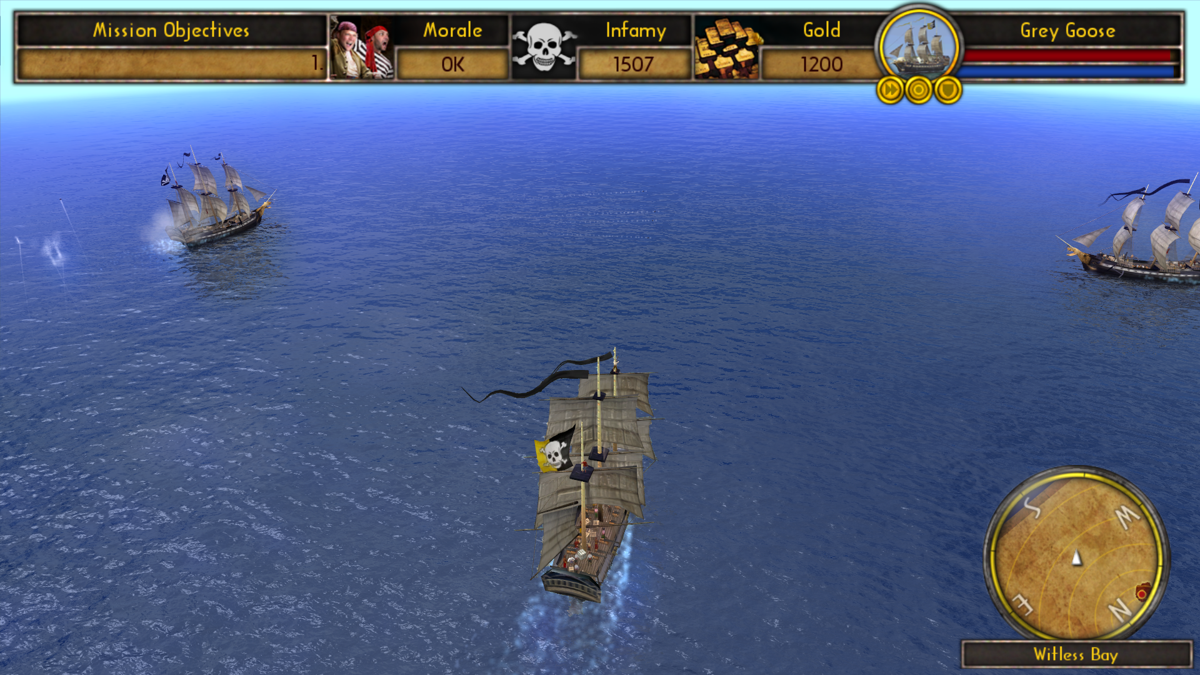
The first hour gets its hooks in through simple, satisfying ship combat. You steer with directional buttons, aim with the mouse, and choose which side of the ship fires its cannons. That means every fight asks for a little positioning: get alongside a target, expose the correct broadside, and avoid drifting into a bad angle yourself. It is not a deep simulation, but it has the immediate pleasure of a game that lets you start causing trouble almost at once.
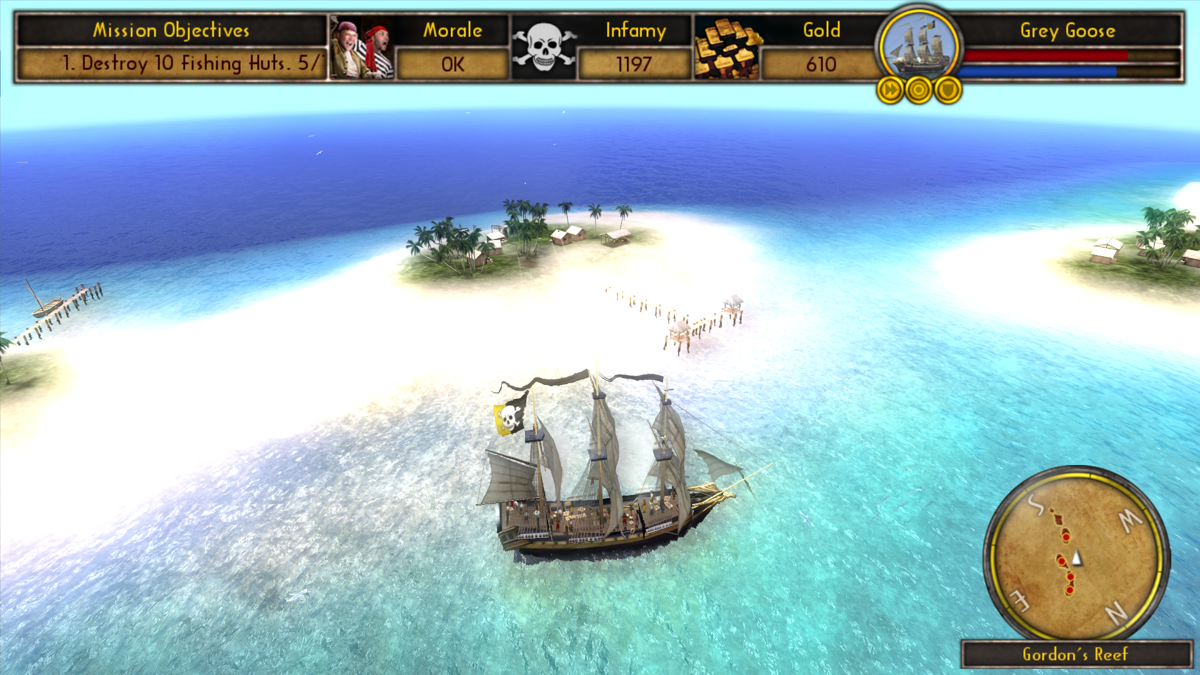
Missions ask you to sink ships, destroy buildings on land, or explore, so the action has more variety than a pure arena shooter. The problem is that most tasks can only be completed once. Merchant convoy robbery is the repeatable exception, and it becomes important because the campaign asks you to build up gold and infamy over time. If you enjoy revisiting the sea for another profitable raid, that loop works; if you need every mission to stay fresh, repetition can set in.
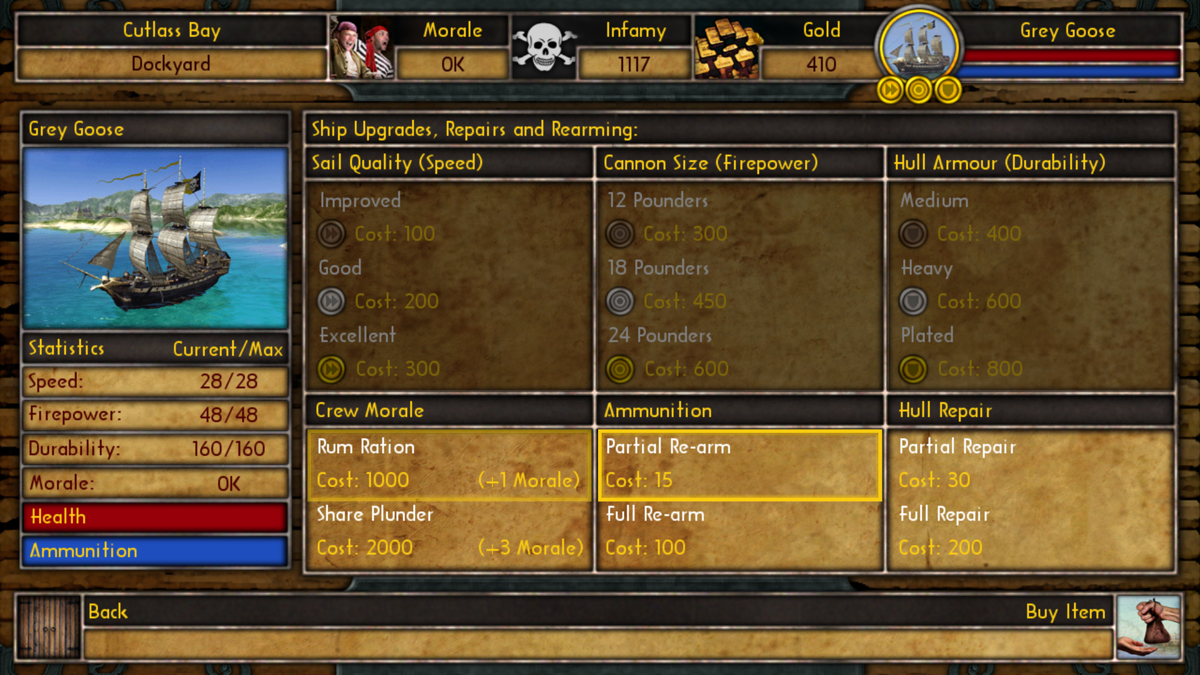
Back in Cutlass Bay, the campaign is managed through menu-based buildings. The Dockyards handle repairs and upgrades, the Shipwright sells vessels with different properties, and the Chart Room is where missions are gained. It is a functional structure rather than an immersive port adventure, but it keeps the focus on the next sortie. The multiplayer battles, supporting teams of up to 18 players, are a welcome alternative when you want ship-to-ship combat without the campaign’s longer-term maintenance.
Graphics
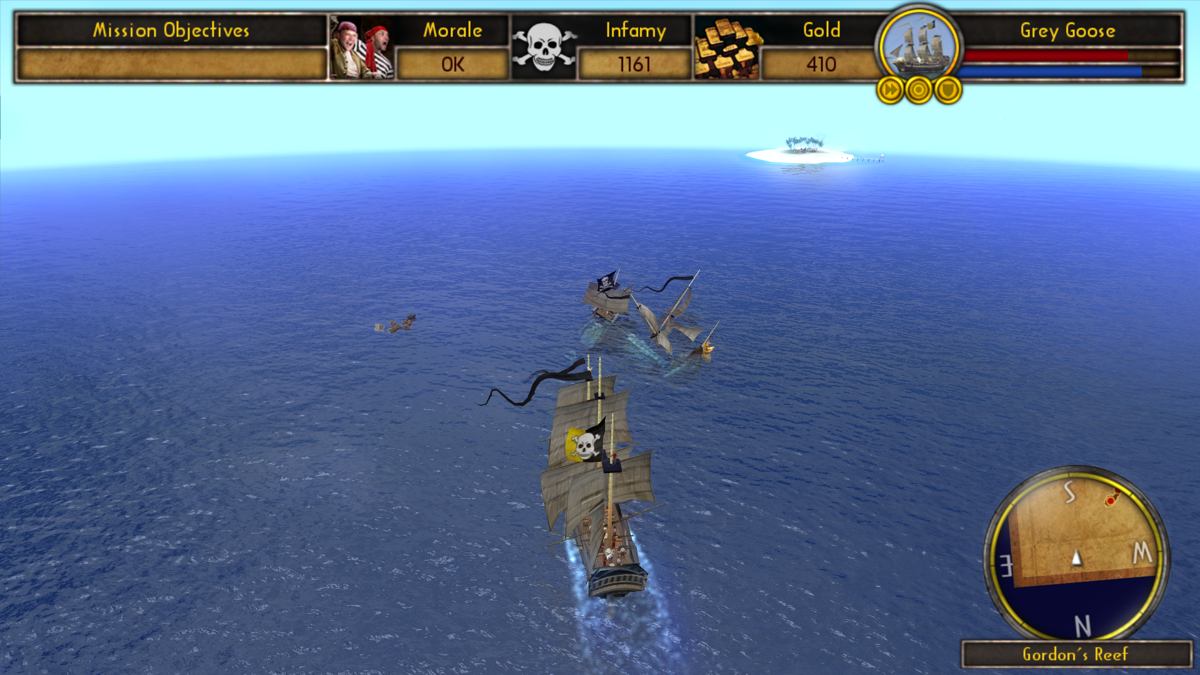
The diagonal-down sea view is built around keeping ships and their firing sides easy to track during a fight. Cutlass Bay is handled as menus for its key locations rather than as a space to walk around, so the game spends its visual energy on the vessels and objectives out at sea.
Story
This is a lean pirate premise, not a tale carried by characters or elaborate plot turns. You are trying to rescue the Golden Buccaneer pirates from their decline by earning enough infamy, and that goal gives each raid a useful sense of direction.
The strongest narrative idea is also the game’s central source of anxiety: infamy does not stay earned. It fades over time, and crew morale determines how fast it disappears. Suddenly a successful mission is not just a victory; it is a temporary reprieve that you need to protect.
That pressure makes the campaign feel more personal than its bare setup suggests. You are not simply collecting a score, because the crew’s standing and morale turn reputation into something fragile. Don’t expect a richly told swashbuckling saga, but the stakes fit the action well.
Overall Experience
Buccaneer: The Pursuit of Infamy is at its best when you are circling an enemy ship, choosing a firing angle, and knowing that the reward matters beyond the current battle. The upgrade path, new ships, morale, and decaying infamy give its straightforward cannon fights a sturdier campaign loop than they would otherwise have.
Its limits are just as clear. The mission types are narrow, the port is largely a set of management menus, and the one-time nature of many objectives can make the campaign feel like it runs out of surprises before it runs out of demands. The reputation drain can also feel punishing if you want relaxed, consequence-free progression.
Still, there is a solid pirate-action game here for you if broadside combat and incremental ship improvement sound more appealing than elaborate storytelling. The 6.3 score fits: it is a competent, occasionally tense naval shooter with a worthwhile progression hook, but not one that fully escapes repetition.



Reviews
There are no reviews yet.