 Retro Replay Retro Gaming History, Reviews & Emulation
Retro Replay Review
Gameplay
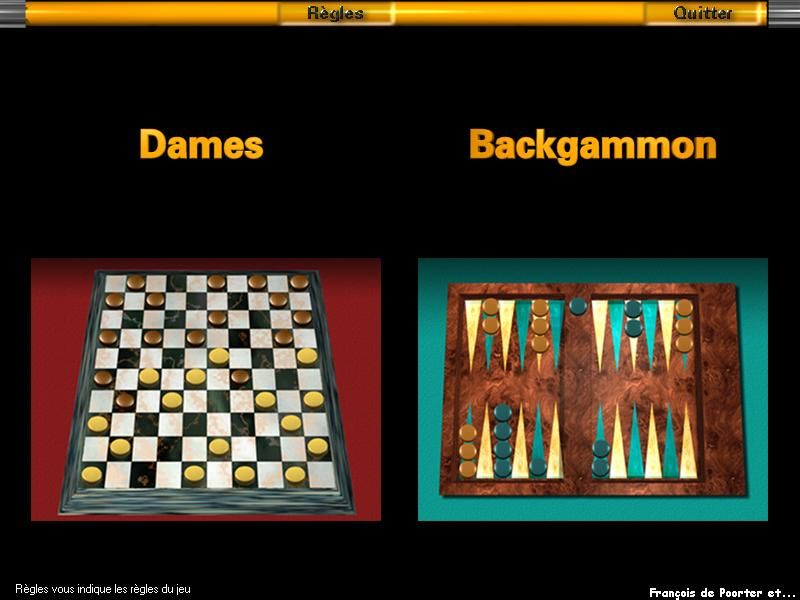
The first few minutes are as direct as they should be: pick checkers or backgammon, choose whether to face the computer or a nearby second player, and start moving pieces. There is no lengthy setup standing between you and the board. That simplicity suits both games, especially when you just want a quick checkers match or a slower backgammon session without clearing a physical table.
The computer opponent has three skill levels, giving beginners somewhere to start and regular board-game players a reason to move upward. The range is a welcome inclusion because checkers and backgammon can turn punishing when you are learning how much one careless move can cost. A timed game option also gives matches more urgency when a relaxed pace starts to feel too forgiving.
Its best feature is how willing it is to let you learn from mistakes. You can ask for a suggested move, record moves from the beginning, and take back a move to the point you choose. That makes Dames & Backgammon more useful for practice than a one-and-done board simulation. Save and resume support helps too: you can leave a match unfinished rather than forcing yourself to play it all in one sitting.
Playing another person means sharing the same computer. That is perfectly workable for a casual game with someone beside you, but it changes the mood from a social online match to a local pass-the-seat affair. If local play and computer competition are enough, the package stays pleasantly focused.
Graphics
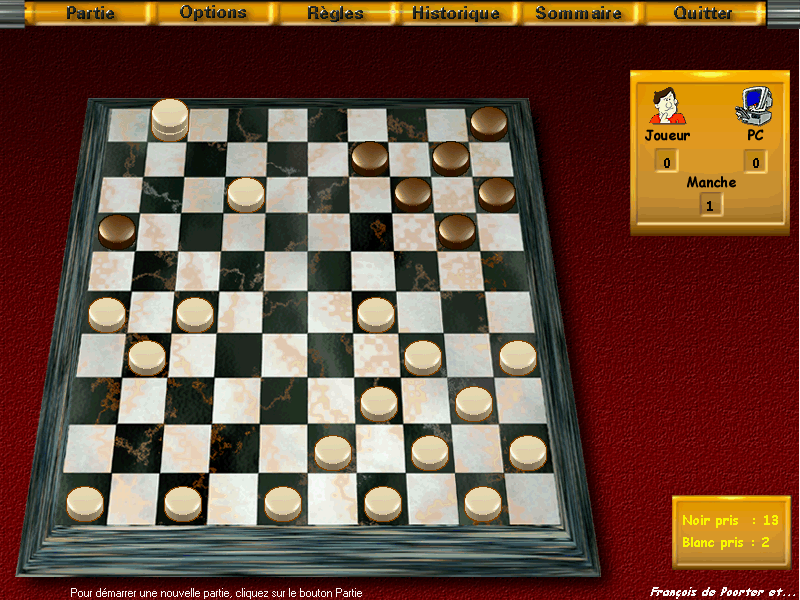
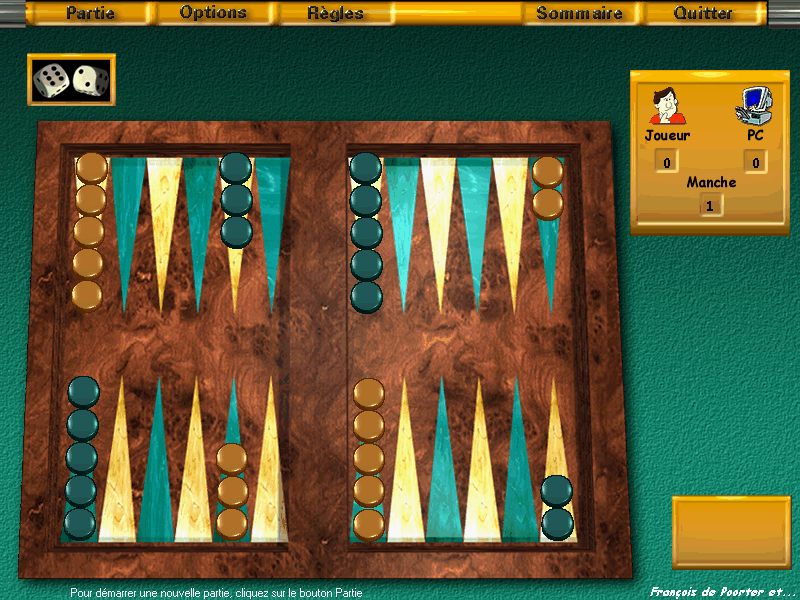
The boards use a fixed pseudo-3D view. You see the action from that single angle for both checkers and backgammon, with no option to change the camera. It gives the boards more depth than a flat diagram, though the unchangeable perspective may grate if you strongly prefer a traditional overhead board.
Story
Dames & Backgammon is built around two games whose drama comes from the board, not from a written storyline. Your memorable moments are practical ones: spotting a better move after asking for a hint, recovering from a poor choice with the take-back tool, or watching a timed match become tense.
Checkers brings the cleaner, more immediately legible contest. Each turn has a clear tactical weight, and the computer skill levels let you settle into that rhythm without jumping straight into a harsh opponent. Backgammon adds the uncertainty of dice and the longer-term pressure of managing a position as it changes.
That split gives the collection a little variety even though it stays within a narrow, traditional lane. You are not being led through a campaign; you are making your own small stories out of reversals, lucky rolls, and moves you wish you had seen earlier.
Overall Experience
This is a straightforward late-1990s board-game utility, and that is both its strength and its limitation. It does not distract from checkers or backgammon with unnecessary fuss. Instead, it gives you familiar rules, a computer opponent, local two-player play, and a strong set of practice-friendly tools.
The payoff depends on why you are opening it. If you want help studying moves, the suggestion and move-recording options give it lasting value beyond a single match. If you want a simple game night option for two people at one computer, it is easy to recommend as a low-pressure choice.
Frustration is more likely to come from the boundaries than from the games themselves: the board angle is locked, and you cannot take the competition online. Still, for someone who wants checkers and backgammon in one compact package—and appreciates the freedom to save, review, and undo—Dames & Backgammon earns a modest recommendation. It is more helpful than exciting, but it knows exactly what it is for.



Reviews
There are no reviews yet.