 Retro Replay Retro Gaming History, Reviews & Emulation
Retro Replay Review
Gameplay
The first hour of Distant Worlds is less about conquering the galaxy than learning to live with one. You start scouting unknown systems, looking for habitable worlds and useful resources, but the important realization arrives quickly: expanding without a functioning supply network creates problems that fleets alone cannot solve. Colonies need goods, income depends largely on taxes, and a happier population grows faster and tolerates more taxation. That makes every new settlement feel like a commitment rather than a checkbox.
The split between state control and private enterprise gives the game its personality. You directly handle state ships and buildings, while private freighters and other commercial vessels are built automatically and move goods through your empire. It means you are not micromanaging every haul, but you are still responsible for the conditions that let trade work. Mining stations, space ports, and protected routes become pieces of one economic machine. Pirates and hostile forces are not merely combat interruptions; they can cut into the traffic your colonies depend on.
Exploration has enough uncertainty to keep the map compelling. Scouts uncover systems one at a time, and a trip outward can turn up resources, ruins, native populations, abandoned ships or bases, hostile pirates, and space monsters. Colonizable planets are valuable, while gas giants and asteroids open different opportunities through gas and mining stations. Research also resists becoming a simple routine: stations can influence a field, exploration and espionage can yield advances, and spending credits on a crash course gives you control at the cost of stalling other progress.
There is a lot to juggle, and the game’s scale can turn a small mistake into a lingering administrative headache. Custom ship and building design adds another layer, asking you to meet core component requirements before using remaining capacity for your own choices. That depth is rewarding when you want to tune an empire’s tools, but Distant Worlds is not in a hurry to make any part of its web feel simple. Give it time, and its systems begin to connect in gratifying ways.
Graphics
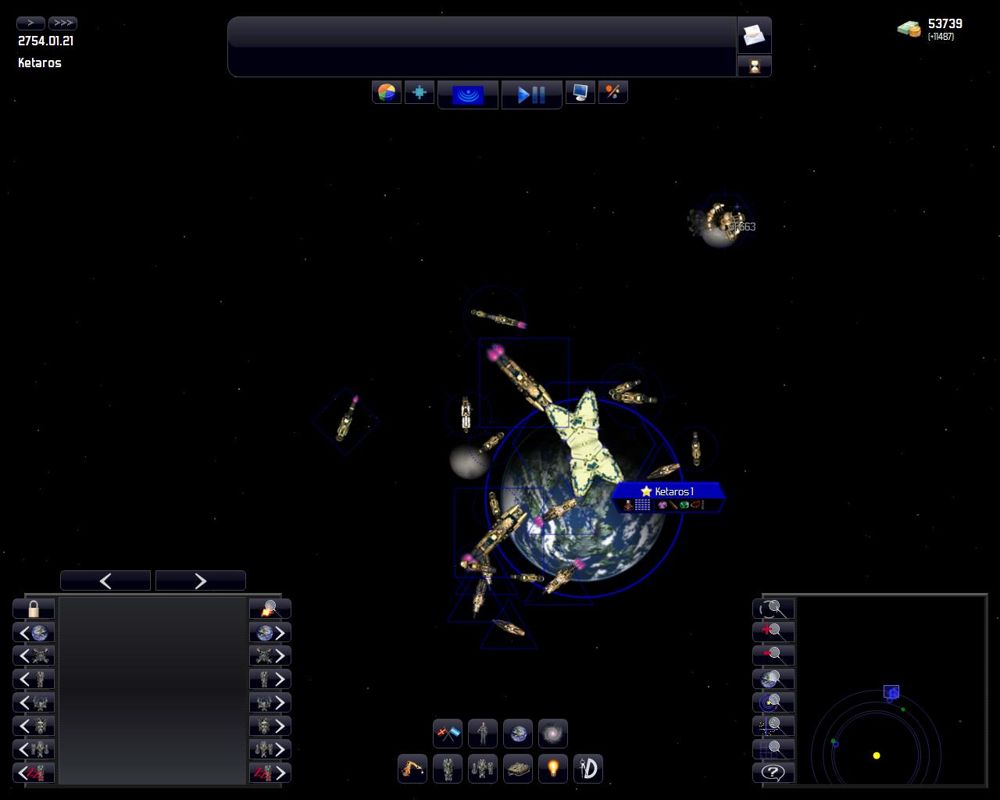
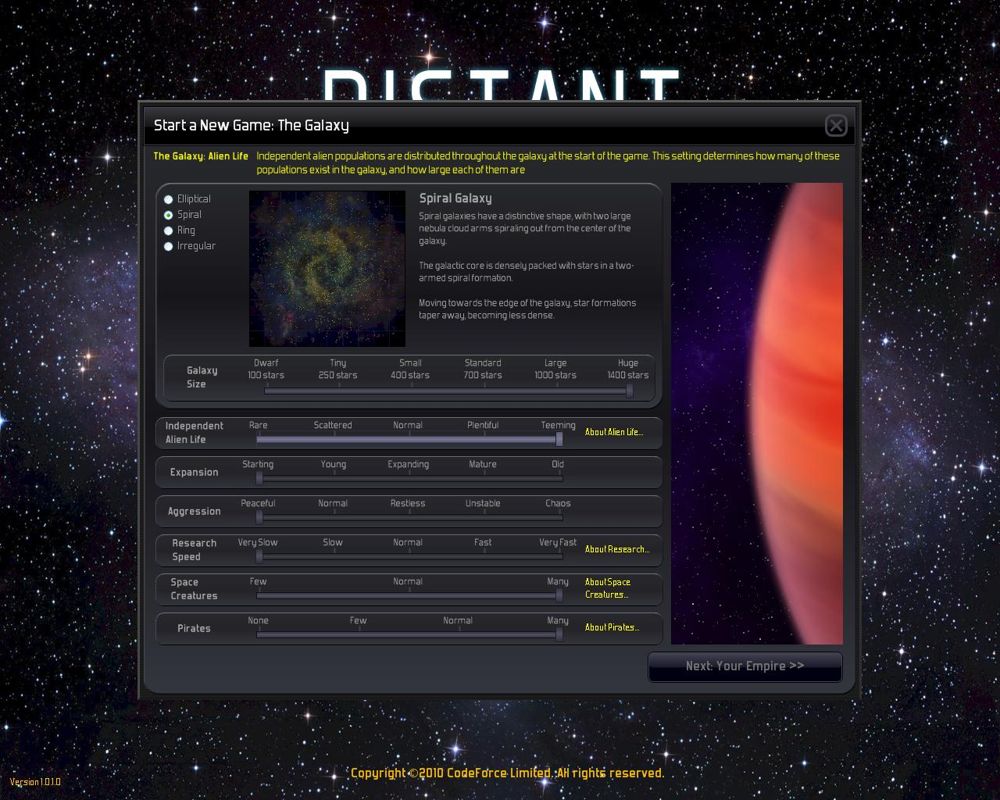
The galaxy map is the view you will live in: a field of star systems gradually revealed by scouts, with planets, moons, gas giants, asteroids, bases, and anomalies becoming part of your expanding reach. The top-down strategy view suits the game’s huge scope, because you are constantly checking where resources, colonies, and possible threats sit in relation to one another.
Story
Distant Worlds does not hinge on a tightly authored campaign story. Its narrative comes from the history you create while pushing into a galaxy with buried secrets and hints of future danger. A newly uncovered ruin, an abandoned ship, or an event mystery can turn routine exploration into the start of a new problem or opportunity.
Diplomacy supplies much of the drama. Early pirate encounters can lead to protection payments, temporary safety, or even a lasting alliance, and pirates may sell useful information about maps, mysteries, or promising worlds. That is a nicely pragmatic start to galactic politics: sometimes the sensible move is not to fight the first threat you meet, but to pay it while your economy finds its footing.
Relations with other races have the same cause-and-effect quality. Trade and peaceful behavior can develop into free trade or military alliances, while failed espionage and unjustified attacks hurt both individual relationships and your wider reputation. War weariness, reputation, and public happiness tie diplomacy back to domestic management, so foreign policy never feels isolated from the rest of your empire.
Overall Experience
Distant Worlds is for you if the phrase “living galaxy” means more than a crowded map. Its strongest moments come when exploration, civilian trade, colony happiness, research, piracy, and diplomacy collide without waiting politely for you to address them one at a time. You are building an empire, but you are also trying to keep an interconnected society from becoming expensive, unhappy, and vulnerable.
The game earns its complexity because its systems have consequences for each other. A resource site matters because freighters need to move its output; a pirate deal matters because it can protect that movement; a research choice matters because it shapes what worlds and projects you can pursue. The result is more demanding than a streamlined 4X, yet it offers a richer sense that your decisions travel through the whole empire.
It will frustrate gamers who want direct control over every ship or a brisk path from expansion to victory. The private economy deliberately leaves some activity outside your hands, and the huge galaxy can make priorities feel crowded. But if you enjoy stepping back, reading the situation, and making the next sensible intervention rather than issuing every order yourself, the payoff is substantial. Distant Worlds remains a strong strategy game precisely because it makes growth feel messy, costly, and worth managing.


Reviews
There are no reviews yet.