 Retro Replay Retro Gaming History, Reviews & Emulation
Retro Replay Review
Gameplay
Dying Light 2 grabs you with the simple pleasure of seeing a distant rooftop and figuring out how to reach it without becoming infected chow at street level. Villedor is built vertically, so a trip across town can turn into an improvised chain of jumps, climbs, and narrow escapes. Early on, you are working with basic movement, but new parkour options and the paraglider steadily make the city feel less like a maze and more like a personal playground.
That growing freedom is the game’s strongest hook. You can take the streets and deal with their dangers, or look for a roofline that offers a safer, faster path. It has some of the route-reading satisfaction of Mirror’s Edge, though this is a dirtier, more crowded survival-action game where looting and close-range brawls are always close at hand. The day and night cycle gives route planning real tension, since darkness makes infected a much bigger problem and UV-lit safe spots become valuable waypoints.
Combat works best when you keep moving. Melee weapons, mods, bows, stealth, and parkour attacks give you options, and vaults and kicks make fighting feel connected to traversal rather than separate from it. Still, the game can lose its rhythm when a long conversation or a pile of side chores stands between you and the next great run across the skyline. Four-player online co-op can make roaming more lively after the opening, but the host’s campaign decisions and progression remain the ones that matter.
Graphics
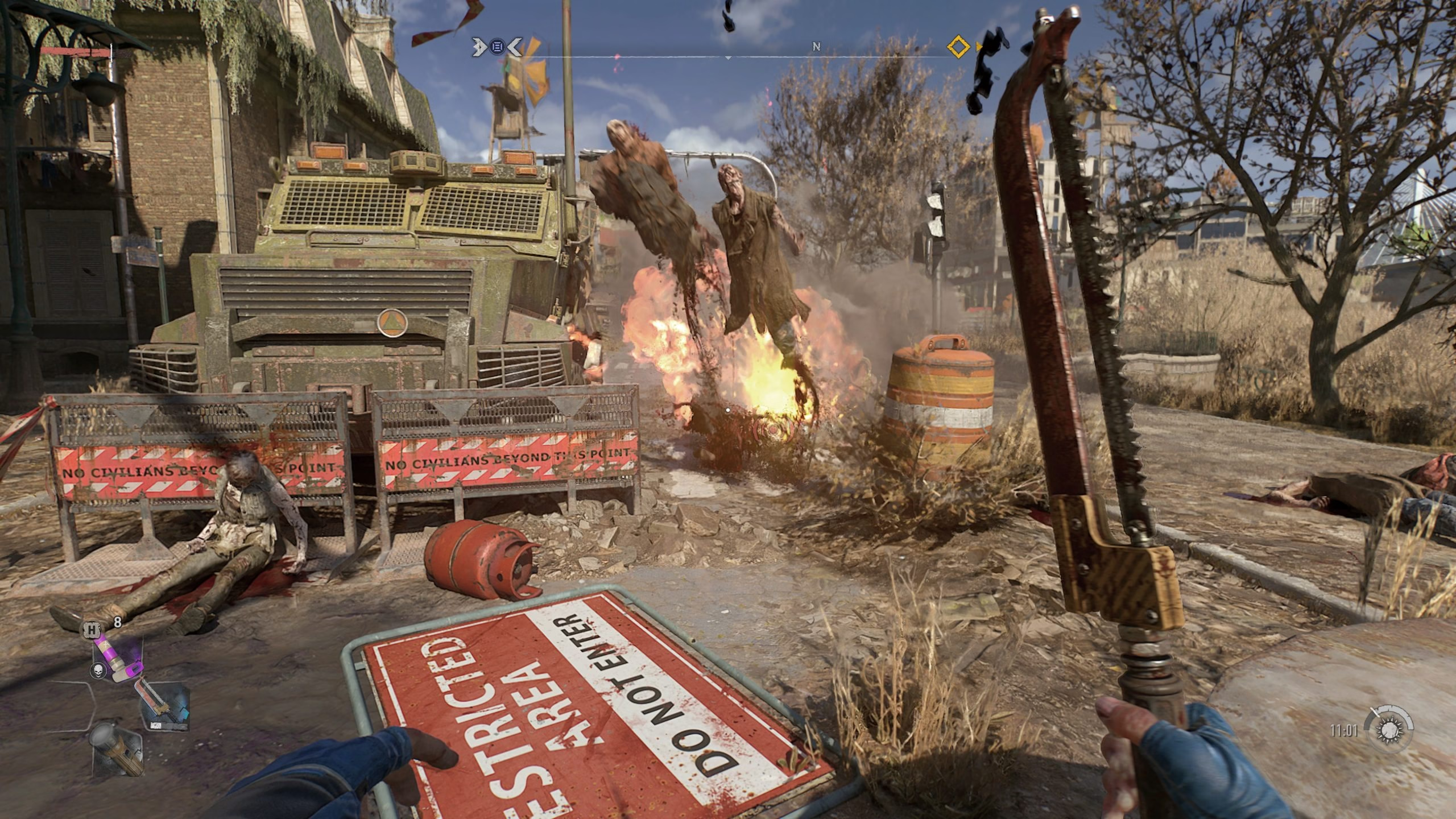
Villedor’s ruined streets have a convincingly worn-in look: a rusty serrated blade fills the first-person view while battered military trucks, barricades, bodies, wreckage, dry grass, bare trees, and ivy-covered brick crowd the route ahead. Orange fire adds sharp heat to a mostly brown-and-gray cityscape, especially around burning infected, although the muted colors can make parts of the cluttered street scene run together.
Story
Aiden Caldwell comes to Villedor searching for his sister Mia, but the city is already being pulled apart by a struggle for power and resources. Survivors and Peacekeepers each want influence, and that conflict gives your conversations and faction decisions a practical edge beyond Aiden’s personal goal.
Your choices can change parts of the story and affect which city facilities become available. That is meaningful enough to make decisions feel worth considering, particularly when you are weighing who gets resources, but it does not turn every decision into a total rewrite of Villedor. The strongest consequence is often the way a choice shapes the routes and opportunities around you.
The story is more effective when it puts you back into the city quickly. Aiden’s search provides a clear reason to keep pushing forward, and the faction rivalry supplies ongoing friction, yet extended dialogue stretches can interrupt the energy that parkour creates. If you are here chiefly for a tightly paced narrative, that stop-start structure may test your patience.
Overall Experience
Dying Light 2 succeeds because simply moving through its world is rewarding. The climb from uncertain early jumps to confidently crossing rooftops and gliding over danger gives the open world a progression arc you can feel in your hands. Few games make an ordinary objective marker feel like an invitation to improvise a route.
It is less successful at maintaining that velocity. Looting, optional activities, and lengthy conversations can turn a great sprint through the city into a series of interruptions. The game is strongest when it trusts you to make a risky route decision, fight your way out when the plan falls apart, and race for light as night closes in.
Give it a chance if you want first-person action with a real sense of place and movement, and can tolerate a messy open-world structure around its best ideas. The payoff is worth it for the traversal alone, especially once the city opens up and the paraglider changes how you see its rooftops. For a useful launch-era look at the design priorities behind its parkour, melee combat, gliding, and choices, see Techland’s original gameplay introduction.



Reviews
There are no reviews yet.