Retro Replay Retro Gaming History, Reviews & Emulation
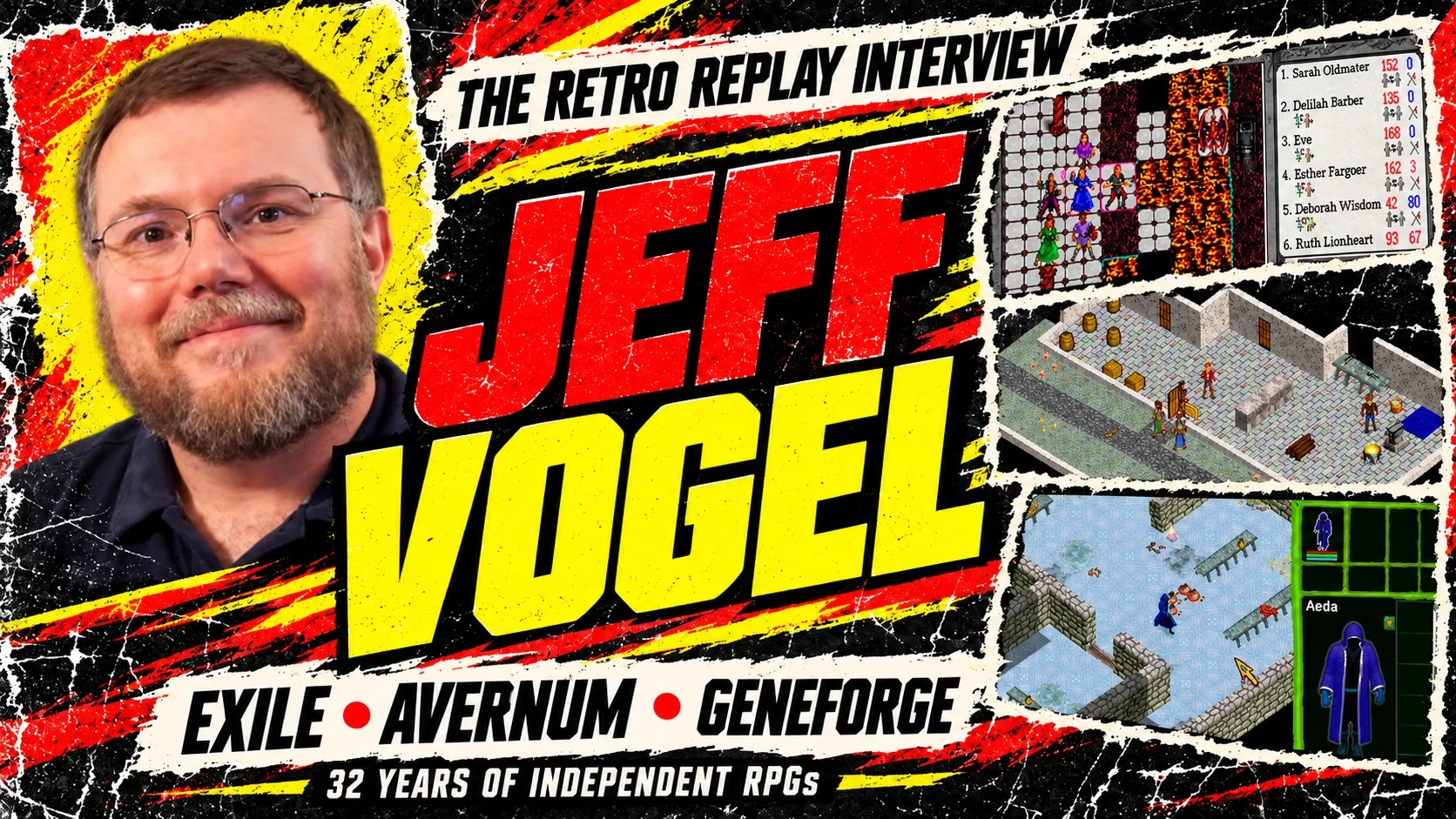
Jeff Vogel bought a PowerMac 6100 in 1994, went looking for a role-playing game, and failed to find one. So he started writing his own. There was already a Mac shareware RPG called Realmz, but he did not discover it until Exile: Escape From the Pit was almost ready to launch. Had he found it earlier, he tells us, his whole life might have gone differently. Then the Realmz developers at Fantasoft offered to publish his game. The RPG he missed became part of the reason his own reached an audience.
More than three decades later, Spiderweb Software is still making enormous adventures with a very small team. Exile became Avernum. Geneforge sent players into a world where creating obedient life brought some decidedly uncomfortable questions. Nethergate took a detour into Roman Britain, while Avadon and Queen’s Wish gave Jeff other political arrangements to put under pressure. There are monsters to fight in these games, but there are also people who can explain, quite convincingly, why you should help them do something you might regret.
That is a remarkable body of work to build while keeping the company deliberately small. Jeff remembers reaching a point after Exile 3 when he could have hired more people and expanded. He chose otherwise. Alongside his wife and business manager, Mariann Krizsan, he kept making the kind of games Spiderweb could afford to finish. The interview gets into what that choice costs, what it makes possible, and why an affordable monster model can have more influence on a creature roster than a grand artistic manifesto.
For players who found these worlds through a shareware demo, an older computer, or a much later Steam purchase, there is plenty here to enjoy. Jeff discusses the talking Xian Skull, the stories and films behind Geneforge, and the opera that stayed in his head until it became Avadon. He also talks about returning to old work with respect for the younger developer who made it. The remasters pay the bills, certainly, but he wants those early ideas to have a better showcase, too.
We are delighted to welcome Jeff to Retro Replay. When he accepted the invitation, he warned us, “I tend to give a fun interview.” He followed through. His answers are funny, unsentimental, and unusually frank about the work required to keep a small RPG company alive. Asked what still excites him after 32 years, he makes a distinction that sets the tone for everything that follows: “I’m fulfilled. Creation is fulfilling.”
Interview by David Becker for Retro Replay. Answers have been lightly formatted. One repeated question has been omitted; its subject is covered in the earlier discussion of player faction choices.

Explore the interview (click to expand)
- Thirty-two years in, and the RPG he could not find
- Exile, shareware, and getting a game finished
- Stories, scenario tools, and Roman Britain
- Returning to Avernum, and trusting the younger Jeff
- Geneforge and the creatures that serve you
- Avadon, Queen’s Wish, and choices that matter
- Steam, staying small, and the business cycle
- The worlds worth saving, and the work ahead
Thirty-two years in, and the RPG he could not find
Retro Replay: Before I drag you back to 1994, what are you most excited about right now? What part of making games still gets you out of bed wanting to work after more than thirty years of doing this?
Jeff Vogel: I’ve been doing this 32 years. 18 all new games, a ton of remasters. I’ve done everything many times. I never get excited. Making our trailers is still a little fun, though.
But … That’s not a bad thing. I’m fulfilled. Creation is fulfilling. I don’t miss the excitement part, as it was often accompanied by terror.
Retro Replay: Let’s do the traditional origin question anyway. What was missing from the RPGs you were playing that made you finally decide, “Fine, I’ll just make the game I want myself”?
Jeff Vogel: So I got a nice PowerMac 6100 in 1994 and was super-psyched. My first real, grown-up computer! And, since I loved RPGs more than any other game, I went looking for one of those. And I couldn’t find one for Mac. So I decided to write one.
But here’s the thing. There was already a great shareware Mac RPG, called Realmz. But the web didn’t really exist then, so I didn’t find out about Realmz until my first game, Exile: Escape From the Pit, was ready to launch. If I had found Realmz, my whole life might have been very different.
Retro Replay: When you started Spiderweb Software, did you genuinely think you were starting a company that might still exist thirty years later, or were you mostly trying to sell enough copies of Exile to justify making another one?
Jeff Vogel: Running a shareware business was ridiculously hard back then. I hoped to make a little extra money and that’s it. The only reason I got anywhere was that I got super lucky. Fantasoft, the Realmz people, found me and offered to publish me. Without that, my business would probably never have gotten off the ground.
Exile, shareware, and getting a game finished
Retro Replay: What did the earliest days of making Exile actually look like? Were you working regular hours like a sane person, or was this one of those projects where you suddenly realized it was 3:00 in the morning?
Jeff Vogel: I worked serious, fanatical hours in my twenties. I worked at least 4 hours every day but Christmas. When I started Exile, I was a math grad student too, which took a lot of time too. Working very long hours when started your business is often a simple necessity.
It wasn’t terrible. I still had fun and friends and parties and got married to my radiant wife and business manager. But I still put in serious time. It was pretty great. I was doing for a living what I dreamed of loving as a child.
Now I’m old. I can’t do that anymore. Fortunately, I’m very efficient.
Retro Replay: Exile was a Mac shareware RPG at a time when both “indie game” and digital distribution meant something very different from today. How important was the shareware model to making Spiderweb possible at all?
Jeff Vogel: One hundred percent necessary. I have never been in the running for a publishing deal. Nobody has ever even offered. I only ever wanted to be a humble toymaker, making a niche product for an audience I love.
Retro Replay: Do you remember the first time somebody you had never met actually paid you for Exile? Was there a moment when it clicked that strangers genuinely wanted the thing you had made?
Jeff Vogel: I don’t remember, and honestly it’s all very abstract for me. When my friends and loved ones like my games, that’s awesome. I do appreciate fan mail. But I can’t hold the idea of tons of people liking my games in my head. Glad they do, though!
Retro Replay: Exile’s graphics were never exactly trying to compete with a major studio art department. Did discovering that players would forgive crude visuals if the world and writing were compelling become one of the foundational lessons of your career?
Jeff Vogel: The most important thing to remember about my work is that it’s a bunch of complex, full-length video games, written for the most part by just one guy, on a tight schedule. Every day is nothing but putting out fires and doing what I can to drag the thing over the finish line. When determining what players will forgive, all I look at is the sales figures at the end of the month. That tells me everything I need.
The art is that way because it has to be that way for the business to function. But the games keep selling, so it’s good enough. Phew!
Retro Replay: Has there ever been a Spiderweb screenshot where even you looked at it and thought, “Good lord, we really shipped that”? 🙂
Jeff Vogel: Constantly. Since it’s a huge, complex creation made mostly by one person, me, I can often develop blind spots. Things I did because I had only a little time and it sucked but I saw it so many times and was so distracted by everything else that I stopped seeing it sucked. And then I see it with fresh eyes a year or two later and go, “Oh, no. No no no no no.”
There is so much that needs fixing. Thank goodness for remasters!
Stories, scenario tools, and Roman Britain
Retro Replay: What did the Exile games let you do as a storyteller that more linear RPGs of the period did not?
Jeff Vogel: I write pretty good stories, but I’m more a follower than a trendsetter. The first game, Exile, had a very bare bones story. The second game, Exile 2, had a much more developed story, but nothing that struck me as crazy compared to a fantasy novel.
I have written some games with innovation in the story. Nethergate. Geneforge. Queen’s Wish. But I don’t see them as THAT innovative. When you write a story for a video game, the bar for success is very low. To quote myself,
“When someone says a video game has a good story, they mean it has a story.” – Vogel’s 1st Law of Video Game Storytelling
“Players will forgive your game for having a story as long as you allow them to ignore it.” – Vogel’s 2nd Law of Video Game Storytelling
Retro Replay: Blades of Exile gave players tools to create their own scenarios. Did the community ever build something with your own tools that made you think, “They understand this system better than I do”?
Jeff Vogel: I don’t know. You think I played all those scenarios? I’m too busy! As soon as I finished Blades of Exile, the doom clock started. I had to release a new game before our bank account went negative. It would have been nice to play their work, but 1998 economics said No.
I understand some of the creators did some wild, cool stuff to expand my lore. Maybe it was better than what I eventually did. In fact, it probably was better. They had a lot more time to focus on it and fewer other things demanding their time. I probably disappointed them. Oh well. They can join the ever growing “Jeff Vogel Disappointed Me” Club.
Retro Replay: Nethergate has always seemed like one of the more unusual entries in your catalog. What made Roman Britain interesting enough that you were willing to step away from Exile and build an entirely different world around it?
Jeff Vogel: I honestly can’t remember. I know I did a lot of Ren Faire stuff and it left me with a fascination for Celtic culture. And who doesn’t think the Romans were cool? And I remember thinking up what the game would look like as a sudden bolt during a step aerobics class.
I came up with that idea for the story, most likely, the way I came up with all my other stories: As a sudden whim that lodges itself in my brain and stays there for a couple years, so I decide to write it just to stop thinking about it.

Returning to Avernum, and trusting the younger Jeff
Retro Replay: You later rebuilt Exile as Avernum rather than simply leaving those games in the past. At what point does a remake become worth doing instead of spending that same time making something completely new?
Jeff Vogel: Right now, the choice is easy. Sales figures don’t lie. Gamers don’t like what I like to write now. And all those old dusty games are sitting there really really needing the work. And I’m good doing remasters. And fans love them. And they sell. The math is easy.
When I started doing remaster, on the other had, it was simply a case of looking at the old screenshots and realizing I could do so much better. I AM an artist, after all, and I do take pride in my work, and I want my best ideas to have the best showcase.
Retro Replay: When you revisit one of your own games twenty years later, do you feel loyalty to the younger developer who made it, or do you mostly want to grab him by the shoulders and ask what the hell he was thinking?
Jeff Vogel: The former. Very much the former. I have learned to show maximal respect to my early self. All the changes I make are to showcase my early self’s great ideas as much as possible.
Retro Replay: How do you decide which old design decisions are part of a game’s identity and must remain intact, and which ones are simply old mistakes that deserve to die?
Jeff Vogel: Well that is where the art is, isn’t it? It is a long series of aesthetic decisions, so it all depends on whether I have good taste or not. The main thing I have learned is to, when in doubt, trust earlier me. He’s the one who made us a success, after all.
Retro Replay: Avernum has now lived through multiple generations of technology and multiple remakes. What is it about that underground world that keeps pulling you back?
Jeff Vogel: I started Avernum (formerly Exile) in 1994, and that first trilogy had enormous emotional resonance to me and to my fans. Then I grew older and it stopped representing where I was emotionally, so I wrote the second trilogy about what I was like then. And now that is all decades in the past and I am a completely different person, but those games still affect and draw in other people.
So I rewrite them to make them more modern and better designed, while leaving alone as much as possible the things that gave the games resonance.
So, to answer your question of what pulls me back: I want to make money.
Retro Replay: Is there a particular character, town, dungeon, or piece of Avernum lore that still makes you smile because players have remembered it far longer than you ever expected?
Jeff Vogel: There is an item called the Xian Skull that constantly says random things while you walk around. Still makes me smile.

Geneforge and the creatures that serve you
Retro Replay: Geneforge feels very different from the more traditional fantasy of Avernum. Where did the central idea of creating life and then dealing with the moral consequences of that power come from?
Jeff Vogel: I was inspired by the Eden books by Harry Harrison (if you are young, you might want to Google what a “book” is, they can sometimes be a great source of inspiration) and the movie eXistenZ, directed by David Cronenberg. Both dealt heavily with biological technology. I wanted to write a game about that.
But what would the story be about? Once I knew that the game would be about making living creatures to serve the makers, I immediately found the plot had to be one thing and one thing only. (A creation rebellion.)
Retro Replay: The Geneforge games rarely hand the player a clean good-guy/bad-guy answer. Do you deliberately write factions so that agreeing completely with any one of them should make the player a little uncomfortable?
Jeff Vogel: Yes. When writing an faction, I try to steelman them as much as possible. In other words, every faction should give the best possible arguments for why it should exist. I want the players to thing I am biased in favor of that faction (which, while writing them, I am). Even though the factions in the Geneforge Saga get CRAZY.
Retro Replay: Have players ever overwhelmingly sided with a faction or character you personally expected them to dislike?
Jeff Vogel: I don’t know! I am never sure, when my games are out in the wild, which side people actually side with.
On thing though: You can always count on tons of players siding with the most centrist, wishy-washy, milquetoast faction I make available.
Retro Replay: The creature-creation system is one of Geneforge’s signatures. Was there ever a creature concept that was simply too weird, ugly, disgusting, or mechanically useless to survive development?
Jeff Vogel: Nope. When making a creation, I asked one question: What monster can I buy an affordable 3-D model of. In 1999, I shopped for 3D models to put into Poser for rendering, and that’s where the monsters came from.

Retro Replay: You’re currently revisiting Geneforge again with the modern remasters. Does remaking those games force you to confront how your own views on their political and moral questions have changed over twenty-plus years?
Jeff Vogel: Yes and no. These games are around making life. What is your responsibility to it? And its responsibility to you? It’s a very abstract question, and my views on it haven’t changed much. But … Now everything is about AI and that’s capabilities. The issues in Geneforge map really well to what people are arguing about for how to handle AI. So I am trying to take some of those new issues and perspectives and subtly work them into the games.
Avadon, Queen’s Wish, and choices that matter
Retro Replay: Avadon gave you another new setting after years of Avernum and Geneforge. When you create a new RPG world from scratch, what normally comes first for you: the political situation, geography, game mechanics, or some character talking in your head who refuses to go away?
Jeff Vogel: It always starts with a very simple idea. A bit of inspiration I could describe in 1-2 sentences. I live what that for a year or two and, if it’s still with me, build around that.
For example, Avadon was inspired by watching a Hungarian opera called Bluebeard’s Castle, which is a very strange, fantasy infused version of the Bluebeard story. The setting got stuck in my head, and it didn’t leave.
Retro Replay: Queen’s Wish put the player in the uncomfortable position of representing an empire rather than simply fighting one. Were you deliberately trying to make the player participate in systems they might normally condemn in another RPG?
Jeff Vogel: Of course. We are all born into a system we didn’t choose, and we have to be complicit in it to some extend to function. The alternative is a permanent marginal existence, and very very few will accept that.
I have always been a history and politics fanatic, and I did a bit of research about the history of Empire before I wrote Queen’s Wish. I didn’t want to write something childish or simple wish fulfillment.
Almost all of us are born as citizens of some Empire or other. I made a game that gives you freedom to not pretend otherwise.
Retro Replay: You have repeatedly built games around choice and consequence, but you also have to make those games with a tiny team and finite budget. What is the trick to making a world feel enormously reactive without actually having to write ten completely different games?
Jeff Vogel: It takes a lot of planning. I only have so much time and energy to make games. I can only make so many branches available. So I think very carefully about what those are, and I try to make a handful of choices that are difficult, satisfying, and impactful.
Steam, staying small, and the business cycle
Retro Replay: You’ve run Spiderweb through shareware, boxed orders, direct web sales, portals, Steam, GOG, crowdfunding, tablets, and enormous changes in how independent games are sold. Which transition scared you the most at the time?
Jeff Vogel: I think the transition to Steam. It was a huge increase in visibility and potential earnings, as a time when I thought we were about to go out of business. Visibility is stressful. A large audience, awesome as it is, is stressful. Happily, it worked out very well.
Retro Replay: You have survived several supposed “indiepocalypses.” At this point, when somebody announces that independent games are doomed, do you even pay attention anymore?
Jeff Vogel: I wrote a lot about this topic and even gave a talk at GDC, but I never used the term “indiepocalypse.” I always said “indie bubble”, but the real term is the business cycle. All businesses go through times of feast and famine, growth and recession. I got a huge amount of attention for simply saying that economic laws still apply to video games.
Nobody thinks indie games are doomed. They’re huge! Bigger than ever! It’s just way harder to turn a profit, and the vast, vast majority of people who make the deluge of games on Steam will disappear completely unnoticed. The current Steam Next Fest has 8000 games!
Retro Replay: Spiderweb has remained intentionally tiny while much of the industry equates success with hiring more people. Was staying small one of the most important business decisions you ever made?
Jeff Vogel: Certainly. And it was a decision. I wrote a hit game called Exile 3: Ruined World in 1997. I had enough money to get employees and become a real company. I didn’t do it. I chose a humble, fun, relaxing life instead.
The Larian people chose different, and they have been lavishly rewarded. It’s hard not to be envious sometimes, but I like peace.

Retro Replay: You’ve been unusually open over the years about money, sales, workload, burnout, and the unglamorous realities of running a game company. Why have you been willing to talk publicly about things most developers keep private?
Jeff Vogel: I was one of the first successful indie devs, and I always wanted to do what I could to help people do what I do. I was giving advice on selling games online in the mid 1990s! I really care about this strange art form, and I try to help in the little ways I can.
Heck, I put this up 30 years ago: https://www.spiderwebsoftware.com/shareware.html
Retro Replay: After thirty-plus years, what is one piece of conventional game-development wisdom you think is complete nonsense?
Jeff Vogel: Everything changes so fast. It’s all so chaotic. As William Goldman says, “Nobody knows anything.”
In other words, I don’t even know what the conventional game-development wisdom is now!
The worlds worth saving, and the work ahead
Retro Replay: Fun one: if you were forced to live permanently inside one of your own game worlds, where are you going? And more importantly, which Spiderweb world would you absolutely refuse to live in?
Jeff Vogel: I think I would live in Haven (Queen’s Wish). I would avoid Avernum.
Retro Replay: Another cruel one: somebody erases your entire catalog except for one game. You are allowed to save exactly one Spiderweb title for future players. Which one survives?
Jeff Vogel: It’s tough, because I write series. For single game, Avernum: Escape From the Pit, after I give it a polish pass. (Hopefully next year.) For series, probably Geneforge. It’s still really innovative.
Retro Replay: You’re now working on Geneforge 3: Detonation while still revisiting earlier parts of your catalog. Do you see remastering these games primarily as preservation, smart business, an opportunity to improve old work, or some combination of all three?
Jeff Vogel: All three. It makes good money, it’s artistically satisfying, it sends my life’s work into the future in the best condition I can manage, and I’m not sure I can write new games that are that popular anymore.
Retro Replay: Is there still a completely new world or RPG idea you want to make before you eventually decide you have finally created enough enormous games full of people asking the player to solve their problems?
Jeff Vogel: Not currently. Anything is possible, but it would have to be a really, REALLY intriguing idea.
Retro Replay: Finally, when this interview is published, where would you like me to send readers? Spiderweb Software, your current games, Kickstarter pages, your Substack, talks, social media, or anything else you want people to see?
Jeff Vogel: My games can all be found here: https://store.steampowered.com/publisher/spiderwebsoftware
For starting points, I suggest Avernum: Escape From the Pit, Geneforge 1 – Mutagen, and our newest game, Avernum 4: Greed and Glory, which we’re really happy with!
I write a lot of stuff at https://bottomfeeder.substack.com/, and I’m pretty proud of my writing.
I gave a hugely well-received talk at GDC, and I recommend it: https://www.youtube.com/watch?v=stxVBJem3Rs
Watch Jeff’s recommended GDC talk
Jeff recommends his GDC 2018 talk, Failing to Fail: The Spiderweb Software Way, for more on the company’s history and the business of staying independent.
Find Jeff’s games and writing
Browse Spiderweb Software and its Steam publisher page. For starting points, Jeff recommends Avernum: Escape From the Pit, Geneforge 1: Mutagen, and Avernum 4: Greed and Glory. Read his essays at The Bottom Feeder, or visit his long-running advice page for aspiring shareware developers.
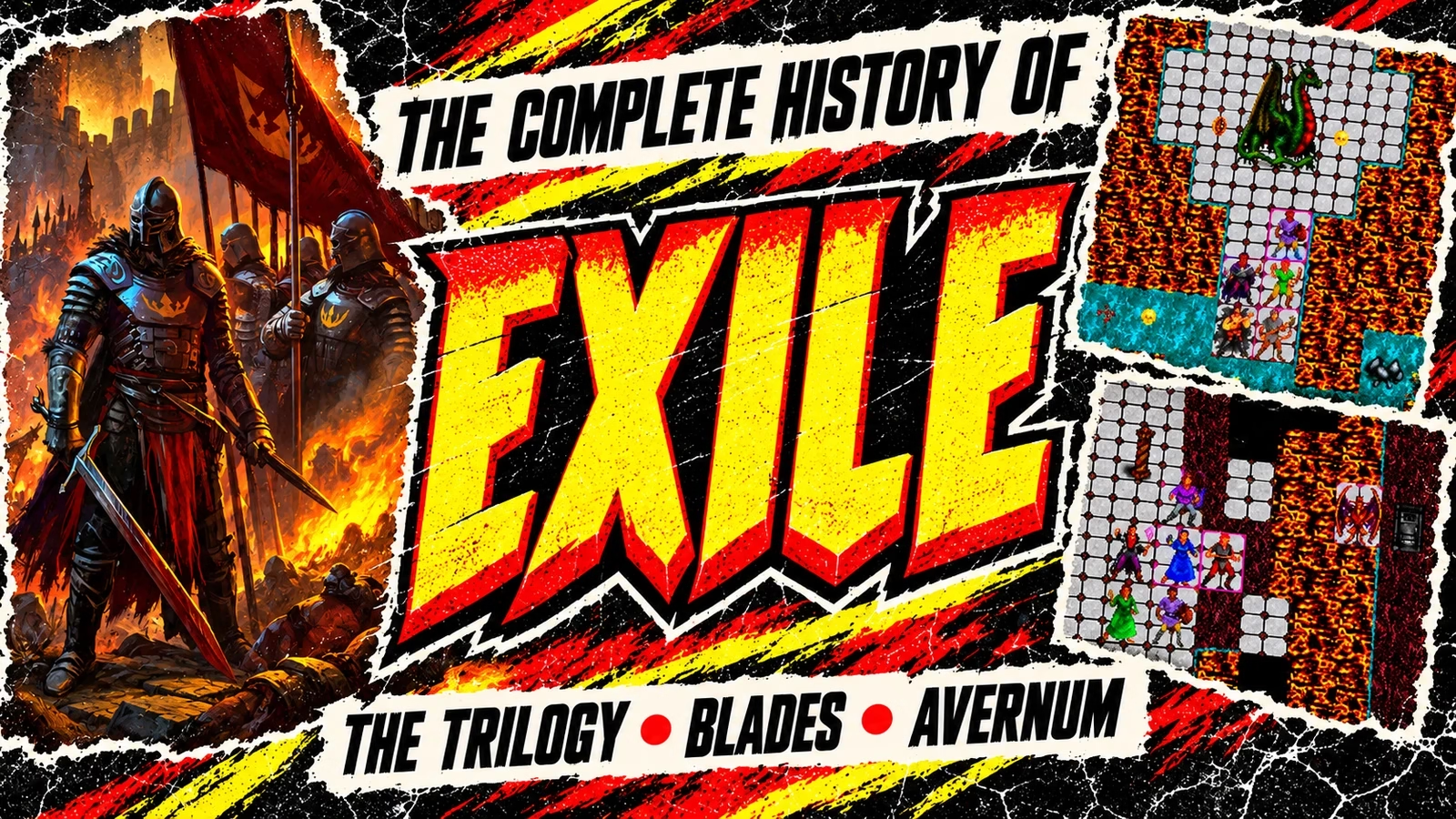
For the longer story of those early adventures, read The Complete History of Exile, from the first arrival in the caves through Crystal Souls, Ruined World, the player-made scenarios of Blades of Exile, and the Avernum remakes.
Thank you, Jeff
Our thanks to Jeff for putting so much time, candor, and humor into these answers. It is a pleasure to share his perspective on building worlds, revisiting old work, and choosing a life making the games he wants to make.
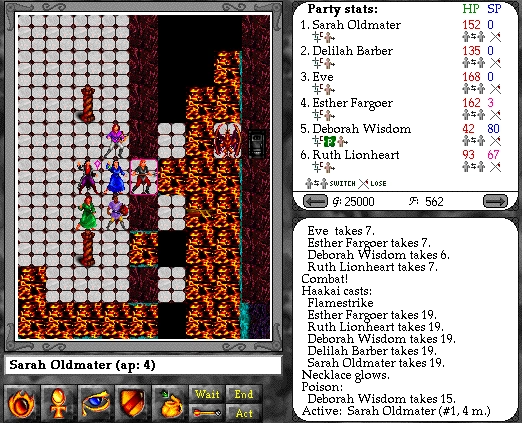
Image credits: Jeff Vogel portrait, credited to Jeff Vogel via GeekWire as linked above; cropped portrait also used in the featured collage. Exile screenshot: Spiderweb Software. Other gameplay images appear in the Retro Replay game entries linked in their captions. Featured collage includes Exile, Avernum, and Geneforge imagery.